Skip to content
WAnimals
  • Map
  • Species
  • Parks
  • Diving
Log inCreate account
WAnimals

The guide for travellers and animal lovers: discover, plan and share your wild adventures around the world.

Discover wildlife

  • Species
  • Ecosystems
  • Glossary
  • Tags

Explore places

  • Map
  • Countries
  • Parks
  • Diving

Plan experiences

  • Guides

Learn

  • Blog

Resources

  • Help centre
  • Contact
  • Install the app

Follow us

Account

  • Log in
  • Create account

© 2026 WAnimals. All rights reserved.

About usHow we build our profilesTerms of servicePrivacyLegal notice
MapSpeciesParksDiving
  1. Home
  2. Species
  3. Woodlark
Woodlark (Lullula arborea)

Birds · Passeriformes · Alaudidae

Woodlark

Lullula arborea

Least Concern

The species is abundant and widely distributed; it faces no significant short-term risk.

Spotted something wrong?

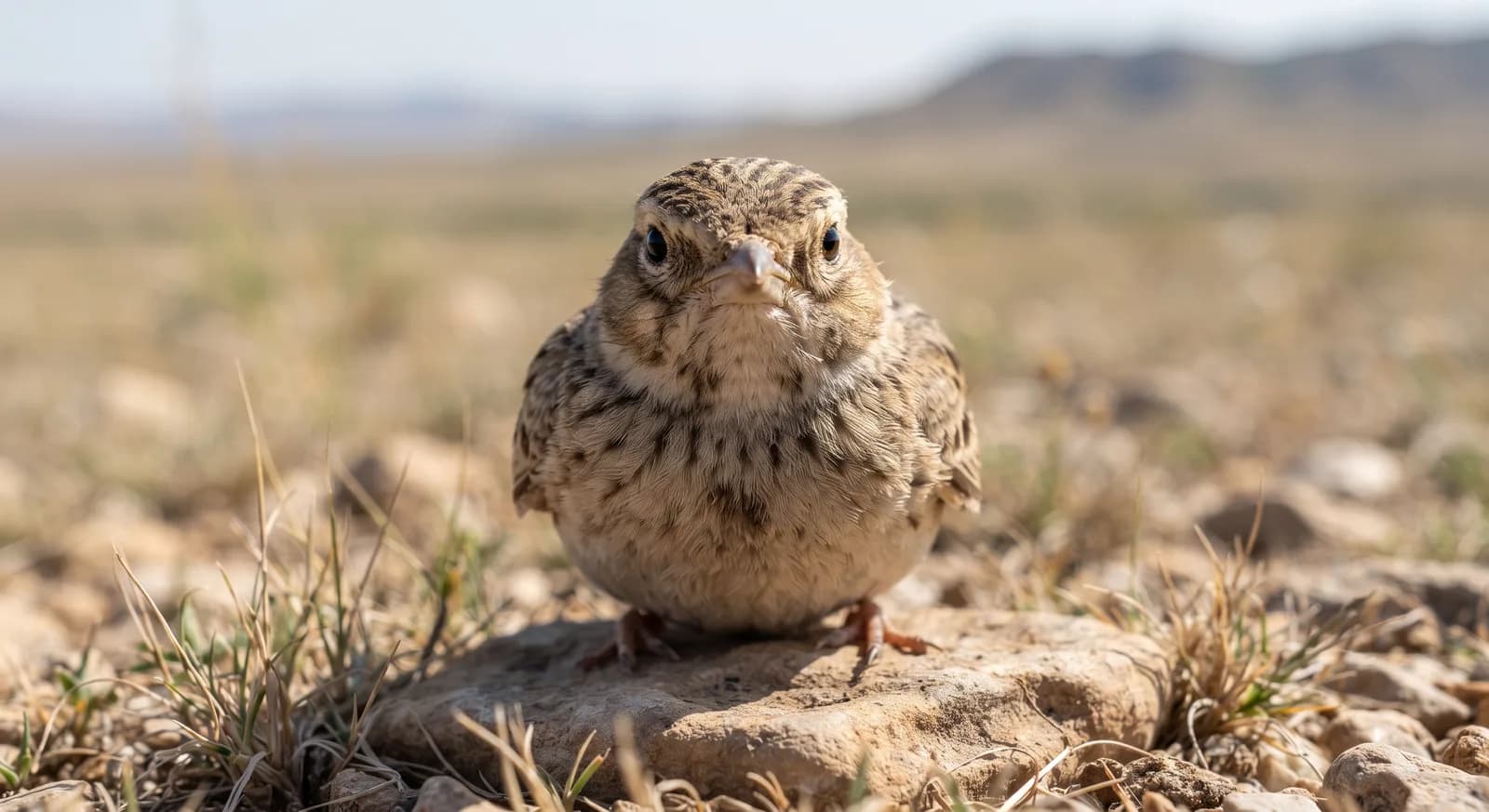
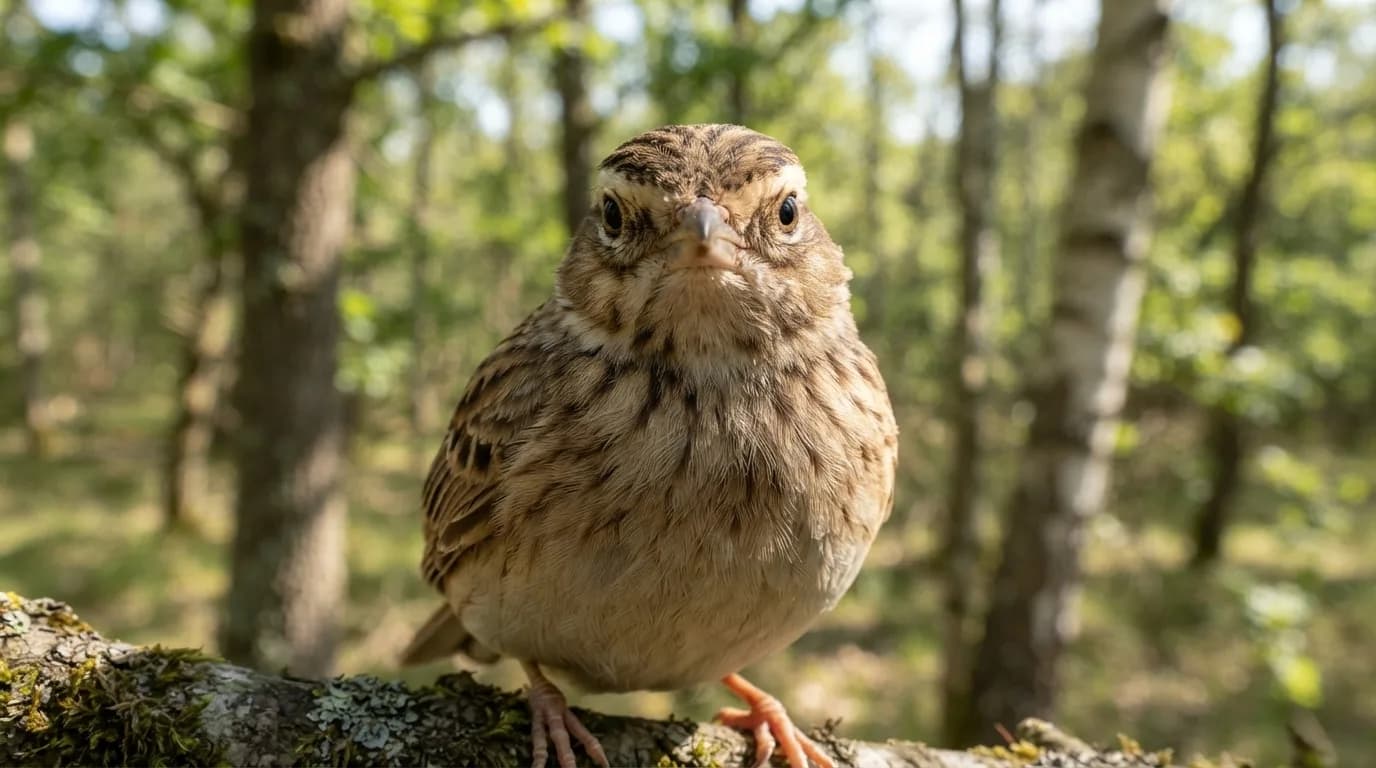
The smallest of our larks and the one most tied to woodland. A brown back with black bars, a barred crown, reddish cheeks and two whitish supercilia that meet on the nape. Its tail is very short and in flight it shows a black-and-white patch on the edge of the wing.

Weight

24 kg – 35 kg

Size

13.5 cm – 15 cm

Life expectancy

5 years
Diet

Omnivore

Combines animal and plant food depending on availability.

Activity

Diurnal

Active mainly during the day.

Social structure

In pairs

Usually lives in pairs, sometimes for life.

Sighting difficulty

Easy

Estimated population

The European breeding population is estimated at between 4,290,000 and 9,130,000 mature individuals according to the 2021 European Red List of Birds

Temperate forestGrassland
46countries190parks4same family

AI-generated images: illustrations, not photographs.

Fun facts

  • GeneralIts wistful falling song can be heard even at night.
  • Its song, which Lars Svensson described as sweet though wistful, is the origin of its scientific name (Lullula), of its French name (alouette lulu) and of almost all its Iberian folk names: tutuvía, cutuvía, titivío, tantararira.
  • It is the lark that perches in trees most, hence the epithet arborea.
  • It can benefit from forest thinning and from fires, but it is harmed by agricultural intensification and by the abandonment of the dehesas.

Life cycle and biology

Skeleton type
Vertebrate - internal bony skeleton (bird)
Habitat and environment
Pine-wood clearings, heath and dehesa
Birth weight
Altricial: born blind, naked or with sparse down and entirely dependent
Size at birth
Altricial: born blind, naked or with sparse down and entirely dependent
Sexual maturity
1 year
Gestation / incubation
12-15 days, by the female. The chicks fledge at 10-13 days
Litter / clutch size
2-6 white to olive eggs speckled with reddish brown, with one or two clutches between March and July. It nests in a scrape on the ground sheltered by a tussock

Sources consulted: SEO/BirdLife (ficha y III Atlas de las aves en época de reproducción en España); IUCN Red List; Asturnatura; Serrano-Davies y Pérez-Granados 2022, III Atlas; Lista Roja Europea de Aves 2021; Carrascal y Palomino 2008; Tellería, Asensio y Díaz 1999

Where to find it

Best time: From March to July, when the male sings in flight, spiralling upwards and then dropping in a dive with its wings closed

Loading map…

Where to see it

Parks and dive sites where this species has been documented — showing 10 of 190.

Related species

Other species in the catalogue with the most in common with Woodlark — same habitat, park, country, tags or family.

Same taxonomic family
Shares a park
Shares a park

Keep exploring

Based on what we already know about woodlark.

Comments

Share an experience, a fun fact or a tip for seeing the woodlark.

Be the first to comment.

See full glossary
This page in other languages: Español · Deutsch · Français · Português · Italiano

The pins mark the parks where its presence is documented.

See its range on the interactive map→
Gran ParadisoItaly
VanoiseFrance
Hohe TauernAustria
BerchtesgadenGermany
Stelvio (Stilfserjoch)Italy
EcrinsFrance
MercantourFrance
TriglavSlovenia
Picos de EuropaSpain
Sierra de las NievesSpain
See all 190 parks
Calandra LarkLeast Concern

Calandra Lark

Melanocorypha calandra

Least Concern

Eurasian Skylark

Alauda arvensis

Least Concern

Crested Lark

Galerida cristata

Greater Short-toed LarkLeast Concern

Greater Short-toed Lark

Calandrella brachydactyla

Least Concern

Eurasian Collared Dove

Streptopelia decaocto

Least Concern

Black-bellied Sandgrouse

Pterocles orientalis

CountriesSpain
ParksGran ParadisoItaly
TagsOmnivore
Omnivore
Diurnal
In pairs
Bird
Temperate forest
Grassland

Europe40

Asia5

Africa1

Spain
Poland
Italy
France
Germany
Greece
Albania
Andorra
Austria
Belarus
Belgium
Bosnia and Herzegovina
Bulgaria
Croatia
Czechia
Denmark
Estonia
Finland
France
Germany
Greece
Hungary
Ireland
Italy
Kosovo
Latvia
Liechtenstein
Lithuania
Luxembourg
Moldova
Montenegro
Netherlands
North Macedonia
Norway
Poland
Portugal
Romania
San Marino
Serbia
Slovakia
Slovenia
Spain
Sweden
Switzerland
Ukraine
United Kingdom
Armenia
Azerbaijan
Georgia
Russia
Türkiye
Morocco