One of the 2 mayflies on WAnimals
Insects · Ephemeroptera · Ephemeridae
Green Drake
Ephemera danica
It has not yet been assessed against the IUCN criteria. See full glossary
A large mayfly with translucent wings, dark venation and three long tail filaments. Its mouthparts are not functional: the adult does not feed. In the subimago stage the wings are matt and yellowish with brown veins, and the front legs and the tail filaments are noticeably shorter than in the imago.
Size
1.5 cm – 2.5 cm
Diet
Detritivore
Feeds on dead organic matter as it decomposes.
Activity
Diurnal
Active mainly during the day.
Social structure
Solitary
Lives and hunts alone, joining others only to breed.
Sighting difficulty
Unknown
Fun facts
- It belongs to the only insect order that passes through an intermediate winged stage, the subimago: it emerges from the water with wings and able to fly, but is not yet sexually mature and must moult once more.
- Together with stoneflies and caddisflies it forms the so-called "big three" of water-quality assessment: its presence indicates clean water and its disappearance, pollution.
- Mayflies, dragonflies and damselflies are the most primitive winged insects alive: they cannot fold their wings over the abdomen, a trait inherited from the Carboniferous.
- The adult does not feed: its mouthparts are vestigial and it lives four days at most, which is where the genus name Ephemera comes from.
- The proportion is extreme: the nymph spends one or two years, sometimes three, buried in the gravel filtering detritus, in order to fly for barely a few days.
- It is the only insect order that moults once already winged: a dull-winged subimago leaves the water and moults again within hours to give the final imago. Anglers call them the dun and the spinner.
- The female flies just above the water and taps the surface with her abdomen to lay her eggs; when she has finished she falls into the water and dies.
- It is sensitive to pollution, so its presence indicates good water quality.
Life cycle & biology
- Skeleton type
- Invertebrate - chitin exoskeleton (insect)
- Habitat & environment
- Rivers and streams with gravel beds, where the nymphs dig tunnels and filter organic detritus before emerging in spring into the shallows
- Litter / clutch size
- The female lays her eggs directly into the water, sometimes dying in the process
Sources consulted: Wikipedia (Ephemera danica); Alba-Tercedor 1990, Life Cycles and Ecology of Some Species of Ephemeroptera from Spain; Brittain 1982, Annual Review of Entomology 27; Revista IDE@-SEA (Orden Ephemeroptera)
Where to find it
See its range on the interactive mapBest time: Mainly in May and June, though adults are about between April and November
Where to watch it
Parques y spots de buceo donde se ha documentado esta especie — se muestran 10 de 167 documentados.
Related species
Other species in the catalogue with the most in common with Green Drake — same habitat, park, country, tags or family.
Four-Spotted Chaser
Libellula quadrimaculata
Beautiful Demoiselle
Calopteryx virgo
Common Clubtail
Gomphus vulgatissimus
Common Spreadwing
Lestes sponsa
Broad Scarlet
Crocothemis erythraea
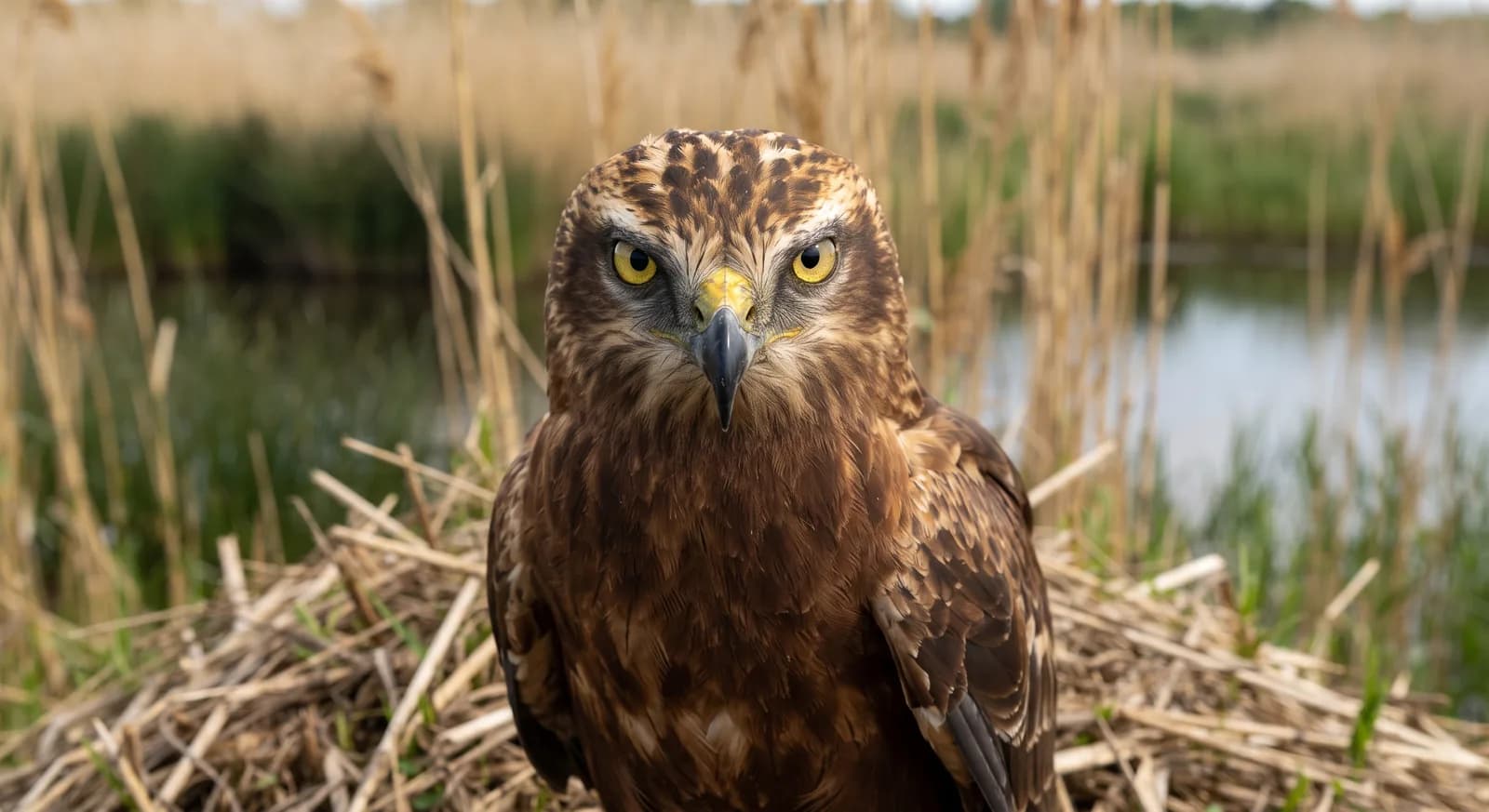 Least Concern
Western Marsh Harrier
Circus aeruginosus
Keep exploring
Based on what we already know about green drake.
Comments
Share an experience, a fun fact or a tip for seeing the green drake.
Be the first to comment.