One of the 17 toads on WAnimals
Amphibians · Anura · Bufonidae
Natterjack Toad
Epidalea calamita
The species is abundant and widely distributed; it faces no significant short-term risk. See full glossary
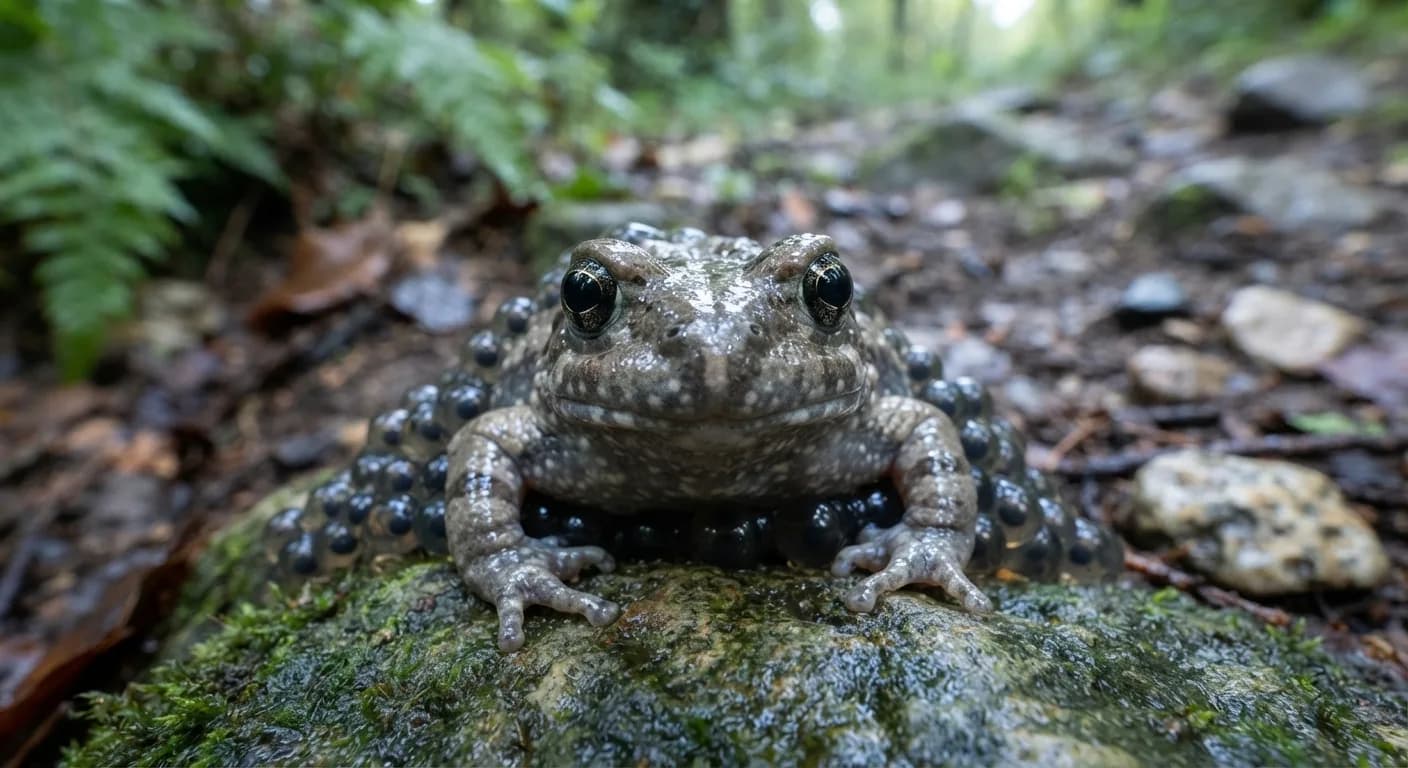
It differs from other European toads in running rather than hopping, thanks to its relatively short legs, and in the striking yellow stripe down its back.
Weight
4 g – 19 g
Size
6 cm – 9.5 cm
Lifespan
10 years
Diet
Insectivore
Feeds mainly on insects and other invertebrates.
Activity
Nocturnal
Active mainly at night.
Social structure
Solitary
Lives and hunts alone, joining others only to breed.
Sighting difficulty
Easy
Fun facts
- Its extraordinarily loud night call carries as far as 2 km.
- It feeds on ants and other small invertebrates.
- It lives in sandy coastal dunes, heathland and open wetlands across much of Europe.
- It is the only toad native to Ireland.
- It runs rather than hops, which is unusual for a toad.
- Its mating call carries over a kilometre.
Life cycle & biology
- Skeleton type
- Vertebrate - internal bony skeleton (amphibian)
- Habitat & environment
- Sandy coastal dunes, heathland and open wetlands across much of Europe
- Birth weight
- Born as a tadpole on hatching from the egg
- Size at birth
- Born as a tadpole on hatching from the egg
- Sexual maturity
- 3-4 years
- Gestation / incubation
- 6-8 weeks to complete metamorphosis
- Litter / clutch size
- 1,500 to 7,500 eggs per clutch, laid in strings
Sources consulted: A-Z Animals; Froglife; Gonefroggin.com; Wikipedia (Natterjack toad); First Nature; Wildlife Trusts; PMC (histological study skin glands)
Where to find it
See its range on the interactive mapBest time: From March to June, on mild nights after rain, when the males call in chorus from freshly formed shallow pools.
Where to watch it
Parques y spots de buceo donde se ha documentado esta especie — se muestran 10 de 27 documentados.
Related species
Other species in the catalogue with the most in common with Natterjack Toad — same habitat, park, country, tags or family.
Green Toad
Bufotes viridis
Common Toad
Bufo bufo
Pygmy White-toothed Shrew
Suncus etruscus
American Bullfrog
Lithobates catesbeianus
Common Tree Frog
Hyla arborea
 Least Concern
Midwife Toad
Alytes obstetricans
Keep exploring
Based on what we already know about natterjack toad.
Comments
Share an experience, a fun fact or a tip for seeing the natterjack toad.
Be the first to comment.