One of the 15 flies on WAnimals
Insects · Diptera · Bombyliidae
Dark-edged Bee-fly
Bombylius major
It has not yet been assessed against the IUCN criteria. See full glossary
The dark-edged bee-fly is a fly of the family Bombyliidae, known as the bee flies. It is a Batesian mimic of bees. The female of Bombylius major flicks her eggs towards the entrances of the underground nests of solitary bees and wasps. After hatching, the larvae enter the nest and feed on the larvae they find there.
Size
up to 1.2 cm
Diet
Omnivore
Combines animal and plant food depending on availability.
Activity
Diurnal
Active mainly during the day.
Social structure
Solitary
Lives and hunts alone, joining others only to breed.
Sighting difficulty
Unknown
Fun facts
- It is a kleptoparasite: in mid-flight it flicks its eggs towards the entrances of solitary bee nests, and the larvae that hatch devour the provisions and the bee's own larva.
- Its proboscis is rigid and cannot be folded away, so it carries it out in front like a lance, although it is completely harmless and does not sting.
- Its hovering flight, with the legs dangling and the wings almost invisible, is one of the most recognisable sights of early spring.
- It looks like a furry bumblebee but is a fly, and its long rigid proboscis, always held stretched out in front, gives it away: it does not sting, it only sips nectar.
- It hovers in front of the flower, legs dangling, and drinks without ever quite landing.
- Its larva is a parasite of the nests of solitary bees, and the female has a remarkable method for reaching them: she hovers over the nest entrance and flicks her eggs in mid-flight, like someone throwing darts, without landing.
- To do so she first gathers sand or dust in a chamber of her abdomen and coats the eggs with it, giving them weight so that the throw is accurate and the wind does not carry them off.
- The newly hatched larva enters the cell and devours the bee larva and its provisions.
- It is one of the first insects to be seen flying in spring, and an important pollinator of early flowers.
Life cycle & biology
- Skeleton type
- Invertebrate - chitin exoskeleton (insect)
- Habitat & environment
- Forest edges, gardens and sunny banks with solitary bee nests
Sources consulted: https://es.wikipedia.org/wiki/Bombylius_major
Where to find it
See its range on the interactive mapBest time: From March to May, on the first flowers of the year
Where to watch it
Parques y spots de buceo donde se ha documentado esta especie — se muestran 10 de 79 documentados.
Related species
Other species in the catalogue with the most in common with Dark-edged Bee-fly — same habitat, park, country, tags or family.
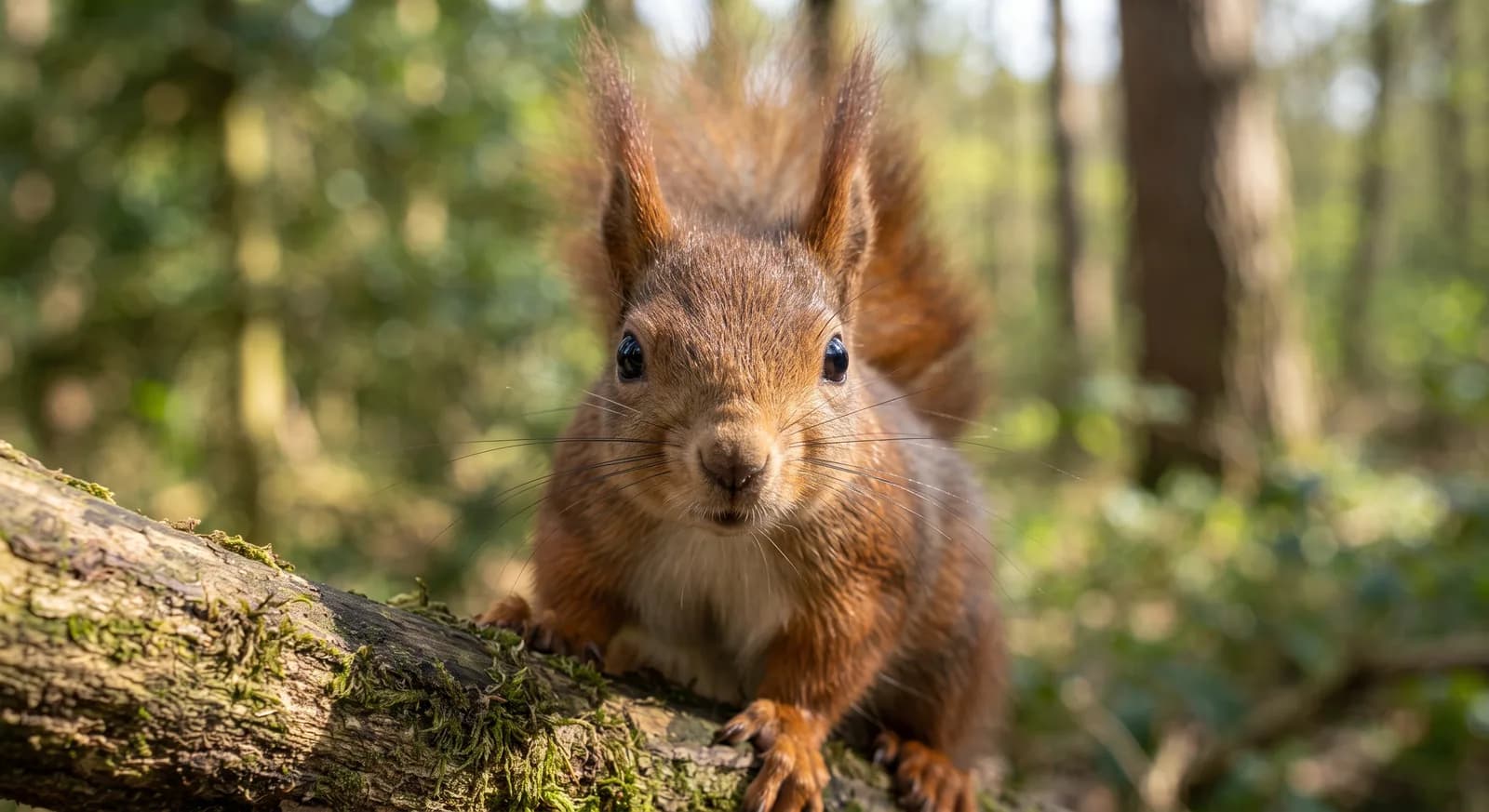 Least Concern
Eurasian Red Squirrel
Sciurus vulgaris
Eastern Gray Squirrel
Sciurus carolinensis
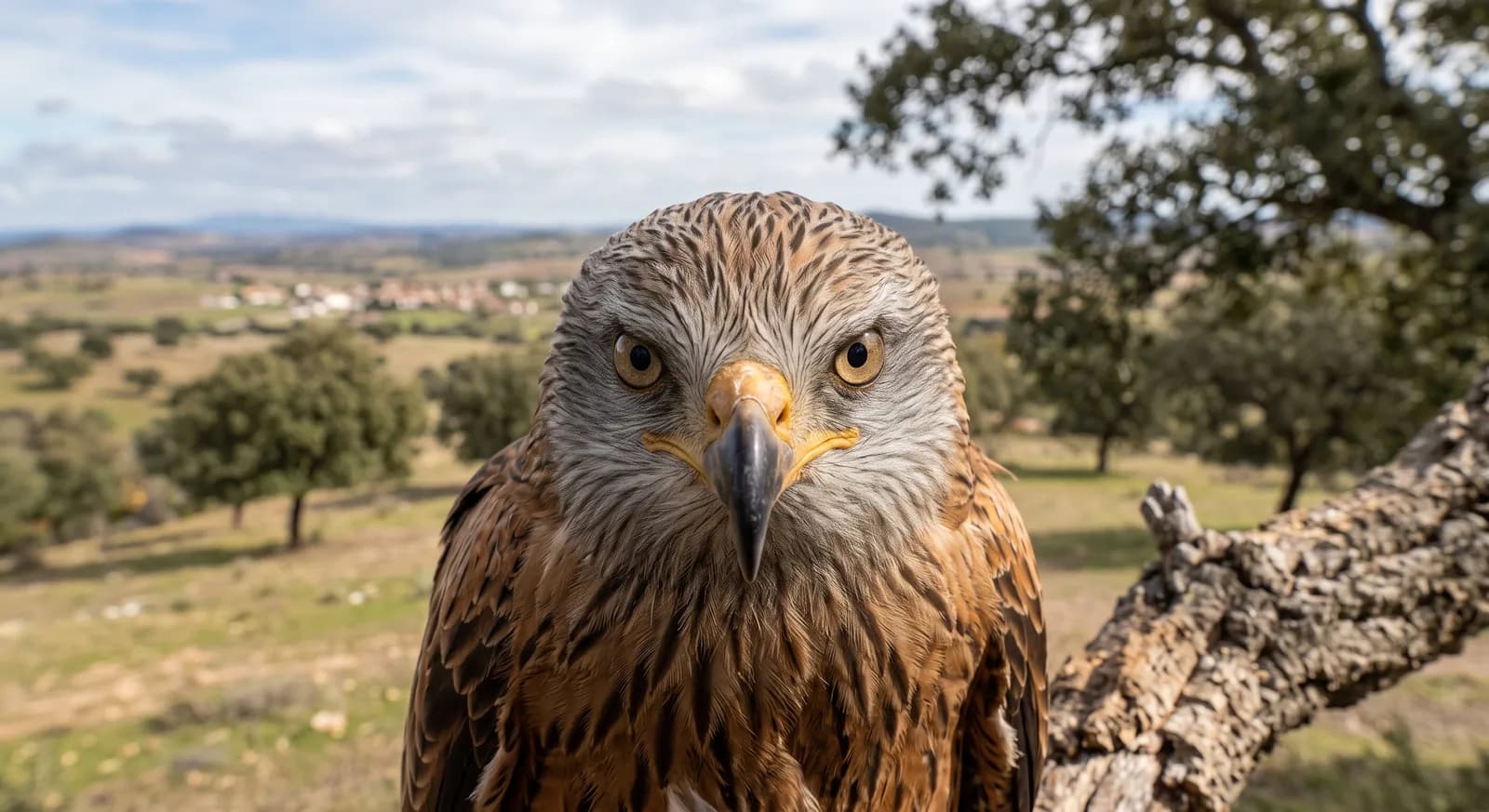 Least Concern
Red Kite
Milvus milvus
Great Spotted Woodpecker
Dendrocopos major
Eurasian Jay
Garrulus glandarius
Common Blackbird
Turdus merula
Keep exploring
Based on what we already know about dark-edged bee-fly.
Comments
Share an experience, a fun fact or a tip for seeing the dark-edged bee-fly.
Be the first to comment.