One of the 7 woodpeckers on WAnimals
Birds · Piciformes · Picidae
Middle Spotted Woodpecker
Dendrocoptes medius
The species is abundant and widely distributed; it faces no significant short-term risk. See full glossary
A medium-sized woodpecker, slightly smaller than the great spotted woodpecker, from which it is told apart by its rounder head, its shorter bill and above all by its entirely red crown. Its black moustachial stripe, broad and well marked, connects neither to the bill nor to the nape, a diagnostic feature against similar species. The belly has pinkish tones. Sexual dimorphism is slight: the male shows a somewhat brighter and more extensive red.
Weight
57 g – 59 g
Size
19.5 cm – 22 cm
Lifespan
9 years
Diet
Insectivore
Feeds mainly on insects and other invertebrates.
Activity
Diurnal
Active mainly during the day.
Social structure
In pairs
Usually lives in pairs, sometimes for life.
Sighting difficulty
Easy
Estimated population
The Spanish population is estimated at between 1,045 and 1,205 pairs, though SEO/BirdLife warns that the figure comes from incomplete, biased or extrapolated information gathered more than twenty years ago. The world population is around 140,000 pairs
Fun facts
- In 2019 it was recorded for the first time in the Aragonese Pyrenees, at Castejón de Sos; in 2021 a pair was confirmed breeding and in 2022 eleven territorial individuals were located in the Ésera valley. It is not known whether this is a relict population that had gone unnoticed or a recent colonisation.
- Unlike other woodpeckers it barely drums on trunks: it searches through the bark and uses its long tongue to pull grubs out of holes.
- Its nesting cavities later serve as shelter for other woodland species.
- In the Iberian Peninsula it lives at the south-western limit of its world range, spread across the Cantabrian Mountains, the Basque-Navarrese hills and the Pyrenees. The oak wood of Izki Natural Park, in Álava, holds one of its largest Iberian populations, with about 315 territories. In 2019 it appeared for the first time in the Aragonese Pyrenees, and in 2021 its first breeding there was confirmed.
Life cycle & biology
- Skeleton type
- Vertebrate - internal bony skeleton (bird)
- Habitat & environment
- A strict specialist of humid oak woods and mature deciduous forest with rough-barked oaks and trees more than 35 cm in diameter: Pyrenean oak, sessile oak, pedunculate oak and Portuguese oak woodland. In Spain it is confined to the Cantabrian Mountains, the Basque-Navarrese ranges and the Pyrenees, from the Ancares of Lugo to the Val d'Aran, in a very patchy way
- Gestation / incubation
- 12 days, with both parents incubating
- Litter / clutch size
- 4-7 white eggs, laid in May. The chicks are fed for 22-24 days until they make their first flights
Sources consulted: IUCN Red List; SEO/BirdLife (ficha, III Atlas: Ciudad y Robles 2022, y Libro Rojo 2021); Lorente y Palacio 2023, Pirineos 178; Ciudad, Fernández-García y Robles 2020 (POCTEFA Habios); Fernández-García 2016, Ornis Hungarica 24(1); Pasinelli 2003, BWP Update 5; Fombellida, García y Rollán 2009, Quercus 275; Asturnatura
Where to find it
See its range on the interactive mapBest time: All year round in mature oak woods in the north of the peninsula; it is resident
Where to watch it
Parques y spots de buceo donde se ha documentado esta especie — se muestran 10 de 137 documentados.
Related species
Other species in the catalogue with the most in common with Middle Spotted Woodpecker — same habitat, park, country, tags or family.
European Green Woodpecker
Picus viridis
 Least Concern
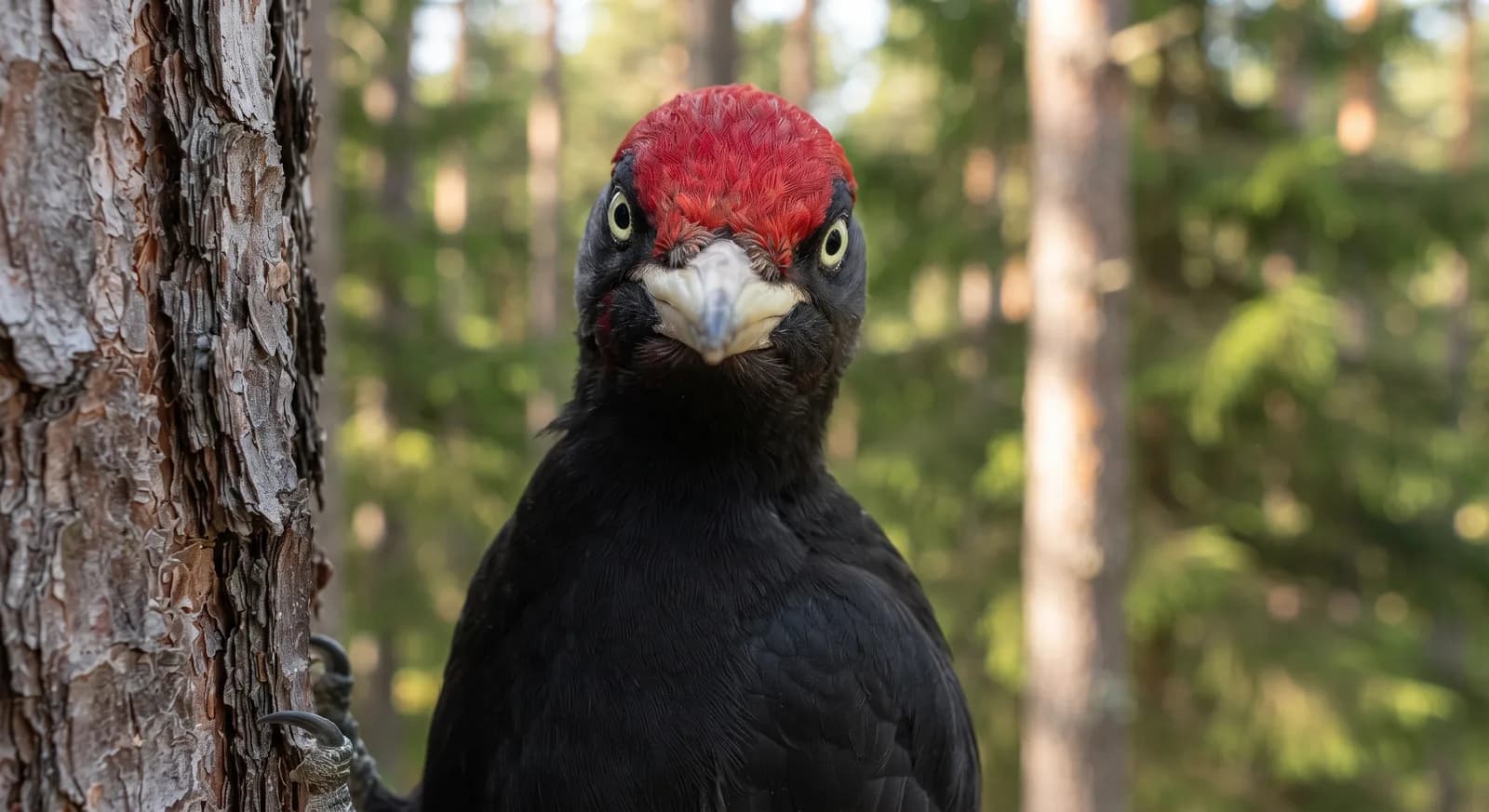
Black Woodpecker
Dryocopus martius
 Least Concern
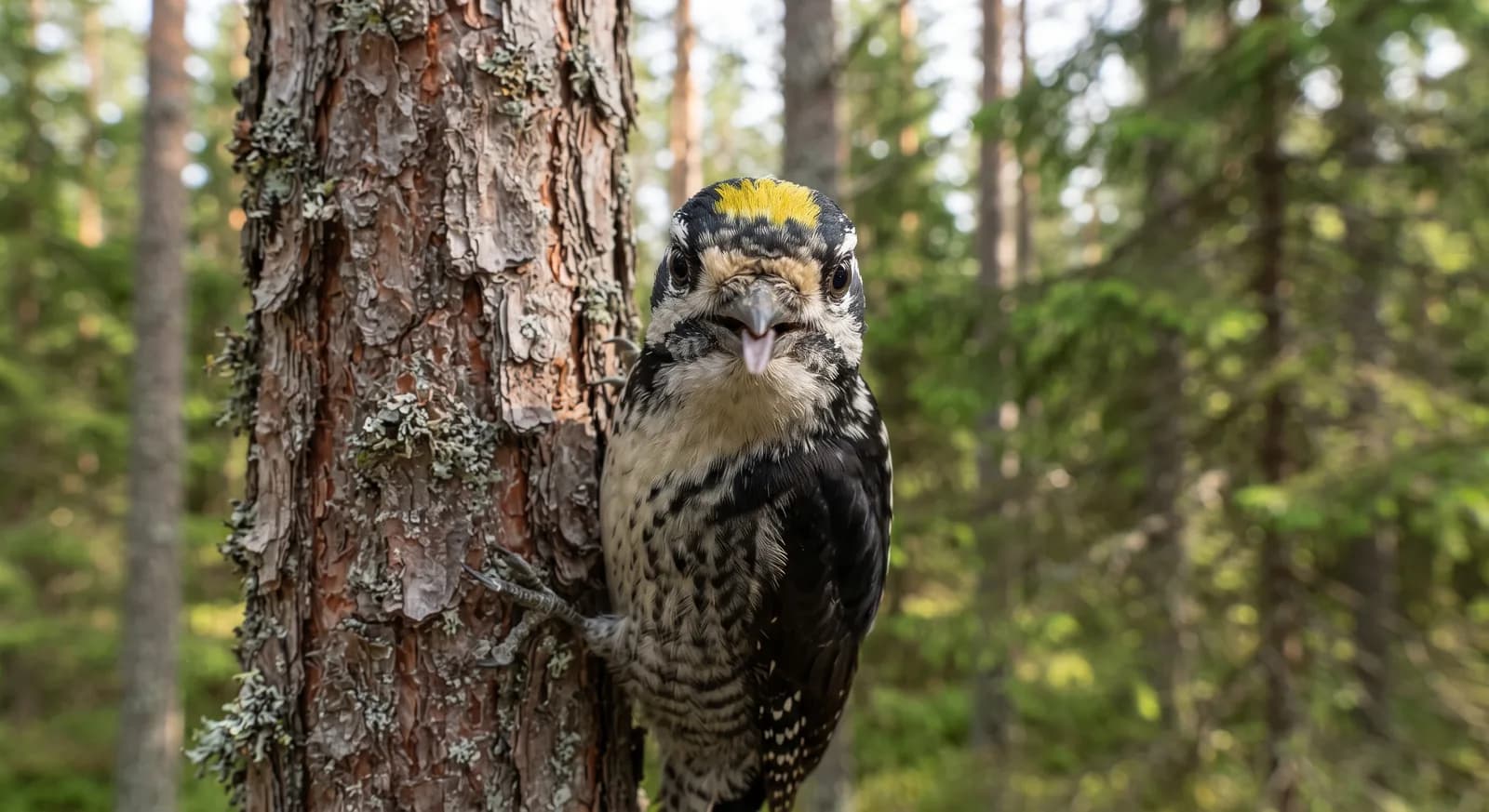
Eurasian Three-toed Woodpecker
Picoides tridactylus
Eurasian Wryneck
Jynx torquilla
Great Spotted Woodpecker
Dendrocopos major
Lesser Spotted Woodpecker
Dryobates minor
Keep exploring
Based on what we already know about middle spotted woodpecker.
Comments
Share an experience, a fun fact or a tip for seeing the middle spotted woodpecker.
Be the first to comment.