Skip to content
WAnimals
  • Map
  • Species
  • Parks
  • Diving
Log inCreate account
WAnimals

The guide for travellers and animal lovers: discover, plan and share your wild adventures around the world.

Discover wildlife

  • Species
  • Ecosystems
  • Glossary
  • Tags

Explore places

  • Map
  • Countries
  • Parks
  • Diving

Plan experiences

  • Guides

Learn

  • Blog

Resources

  • About us
  • How we build our profiles
  • Help centre
  • Contact
  • Install the app

Follow us

Account

  • Log in
  • Create account

© 2026 WAnimals. All rights reserved.

Terms of servicePrivacyCookiesLegal notice
MapSpeciesParksDiving
  1. Home
  2. Species
  3. Schistosome

Flukes · Diplostomida · Schistosomatidae

Schistosome

Schistosoma mansoni

Not Evaluated

It has not yet been assessed against the IUCN criteria.

Spotted something wrong?

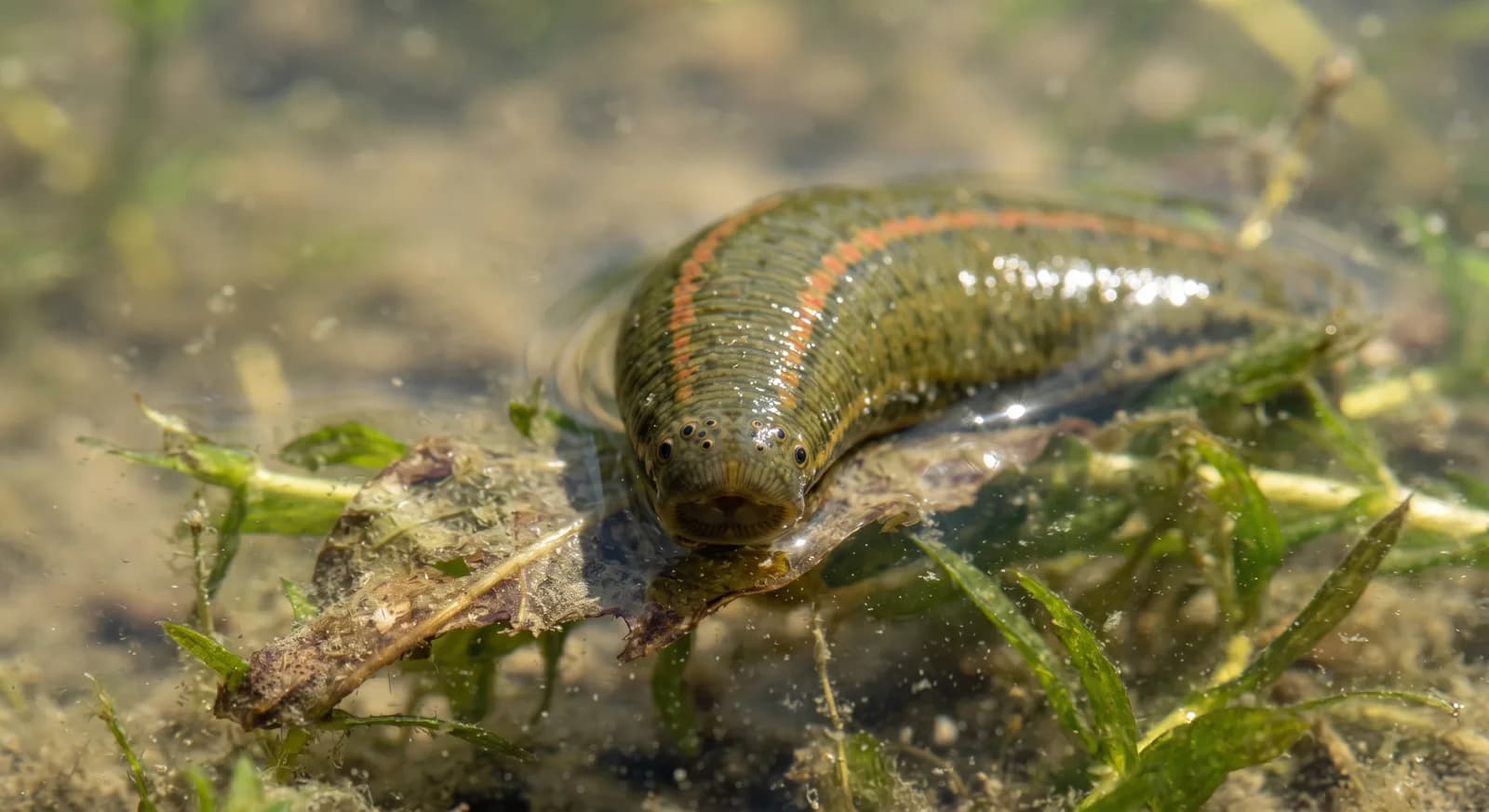
Schistosoma mansoni is a digenetic trematode, a parasitic flatworm of humans that causes the disease known as schistosomiasis or bilharzia. Schistosomes are told apart from other trematodes by having separate sexes.

Size

up to 1.5 cm

Life expectancy

10 years

Diet

Carnivore

Feeds mainly on other animals.

Social structure

Solitary

Lives and hunts alone, joining others only to breed.

Freshwater
58countries

Fun facts

  • GeneralThe bilharzia it causes affects over 200 million people.
  • Unlike almost all flatworms, it has separate sexes and forms permanent pairs: the broader male houses the female for life in a fold of his body called the gynaecophoric canal.
  • Its larvae pass straight through the skin of anyone entering infested fresh water, without having to be swallowed.
  • Its cycle depends on snails of the genus Biomphalaria, and controlling the disease means managing the snails and access to water as much as treating people.
  • Schistosomes are exceptional among flukes in having separate sexes and living in a permanent pair: the broader male houses the female in a fold of his body called the gynaecophoric canal, where she stays for life.
  • You do not have to drink the water to be infected: the larva penetrates the intact skin of anyone bathing, washing clothes or wading in contaminated fresh water.
  • The damage is caused not by the worm but by the eggs. Those trapped in the liver provoke an inflammatory reaction that ends in fibrosis and portal hypertension.
  • Schistosomiasis affects more than 200 million people and is, after malaria, the parasitic disease with the greatest socio-economic impact in the world.
  • It is treated with praziquantel, and control depends on sanitation and on reducing the populations of host snails.

Life cycle and biology

Skeleton type
Invertebrate - no rigid skeleton (hydrostatic skeleton)
Habitat and environment
A parasite: the veins of the abdomen; canals and lakes with snails

Sources consulted: Wikipedia (es): Schistosoma mansoni

Where to find it

Loading map…

Related species

Other species in the catalogue with the most in common with Schistosome — same habitat, park, country, tags or family.

Related to
Related to
Related to
Related to
Related to
Related to

Keep exploring

Based on what we already know about schistosome.
Share an experience, a fun fact or a tip for seeing the schistosome.
See full glossary
This page in other languages: Español · Deutsch · Français · Português · Italiano
See its range on the interactive map→
Medicinal LeechNear Threatened

Medicinal Leech

Hirudo medicinalis

Not Evaluated

Sheep Liver Fluke

Fasciola hepatica

Nile CrocodileLeast Concern

Nile Crocodile

Crocodylus niloticus

Least Concern

Water Opossum

Chironectes minimus

European OtterNear Threatened

European Otter

Lutra lutra

Amazon River DolphinEndangered

Amazon River Dolphin

Inia geoffrensis

CountriesAngola
TagsCarnivore
Carnivore
Solitary
Freshwater
Worm

Africa44

Asia9

South America3

North America2

Angola
Benin
Botswana
Brazil
Burkina Faso
Burundi
Angola
Benin
Botswana
Burkina Faso
Burundi
Cameroon
Central African Republic
Chad
Côte d’Ivoire
Democratic Republic of the Congo
Djibouti
Egypt
Equatorial Guinea
Eritrea
Eswatini
Ethiopia
Gabon
Gambia
Ghana
Guinea
Guinea-Bissau
Kenya
Lesotho
Liberia
Malawi
Mali
Mauritania
Mozambique
Namibia
Niger
Nigeria
Republic of the Congo
Rwanda
Senegal
Sierra Leone
Somalia
South Africa
South Sudan
Sudan
Tanzania
Togo
Uganda
Zambia
Zimbabwe
Cambodia
China
Indonesia
Iran
Iraq
Laos
Philippines
Saudi Arabia
Yemen
Brazil
Suriname
Venezuela
Dominican Republic
Saint Lucia