Skip to content
WAnimals
  • Map
  • Species
  • Parks
  • Diving
Log inCreate account
WAnimals

The guide for travellers and animal lovers: discover, plan and share your wild adventures around the world.

Discover wildlife

  • Species
  • Ecosystems
  • Glossary
  • Tags

Explore places

  • Map
  • Countries
  • Parks
  • Diving

Plan experiences

  • Guides

Learn

  • Blog

Resources

  • About us
  • How we build our profiles
  • Help centre
  • Contact
  • Install the app

Follow us

Account

  • Log in
  • Create account

© 2026 WAnimals. All rights reserved.

Terms of servicePrivacyCookiesLegal notice
MapSpeciesParksDiving
  1. Home
  2. Species
  3. Fall Armyworm Moth
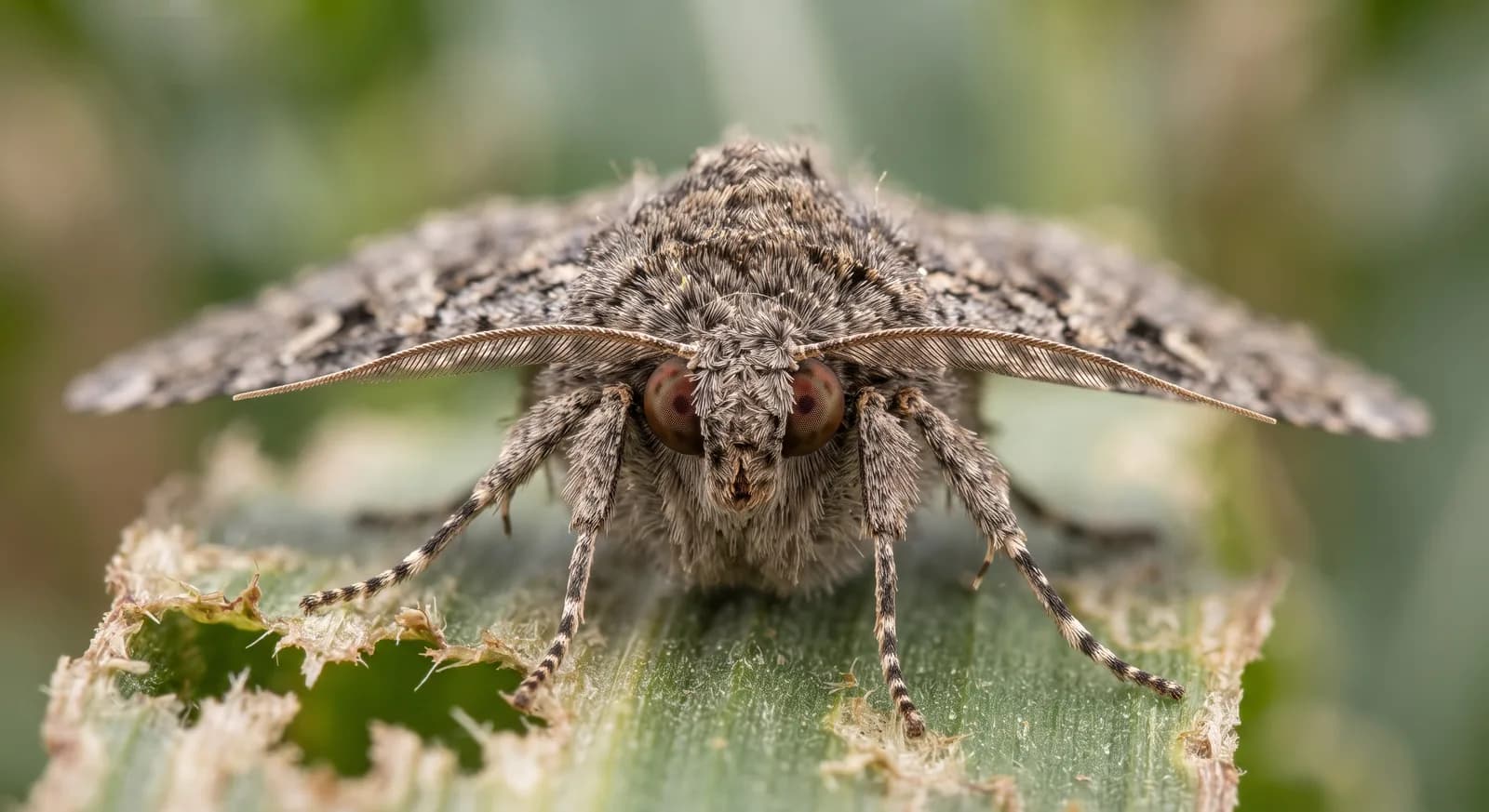
Fall Armyworm Moth (Spodoptera frugiperda)

Insects · Lepidoptera · Noctuidae

Fall Armyworm Moth

Spodoptera frugiperda

Not Evaluated

It has not yet been assessed against the IUCN criteria.

Spotted something wrong?

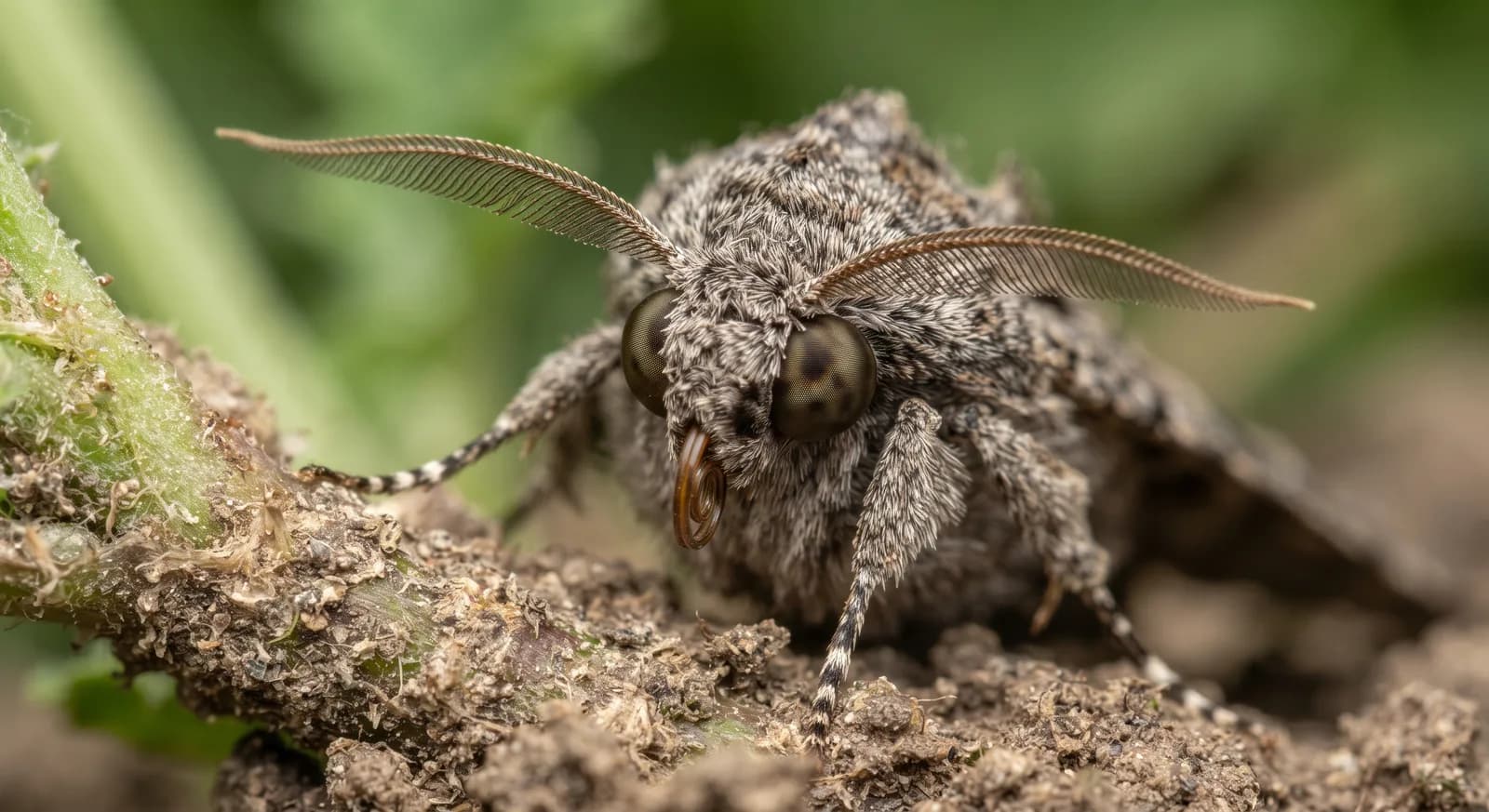
The fall armyworm is a ditrysian lepidopteran of the family Noctuidae, well known in farming for being a considerable pest that attacks various economically important crops such as maize and cotton.

Diet

Herbivore

Feeds mainly on plants.

Activity

Nocturnal

Active mainly at night.

Social structure

Solitary

Lives and hunts alone, joining others only to breed.
59countries1same family

AI-generated images: illustrations, not photographs.

Fun facts

  • The adults are extraordinary migrants: they can cover hundreds of kilometres in a single night on high-altitude winds, which explains the speed of their spread around the world.
  • It does not survive cold winters, so in North America it recolonises the continent each year from Florida and Texas.
  • Its caterpillars are cannibalistic when they compete inside the same whorl, which naturally limits how many complete their development on each plant.
  • It was first detected outside the Americas in Nigeria and Ghana in early 2016, and within a year it had colonised 47 African countries; today it is in more than seventy.
  • It flies some 100 km a night, which would let it completely infest a country the size of Senegal in under a week.
  • It feeds on more than 350 plant species, above all maize, sorghum and sugar cane.
  • The damage attributed to it in Africa alone is estimated at 9.4 billion dollars.
  • Newly hatched caterpillars burrow inside the plant, where contact insecticides cannot reach them; and the species develops resistance very quickly.

Life cycle and biology

Skeleton type
Invertebrate - chitin exoskeleton (insect)
Habitat and environment
Maize, sorghum, rice and pasture crops in warm regions
Birth weight
First-instar larva of about 0.003 g
Size at birth
Dome-shaped egg about 0.4 mm across; first-instar larva of 4.63 mm
Sexual maturity
Copulation takes place a few hours after emergence, mainly between 20:00 and 23:00; pre-oviposition period of 2-3 days
Gestation / incubation
The eggs hatch in 2-3 days, with a hatching rate of 80-87 %
Litter / clutch size
An average of 469 +/- 22 eggs per female and an observed maximum of 1,184; other studies record averages of 1,015 and maxima of 1,485 depending on temperature and host plant

Sources consulted: Wikipedia (es): Spodoptera frugiperda · Psyche (Marri et al. 2023) · PubMed 36153756 (fecundidad y longevidad a temperatura constante) · Psyche: A Journal of Entomology (Marri et al. 2023) · Iowa State University Extension, ficha Fall armyworm

Where to find it

Loading map…

Related species

Other species in the catalogue with the most in common with Fall Armyworm Moth — same habitat, park, country, tags or family.

Same taxonomic family
Related to
Related to
Related to
Related to
Related to

Keep exploring

Based on what we already know about fall armyworm moth.

Share an experience, a fun fact or a tip for seeing the fall armyworm moth.
See full glossary
This page in other languages: Español · Deutsch · Français · Português · Italiano
Grassland
See its range on the interactive map→
Turnip MothNot Evaluated

Turnip Moth

Agrotis segetum

Bare-nosed WombatLeast Concern

Bare-nosed Wombat

Vombatus ursinus

Near Threatened

Southern Hairy-nosed Wombat

Lasiorhinus latifrons

Least Concern

Ord's Kangaroo Rat

Dipodomys ordii

European HareLeast Concern

European Hare

Lepus europaeus

Common CockchaferNot Evaluated

Common Cockchafer

Melolontha melolontha

CountriesAnguilla
TagsHerbivore
Herbivore
Nocturnal
Solitary
Insect
Grassland

North America33

South America11

Africa6

Asia4

Europe4

Oceania1

Anguilla
Antigua and Barbuda
Argentina
Aruba
Australia
Bahamas
Anguilla
Antigua and Barbuda
Aruba
Bahamas
Barbados
Belize
Bermuda
British Virgin Islands
Canada
Cayman Islands
Costa Rica
Cuba
Curaçao
Dominica
Dominican Republic
Grenada
Guadeloupe
Guatemala
Haiti
Honduras
Jamaica
Martinique
Mexico
Nicaragua
Panama
Puerto Rico
Saint Kitts and Nevis
Saint Lucia
Saint Vincent and Grenadines
Trinidad and Tobago
Turks and Caicos Islands
U.S. Virgin Islands
United States
Argentina
Bolivia
Brazil
Chile
Colombia
French Guiana
Guyana
Paraguay
Suriname
Uruguay
Venezuela
Egypt
Ghana
Kenya
Nigeria
South Africa
Tanzania
China
India
Indonesia
Thailand
Greece
Italy
Portugal
Spain
Australia