Skip to content
WAnimals
  • Map
  • Species
  • Parks
  • Diving
Log inCreate account
WAnimals

The guide for travellers and animal lovers: discover, plan and share your wild adventures around the world.

Discover wildlife

  • Species
  • Ecosystems
  • Glossary
  • Tags

Explore places

  • Map
  • Countries
  • Parks
  • Diving

Plan experiences

  • Guides

Learn

  • Blog

Resources

  • About us
  • How we build our profiles
  • Help centre
  • Contact
  • Install the app

Follow us

Account

  • Log in
  • Create account

© 2026 WAnimals. All rights reserved.

Terms of servicePrivacyCookiesLegal notice
MapSpeciesParksDiving
  1. Home
  2. Species
  3. Turnip Moth
Turnip Moth (Agrotis segetum)

Insects · Lepidoptera · Noctuidae

Turnip Moth

Agrotis segetum

Not Evaluated

It has not yet been assessed against the IUCN criteria.

Spotted something wrong?

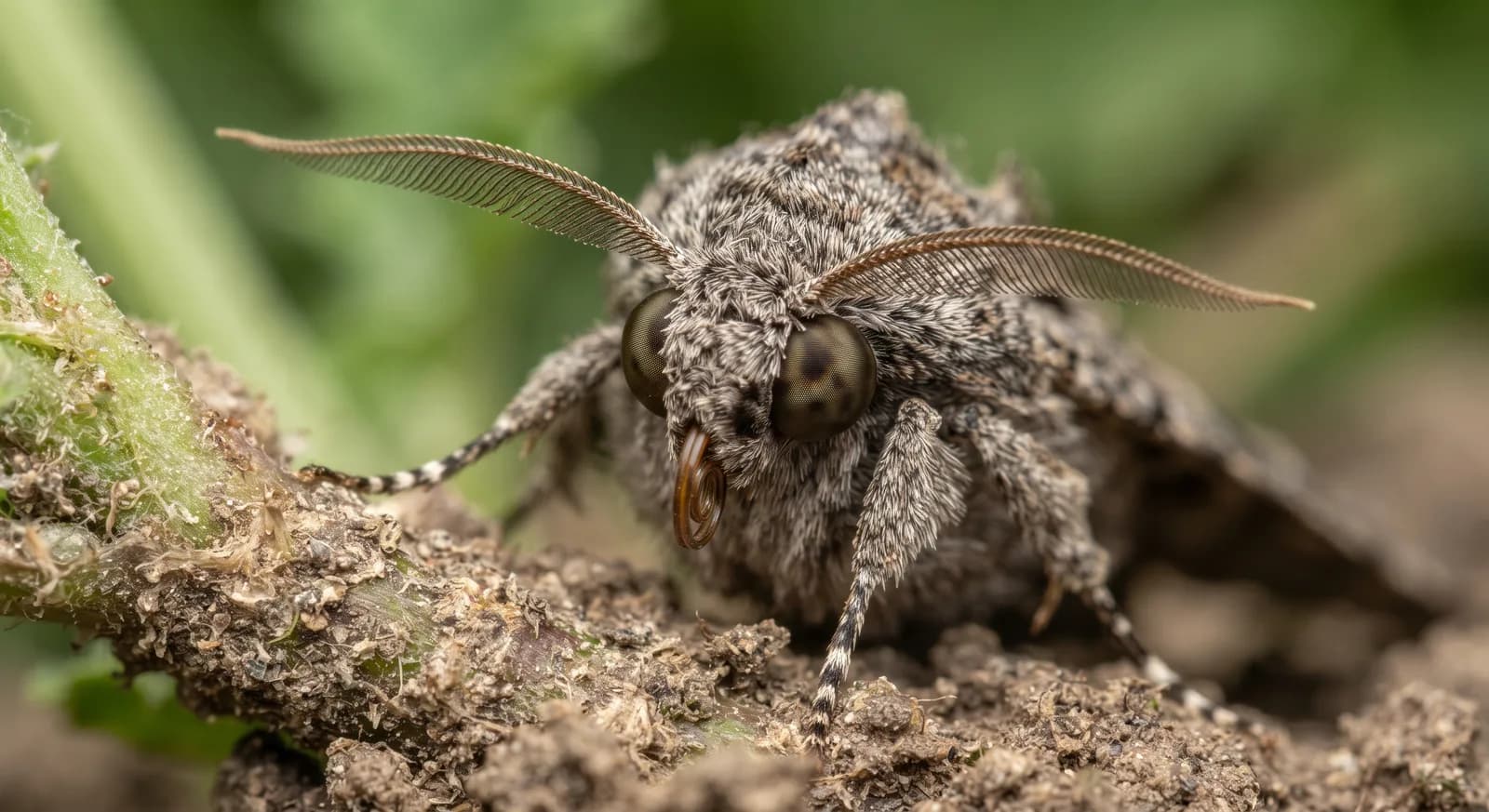
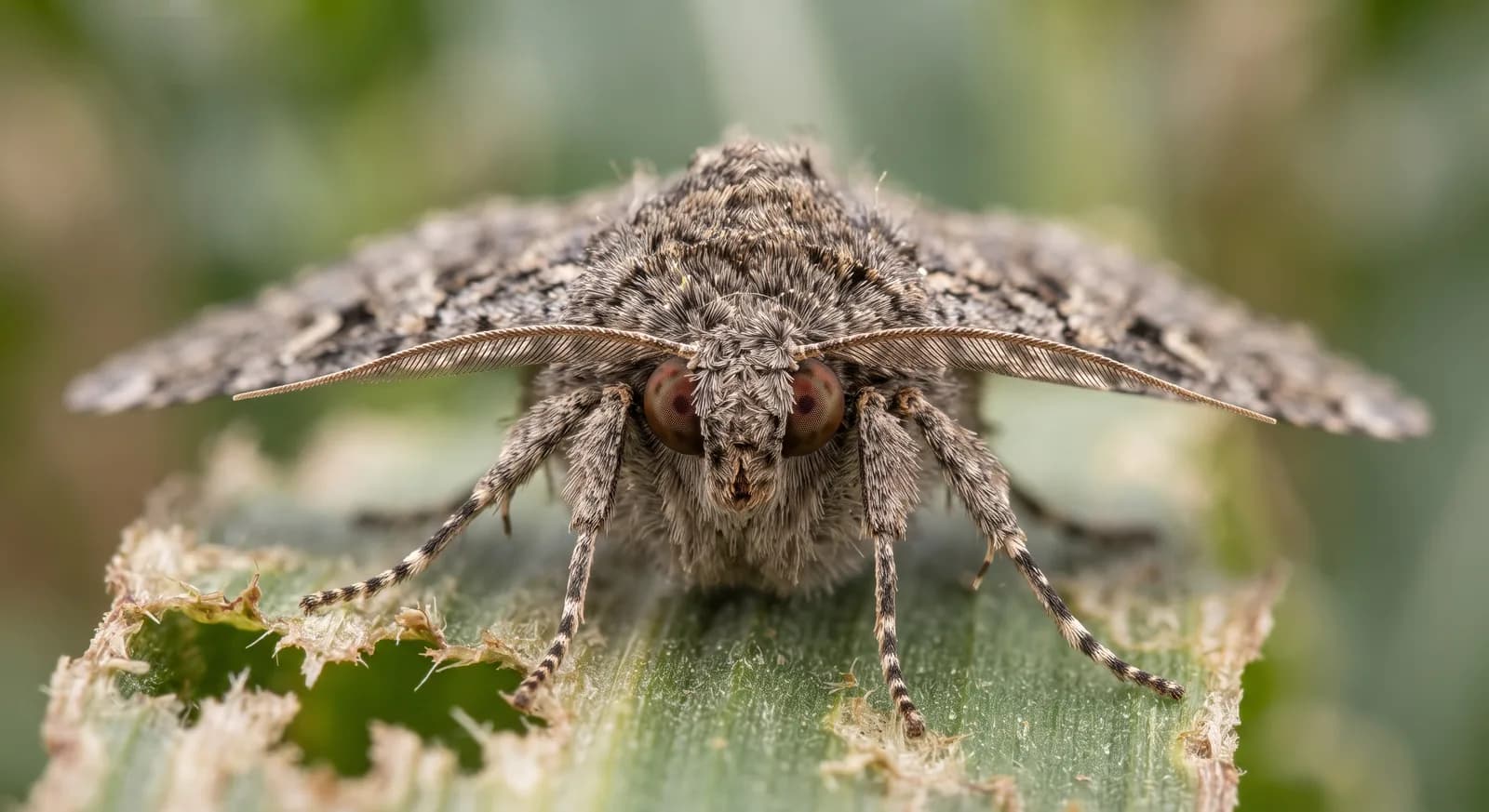
The turnip moth is a drab brown noctuid whose caterpillar spends the day buried in the soil and comes out at night to cut seedlings off at ground level. It is a classic pest of beet, potato, maize and vegetables across Europe.

Size

3.2 cm – 4.2 cm

Diet

Herbivore

Feeds mainly on plants.

Activity

Nocturnal

Active mainly at night.
Social structure

Solitary

Lives and hunts alone, joining others only to breed.

Grassland
54countries1same family

AI-generated images: illustrations, not photographs.

Fun facts

  • It does not devour the whole plant: it cuts it off at the base, so that a single caterpillar can ruin dozens of seedlings in a night while eating almost nothing.
  • The damage shows up as gaps in the crop rows, and the culprit is found curled up in the soil a few centimetres from the severed plant.
  • The caterpillar curls into a perfect C when uncovered, a defensive posture typical of soil-dwelling noctuids.
  • The caterpillar is known as a cutworm, and its damage is characteristic: it mows down seedlings at ground level during the night, cutting through the stem, and in the morning the grower finds the plant lying flat and apparently intact.
  • By day it stays buried beside the plant it has cut, curled into a C shape, which makes it hard to find.
  • It attacks practically any herbaceous crop: beet, maize, potato, vegetables and cereals.
  • It is migratory: the adults travel long distances, and northern European populations are renewed each year by arrivals from the south.
  • Control relies on pheromone traps to track the flights and decide when to treat, because the caterpillar is only vulnerable in its early stages.

Life cycle and biology

Skeleton type
Invertebrate - chitin exoskeleton (insect)
Habitat and environment
Arable crops, vegetable plots and disturbed soil
Size at birth
The larva reaches 40-50 mm when fully grown
Litter / clutch size
Several hundred eggs per female, spherical and strongly ribbed, laid in the soil or at the base of the host plants

Sources consulted: CABI Compendium · EPPO · Ministerio de Agricultura de España · Hebrew University of Jerusalem, ficha de plagas mediterraneas · Gianluca Doremi, ficha Agrotis segetum · Hantsmoths · iNaturalist, ficha Agrotis segetum · UKmoths, ficha Agrotis segetum · Gianluca Doremi

Where to find it

Best time: Double generation: the adults fly in May-June and again in August-September; the flights can start in April and go on until November

Loading map…

Related species

Other species in the catalogue with the most in common with Turnip Moth — same habitat, park, country, tags or family.

Same taxonomic family
Related to
Related to
Related to
Related to
Related to

Keep exploring

Based on what we already know about turnip moth.

Share an experience, a fun fact or a tip for seeing the turnip moth.
See full glossary
This page in other languages: Español · Deutsch · Français · Português · Italiano
See its range on the interactive map→
Fall Armyworm MothNot Evaluated

Fall Armyworm Moth

Spodoptera frugiperda

European HareLeast Concern

European Hare

Lepus europaeus

Common CockchaferNot Evaluated

Common Cockchafer

Melolontha melolontha

SwallowtailLeast Concern

Swallowtail

Papilio machaon

Great Green Bush CricketNot Evaluated

Great Green Bush Cricket

Tettigonia viridissima

Common Garden SnailNot Evaluated

Common Garden Snail

Cornu aspersum

CountriesAlbania
TagsHerbivore
Herbivore
Nocturnal
Solitary
Insect
Grassland

Europe41

Asia10

Africa3

Albania
Algeria
Andorra
Armenia
Austria
Azerbaijan
Albania
Andorra
Austria
Belarus
Belgium
Bosnia and Herzegovina
Bulgaria
Croatia
Cyprus
Czechia
Denmark
Estonia
Finland
France
Germany
Greece
Hungary
Ireland
Italy
Latvia
Liechtenstein
Lithuania
Luxembourg
Malta
Moldova
Monaco
Montenegro
Netherlands
North Macedonia
Norway
Poland
Portugal
Romania
Serbia
Slovakia
Slovenia
Spain
Sweden
Switzerland
Ukraine
United Kingdom
Armenia
Azerbaijan
Georgia
Iran
Israel
Kazakhstan
Lebanon
Russia
Syria
Türkiye
Algeria
Morocco
Tunisia