 Least Concern
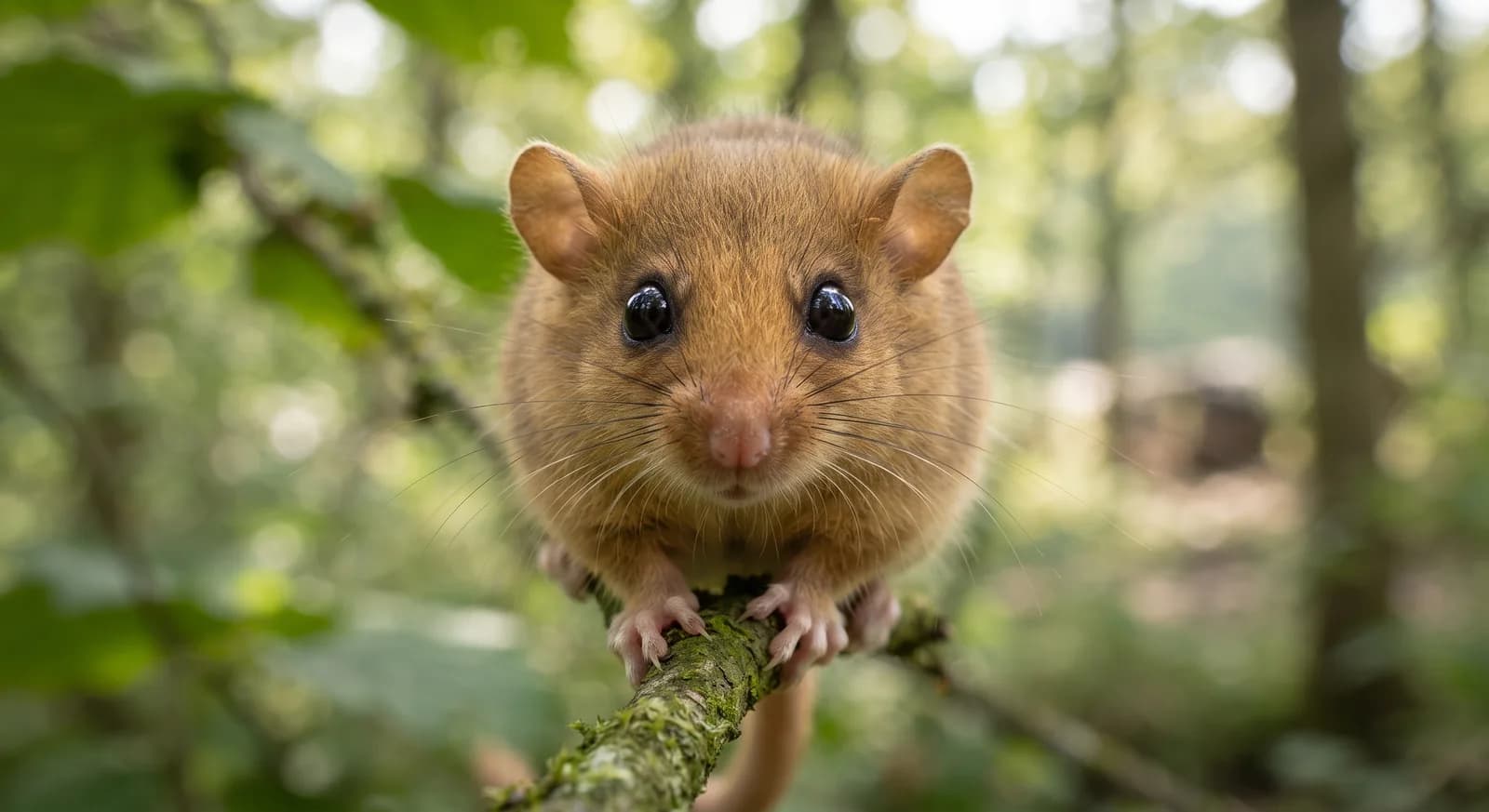
Fat Dormouse
Glis glis
Mammals · Rodentia · Muridae
Micromys minutus
The species is abundant and widely distributed; it faces no significant short-term risk.
The smallest rodent in Europe. It is told apart from a wood mouse by its blunt muzzle, its short ears and, above all, by its prehensile tail, a feature unique among European murids and the mark of a climbing animal.
Weight
6 g on average
Size
4 cm – 6 cm
Diet
Omnivore
Combines animal and plant food depending on availability.
Activity
Nocturnal
Active mainly at night.
Social structure
Solitary
Lives and hunts alone, joining others only to breed.
Sighting difficulty
Easy
Sources consulted: Nores 2003, Enciclopedia Virtual de los Vertebrados Españoles (MNCN-CSIC); Nores y Jardón 1981, Bol. Cien. Nat. IDEA 28; MITECO - Inventario Español de Especies Terrestres; SECEM (Galemys 15); IUCN Red List
Best time: From May to October, during the breeding season, when it climbs the stems and its nests are more visible
Parks and dive sites where this species has been documented — showing 10 of 69.
Other species in the catalogue with the most in common with Harvest Mouse — same habitat, park, country, tags or family.
Based on what we already know about harvest mouse.
Share an experience, a fun fact or a tip for seeing the harvest mouse.
Be the first to comment.
The pins mark the parks where its presence is documented.