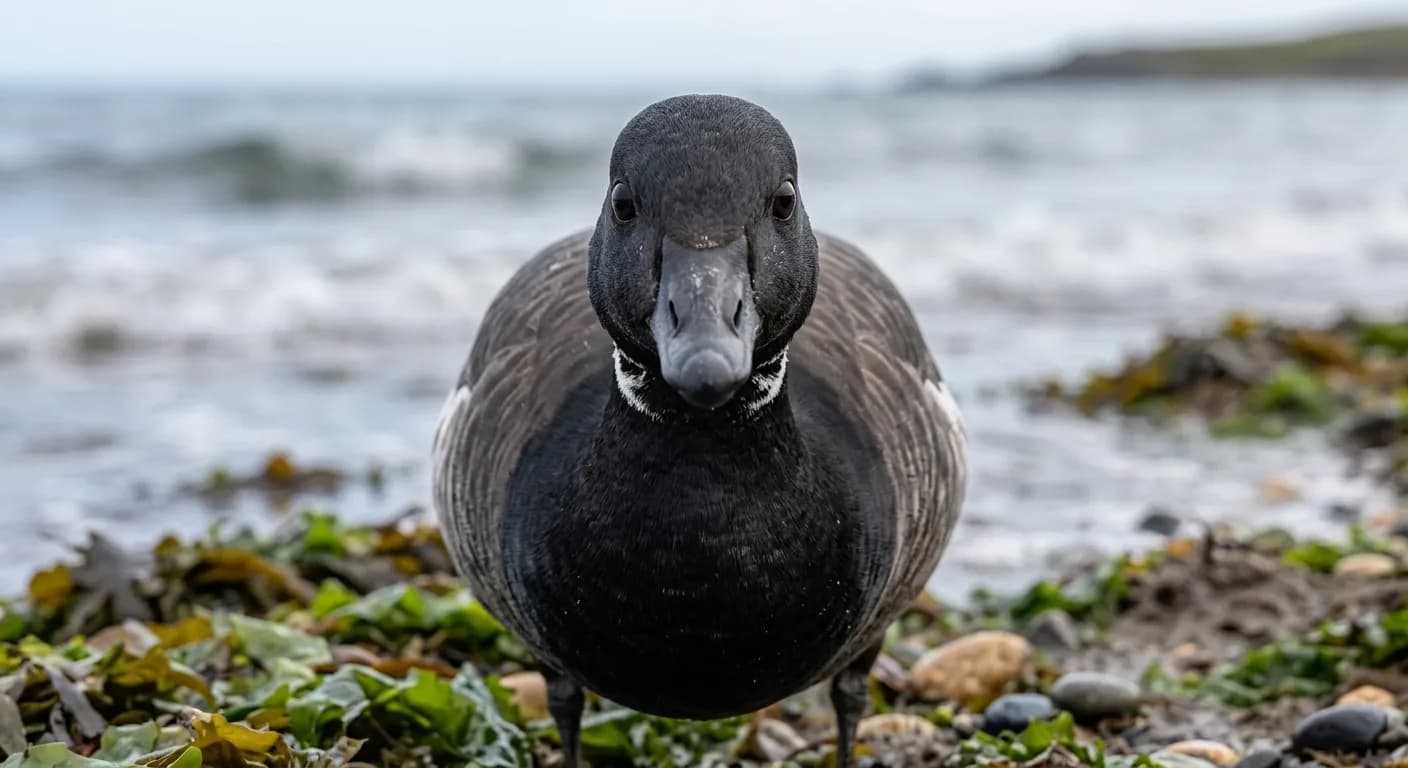
One of the 2 mergansers on WAnimals
Birds · Anseriformes · Anatidae
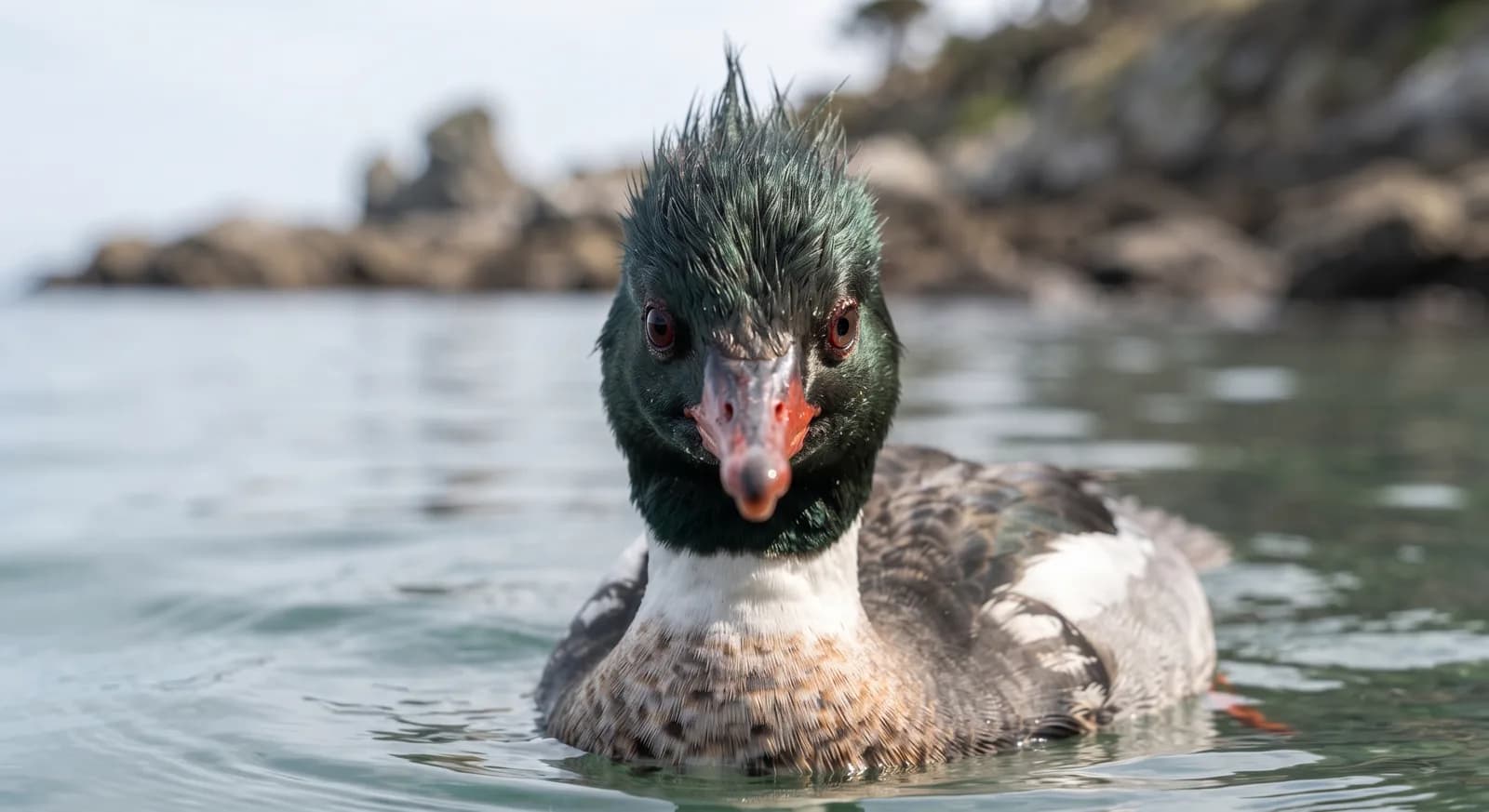
Mergus serrator
The species is abundant and widely distributed; it faces no significant short-term risk.
A medium-sized sea duck with a very long, narrow red bill serrated along the edges, and a characteristic crest of ruffled feathers that it shows in every plumage and at every age. The breeding male has a black head with a greenish sheen, a white collar and a mottled brown breast.
Weight
908 g – 1.1 kg
Size
52 cm – 58 cm
Life expectancy
9 years
Diet
Piscivore
Feeds mainly on fish.
Activity
Diurnal
Active mainly during the day.
Social structure
In pairs
Usually lives in pairs, sometimes for life.
Sighting difficulty
Easy
Estimated population
An average of about 300 wintering birds on the Iberian coasts, concentrated in Santoña, the Ría de Arousa, the Odiel marshes, the Mar Menor and the Ebro delta
AI-generated images: illustrations, not photographs.
Sources consulted: SEO/BirdLife (ficha y III Atlas de las aves en época de reproducción en España); IUCN Red List; Asturnatura; Romay Cousido y Justo Álvarez 2022, III Atlas; Vera y Giménez en SEO/BirdLife 2012; Craik, Pearce y Titman 2020, Birds of the World; De Juana y García 2015
Best time: From November to mid-April, peaking in midwinter
Parks and dive sites where this species has been documented — showing 10 of 21.
Other species in the catalogue with the most in common with Red-breasted Merganser — same habitat, park, country, tags or family.
Based on what we already know about red-breasted merganser.
Share an experience, a fun fact or a tip for seeing the red-breasted merganser.
Be the first to comment.
The pins mark the parks where its presence is documented.