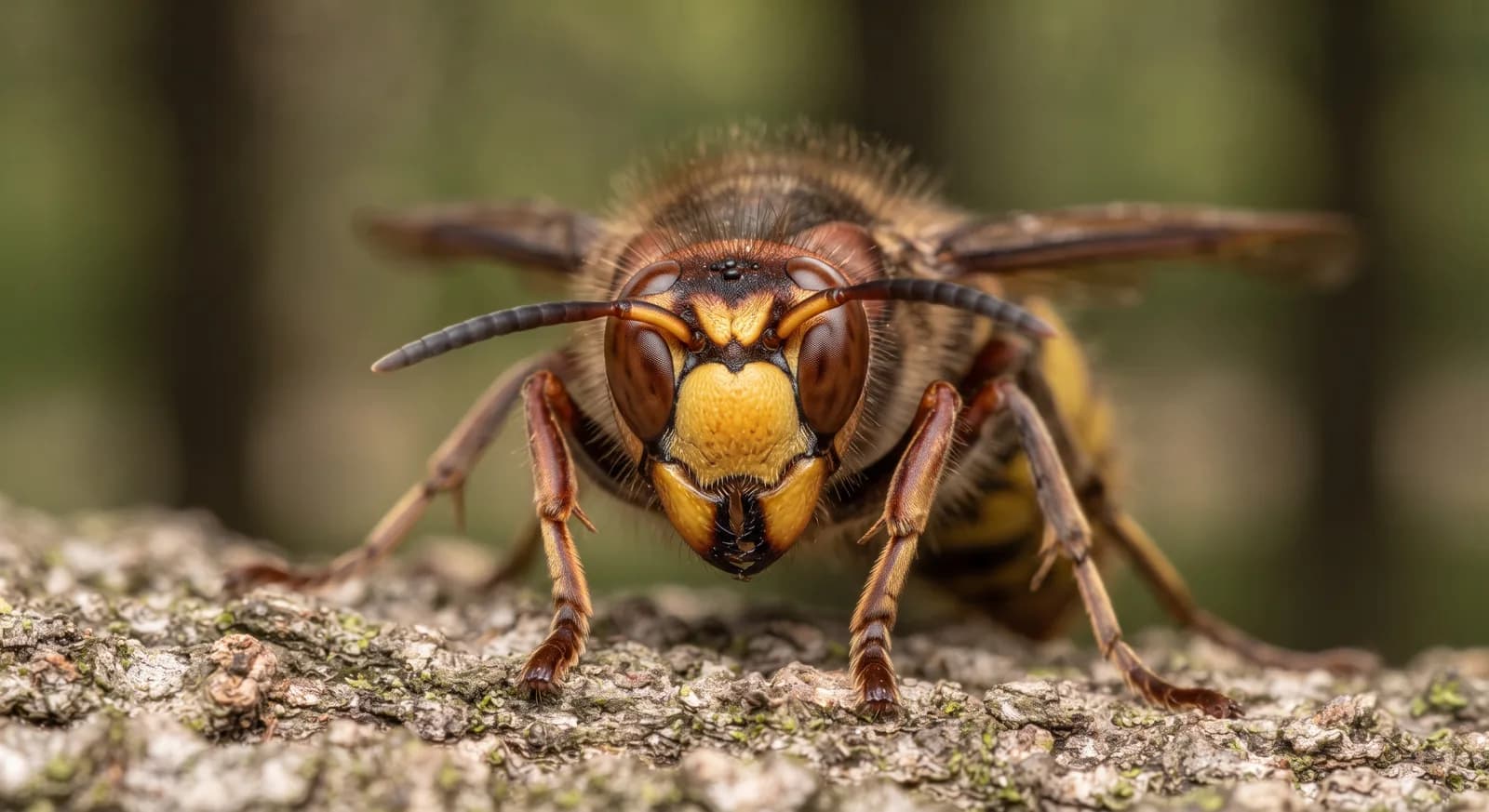
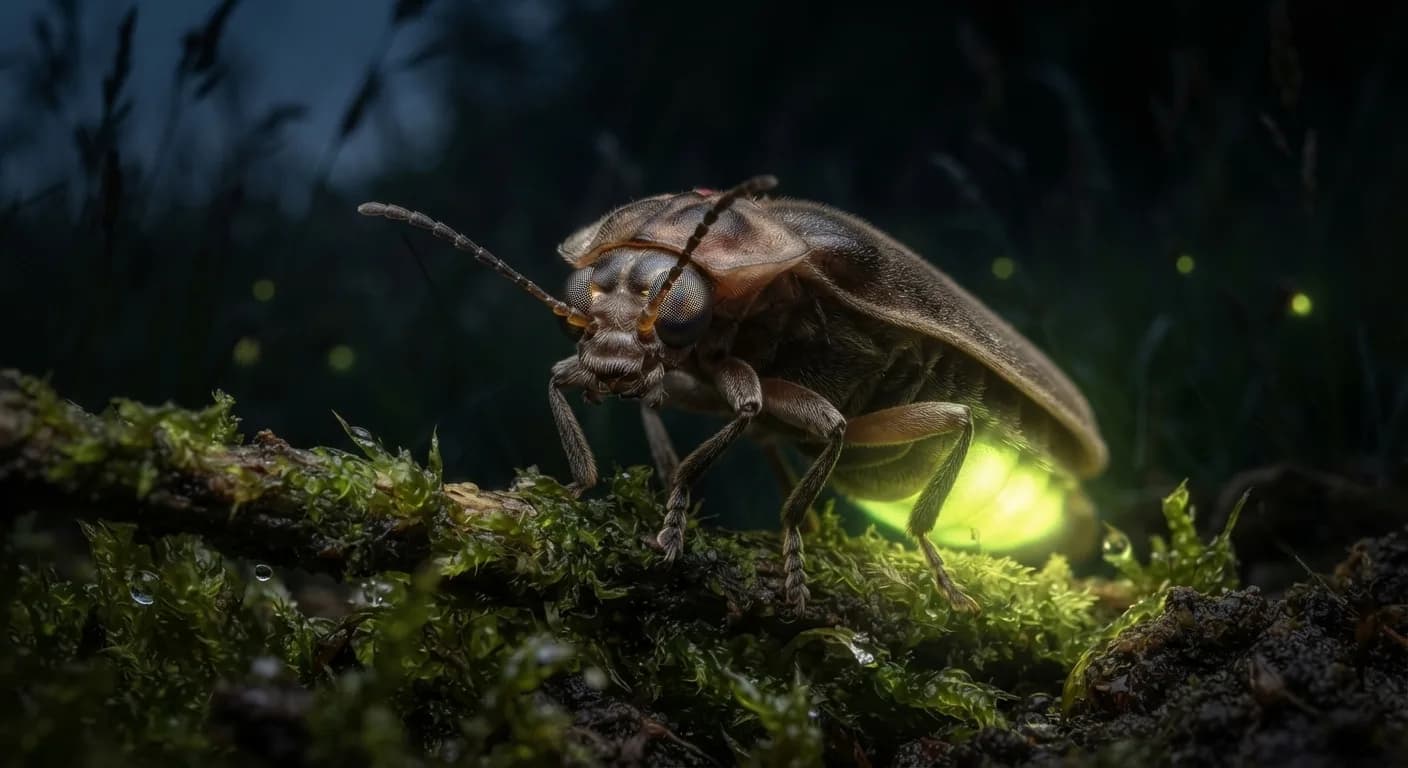
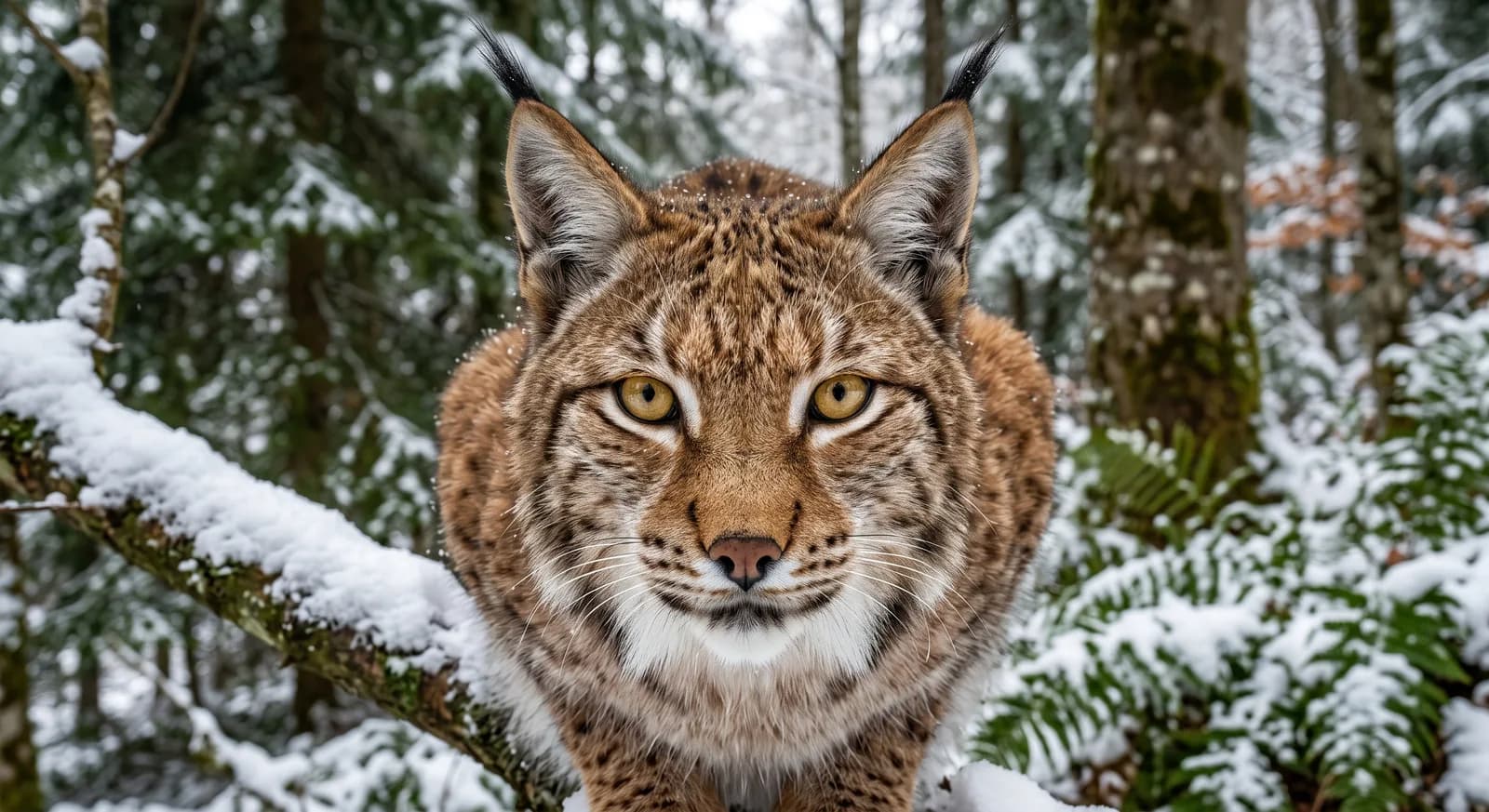
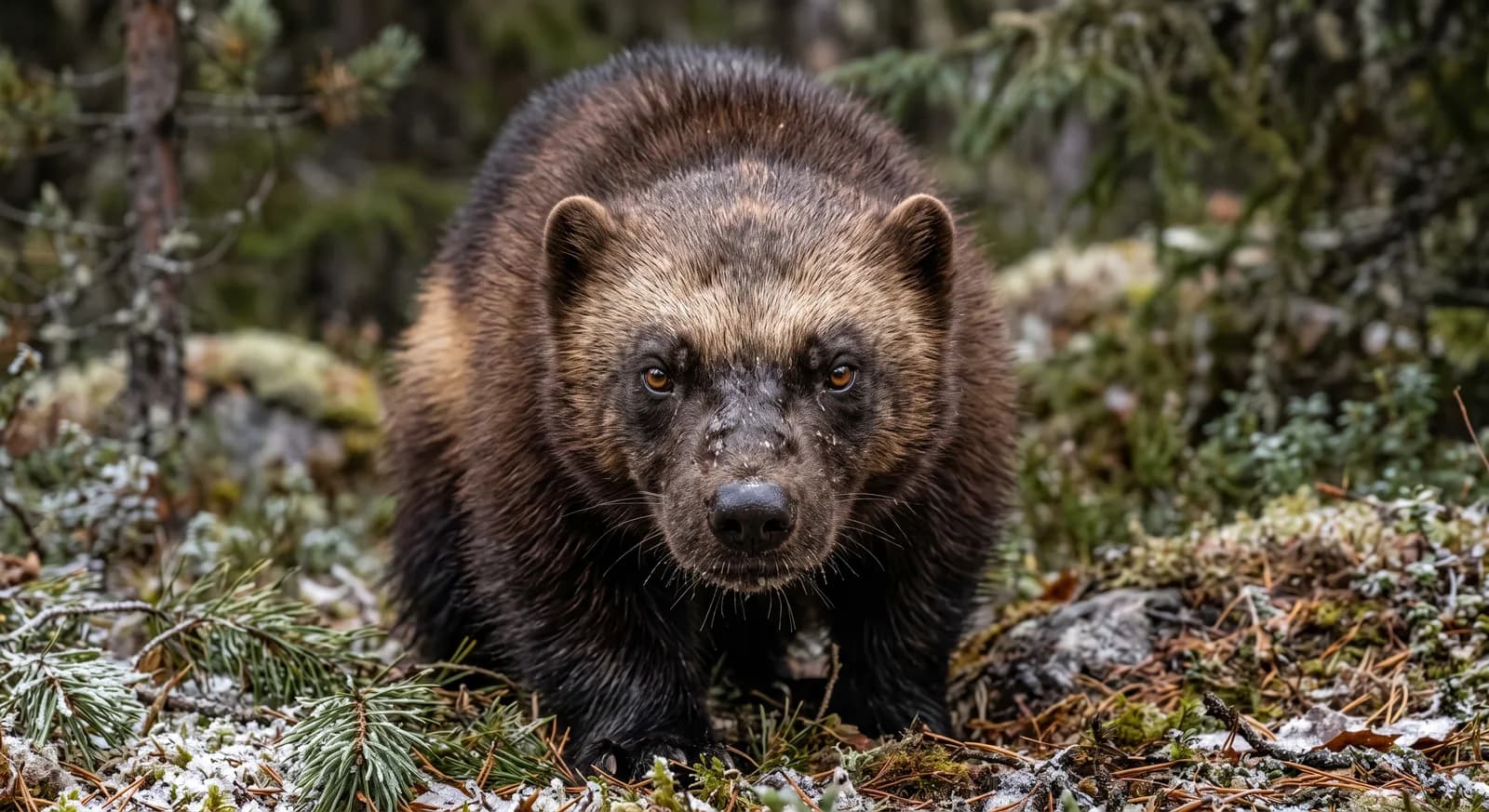
One of the 24 beetles on WAnimals
Insects · Coleoptera · Silphidae
Nicrophorus vespilloides
It has not yet been assessed against the IUCN criteria.
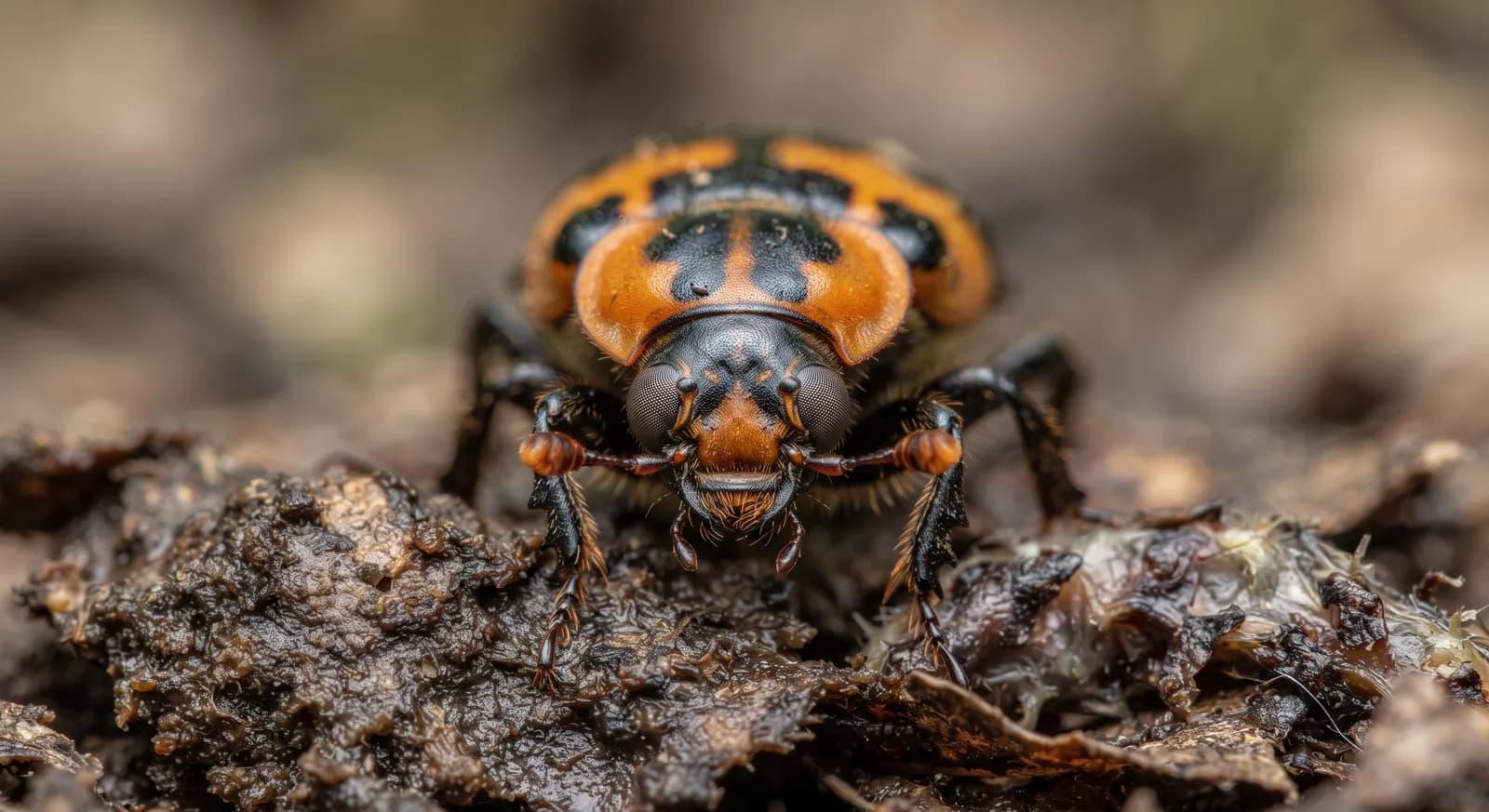
A black beetle with two striking transverse bands of pumpkin orange across square elytra that are shorter than the abdomen, leaving the last segments exposed. Its wholly black antennae end in a club and carry chemoreceptors able to detect a carcass at a great distance.
Size
1.2 cm – 2 cm
Diet
Carnivore
Feeds mainly on other animals.
Activity
Nocturnal
Active mainly at night.
Social structure
In pairs
Usually lives in pairs, sometimes for life.
AI-generated images: illustrations, not photographs.
Sources consulted: Wikipedia (Nicrophorus vespilloides) · Cunningham, Benowitz y Moore 2024, Ecology and Evolution 14 · Pascoal y Kilner 2017, PeerJ 5 · El desinsectador y desratizador · Animalandia (Comunidad de Madrid)
Best time: From April to autumn, with a peak of activity in May and a second rise in late summer
Parks and dive sites where this species has been documented — showing 10 of 167.
Other species in the catalogue with the most in common with Burying Beetle — same habitat, park, country, tags or family.
Based on what we already know about burying beetle.
The pins mark the parks where its presence is documented.