 Least Concern
Great Tit
Parus major
One of the 3 blue tits on WAnimals
Birds · Passeriformes · Paridae
Cyanistes caeruleus
The species is abundant and widely distributed; it faces no significant short-term risk.
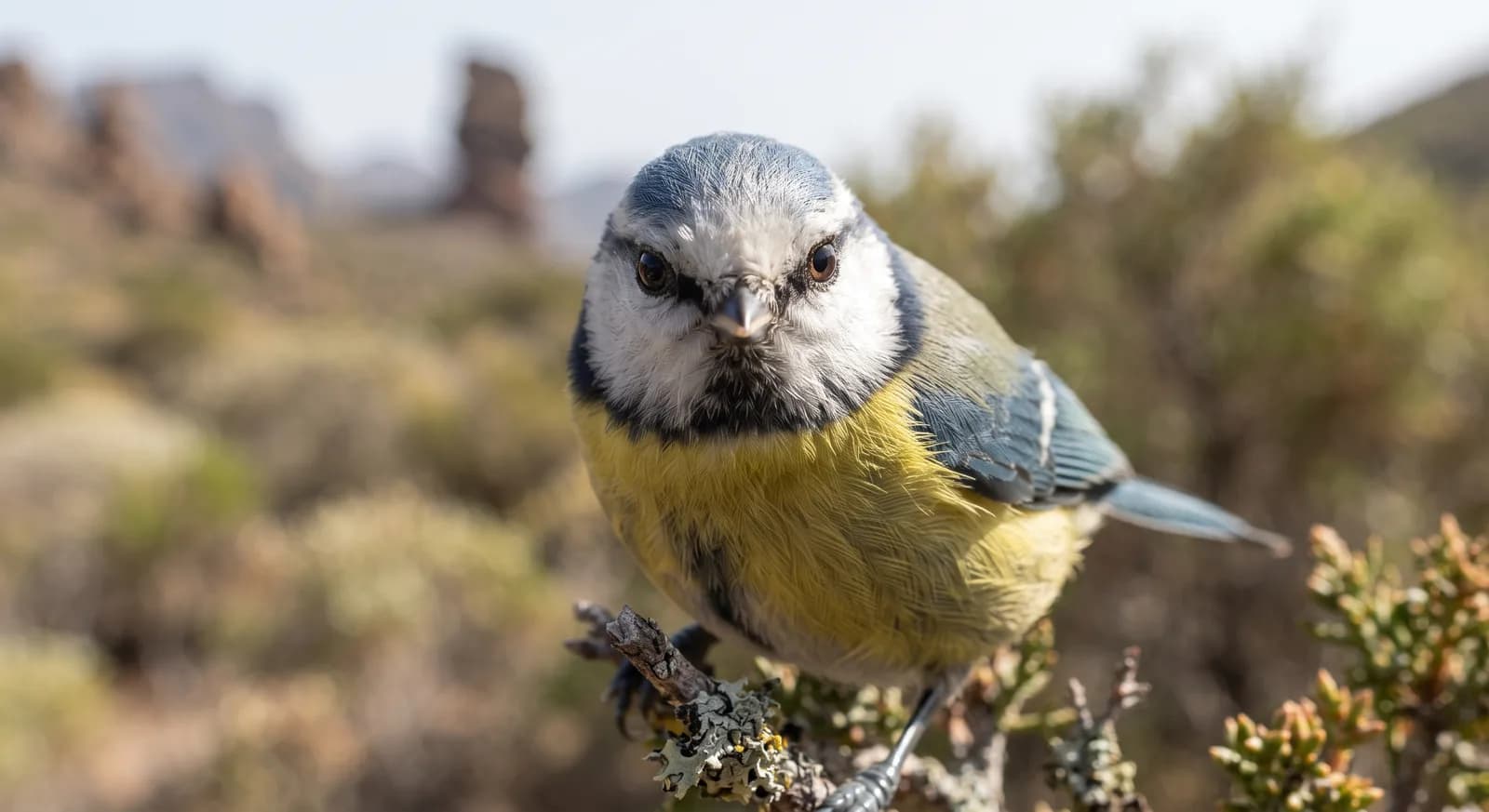
One of the most colourful birds in Europe: a cobalt-blue crown, wings and tail, a greenish back, white cheeks crossed by a black line and a yellow belly. A tireless acrobat, it hangs upside down from thin branches to search for insects among lichen and bark.
Weight
9 g – 12 g
Size
11 cm – 13 cm
Life expectancy
3 years
Diet
Insectivore
Feeds mainly on insects and other invertebrates.
Activity
Diurnal
Active mainly during the day.
Social structure
In pairs
Usually lives in pairs, sometimes for life.
Sighting difficulty
Easy
Estimated population
The Spanish population is estimated at 8,545,223 individuals (99% CI: 8,007,255-9,083,192) in the Third Atlas, lower than the 12,980,667 estimated in 2004-2006
Sources consulted: SEO/BirdLife (ficha y III Atlas de las aves en época de reproducción en España); IUCN Red List; Asturnatura; Salvador 2016, Enciclopedia Virtual de los Vertebrados Españoles (MNCN-CSIC); Wandosell, Remacha y Pérez-Tris 2022
Best time: All year round; the rut begins in late winter
Parks and dive sites where this species has been documented — showing 10 of 215.
Other species in the catalogue with the most in common with Eurasian Blue Tit — same habitat, park, country, tags or family.
Based on what we already know about eurasian blue tit.
Share an experience, a fun fact or a tip for seeing the eurasian blue tit.
Be the first to comment.
The pins mark the parks where its presence is documented.