Birds · Pelecaniformes · Ardeidae
Nycticorax nycticorax
The species is abundant and widely distributed; it faces no significant short-term risk.
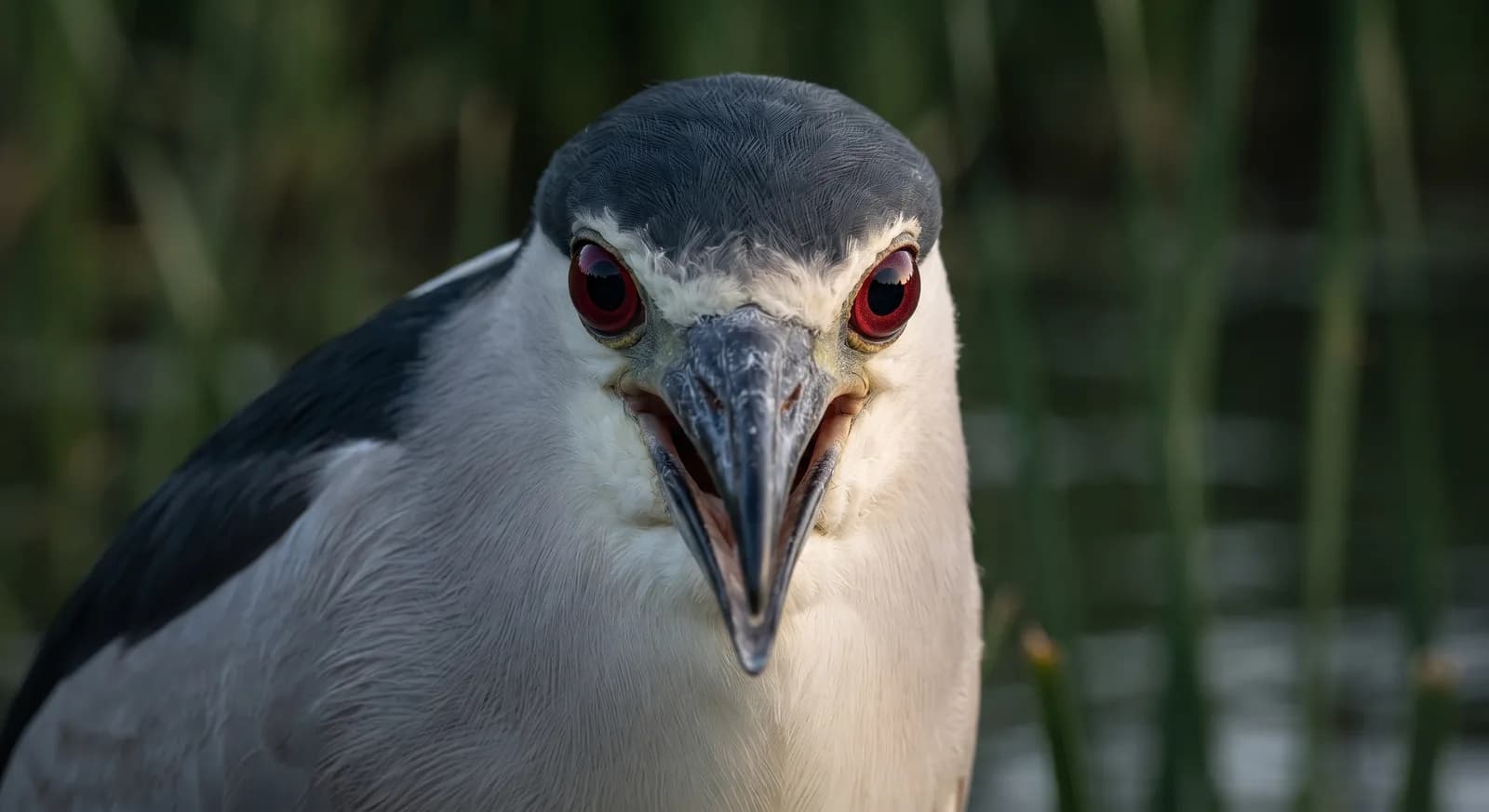
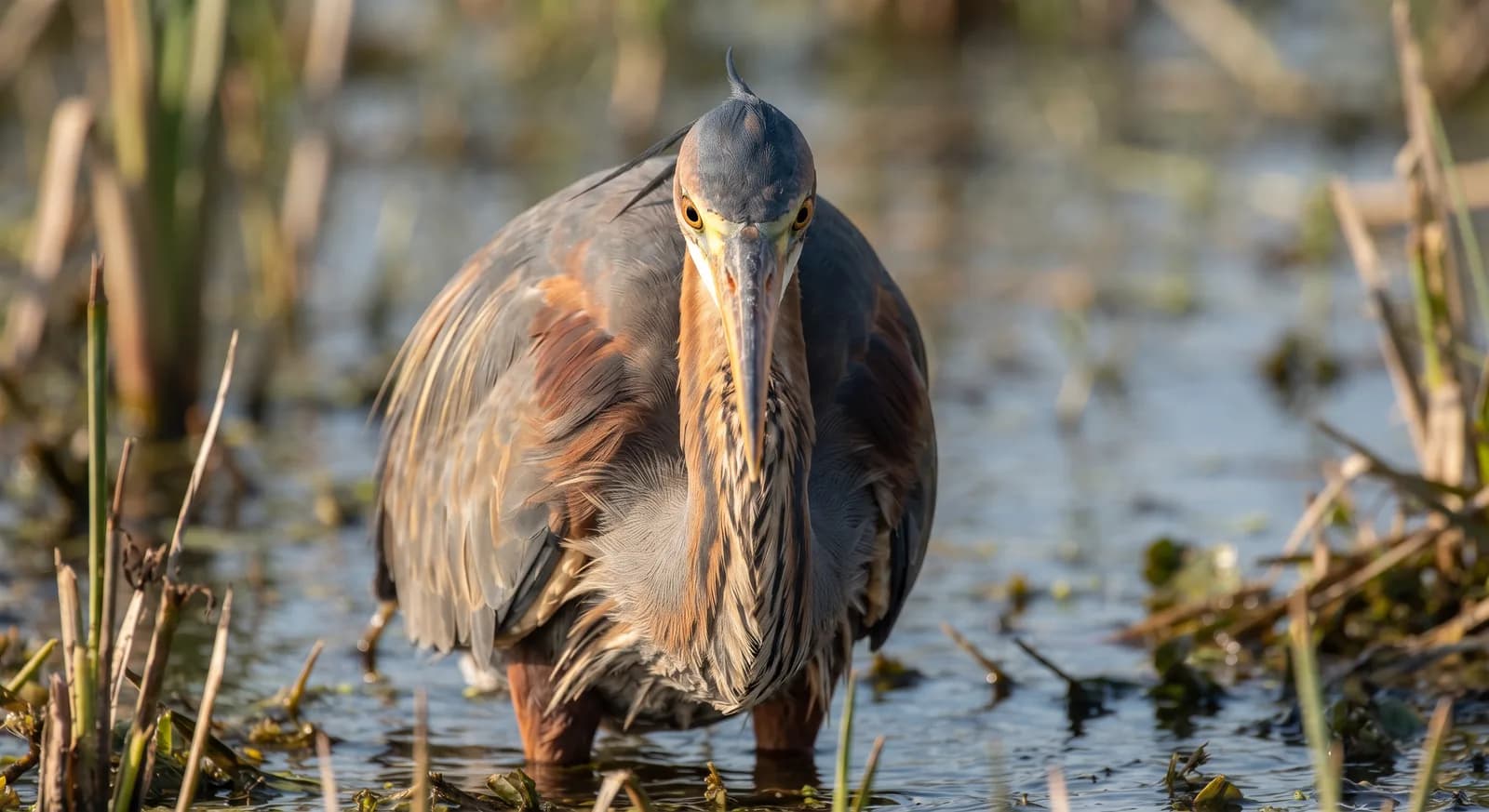
A stocky heron with a very short neck for its family and a stout black bill. Blackish crown, nape and back, grey wings and greyish white underparts, with a pure white face, throat and belly. Its eyes are an unmistakable intense red and two or three long white plumes spring from the nape.
Weight
500 g – 700 g
Size
58 cm – 65 cm
Diet
Carnivore
Feeds mainly on other animals.
Activity
Nocturnal
Active mainly at night.
Social structure
Colony
Lives in large concentrations, often for breeding reasons.
Sighting difficulty
Easy
AI-generated images: illustrations, not photographs.
Sources consulted: SEO/BirdLife (ficha y III Atlas de las aves en época de reproducción en España); IUCN Red List; Asturnatura; Wikipedia (Nycticorax nycticorax); estudios sobre alimentación de pollos en el delta del Ebro y las marismas del Guadalquivir (Ardeola)
Best time: From spring to summer, at dusk, when it leaves the heronry for its feeding grounds
Parks and dive sites where this species has been documented — showing 10 of 100.
Other species in the catalogue with the most in common with Black-crowned Night Heron — same habitat, park, country, tags or family.
Based on what we already know about black-crowned night heron.
Share an experience, a fun fact or a tip for seeing the black-crowned night heron.
Be the first to comment.
The pins mark the parks where its presence is documented.