One of the 3 martins on WAnimals
Birds · Passeriformes · Hirundinidae
Ptyonoprogne rupestris
The species is abundant and widely distributed; it faces no significant short-term risk.
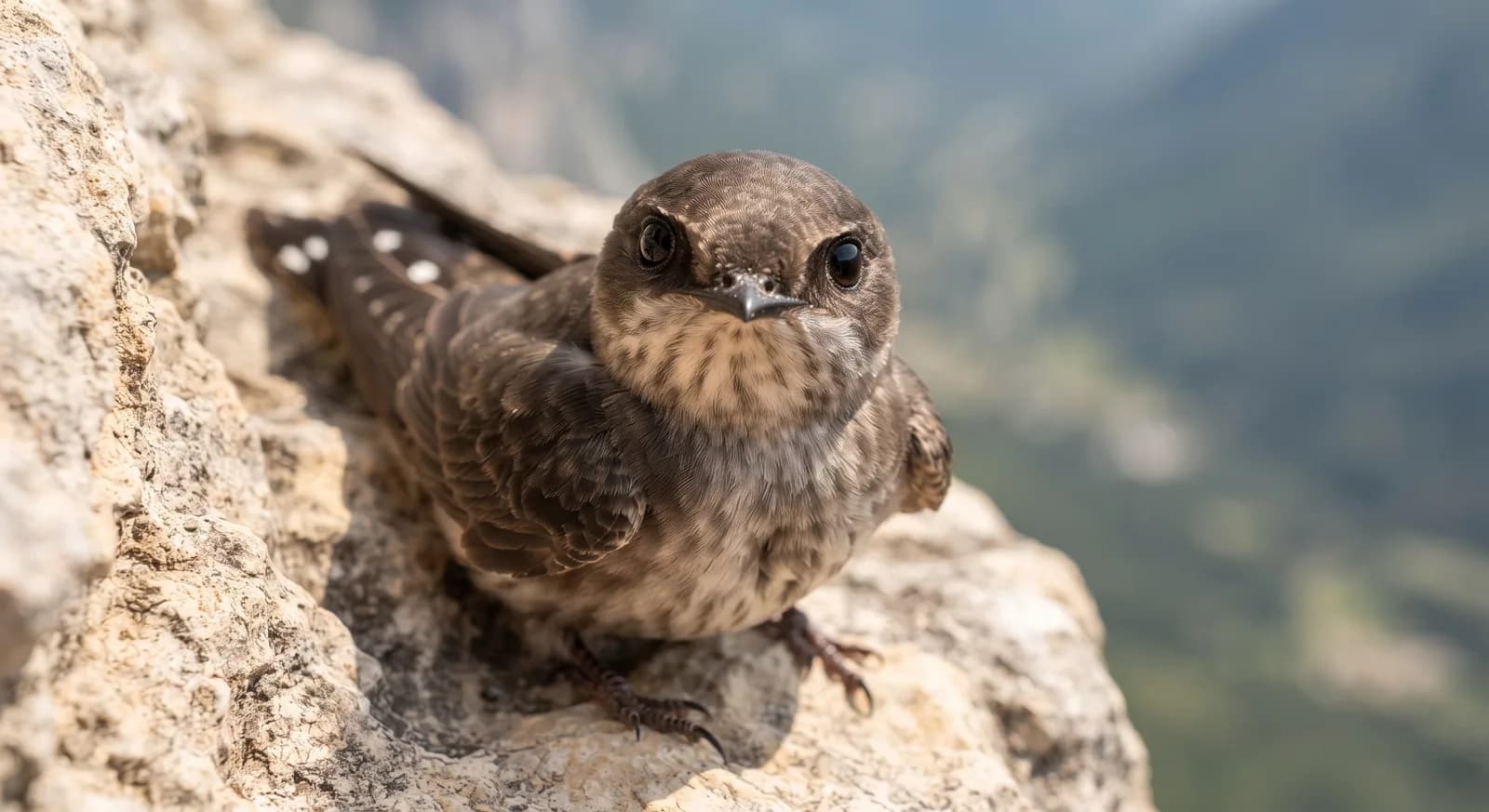
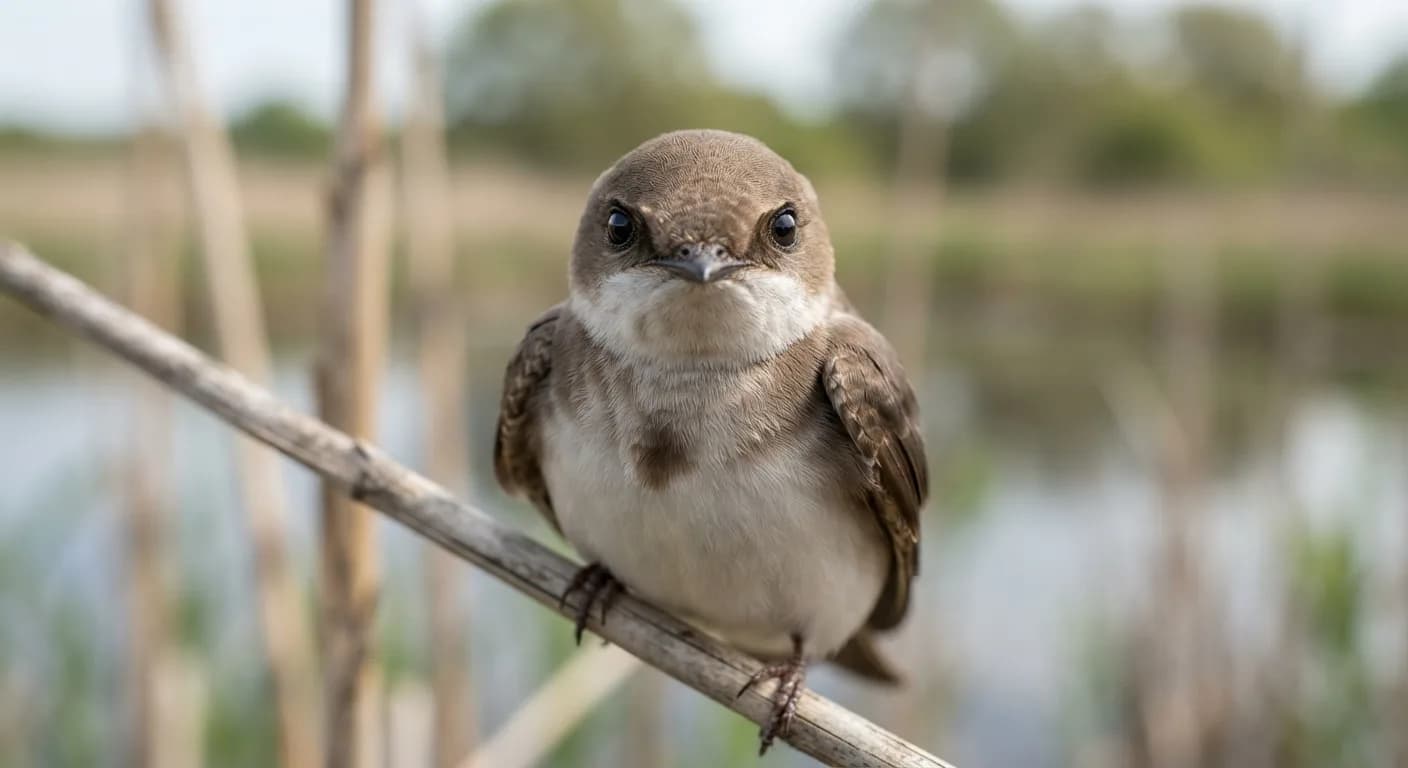
A hirundine of uniformly brownish appearance, ash brown above and somewhat paler below, without the white contrasts of the house martin. Its tail is short and square, with white spots near the tip of every feather except the central pair and the outermost, very visible when it fans it. It has a broader body, wings and tail than any other European hirundine.
Weight
23 g – 25 g
Size
13 cm – 15 cm
Life expectancy
4 years
Diet
Insectivore
Feeds mainly on insects and other invertebrates.
Activity
Diurnal
Active mainly during the day.
Social structure
Colony
Lives in large concentrations, often for breeding reasons.
Sighting difficulty
Easy
Estimated population
The European population is estimated at between 360,000 and 1,110,000 individuals, that is, 120,000 to 370,000 breeding pairs
AI-generated images: illustrations, not photographs.
Sources consulted: IUCN Red List; SEO/BirdLife (III Atlas: Prieta Díaz 2022); Catálogo Nacional de Especies Amenazadas; Sierra de Baza (ficha técnica); Naturaleza Para Todos; Animalia.bio
Best time: All year round: it is the only swallow that can be seen on the Iberian Peninsula in all twelve months
Parks and dive sites where this species has been documented — showing 10 of 79.
Other species in the catalogue with the most in common with Eurasian Crag Martin — same habitat, park, country, tags or family.
Based on what we already know about eurasian crag martin.
Share an experience, a fun fact or a tip for seeing the eurasian crag martin.
Be the first to comment.
The pins mark the parks where its presence is documented.