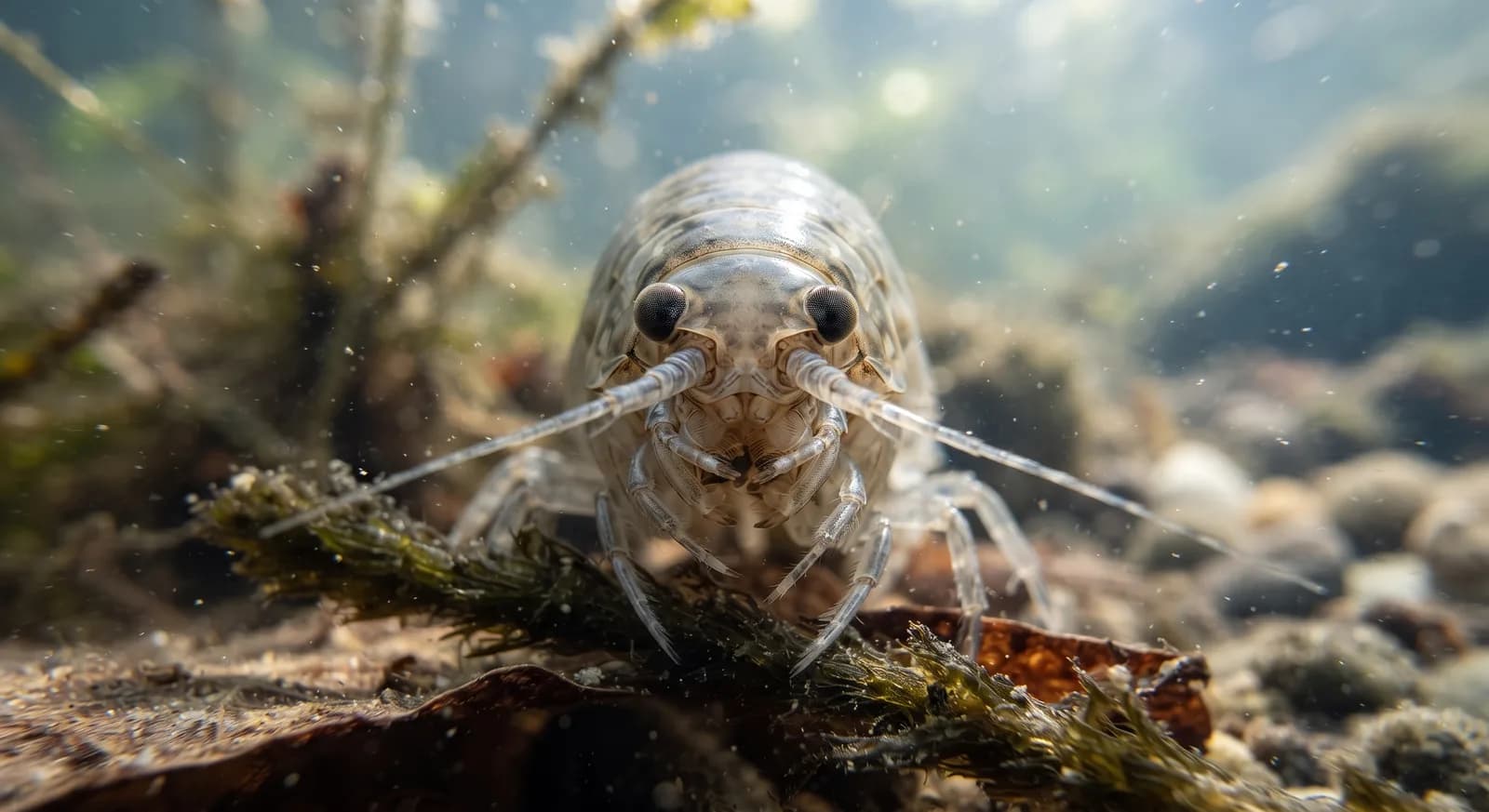
Malacostracans · Amphipoda · Gammaridae
Gammarus pulex
It has not yet been assessed against the IUCN criteria.
A bottom-dwelling amphipod with a laterally compressed, curved body, translucent grey with brown or greenish markings that vary with habitat, age and diet. It has compound eyes, two pairs of antennae and seven pairs of thoracic legs, the first two modified into gnathopods for feeding.
Size
1 cm – 2.1 cm
Diet
Detritivore
Feeds on dead organic matter as it decomposes.
Activity
Nocturnal
Active mainly at night.
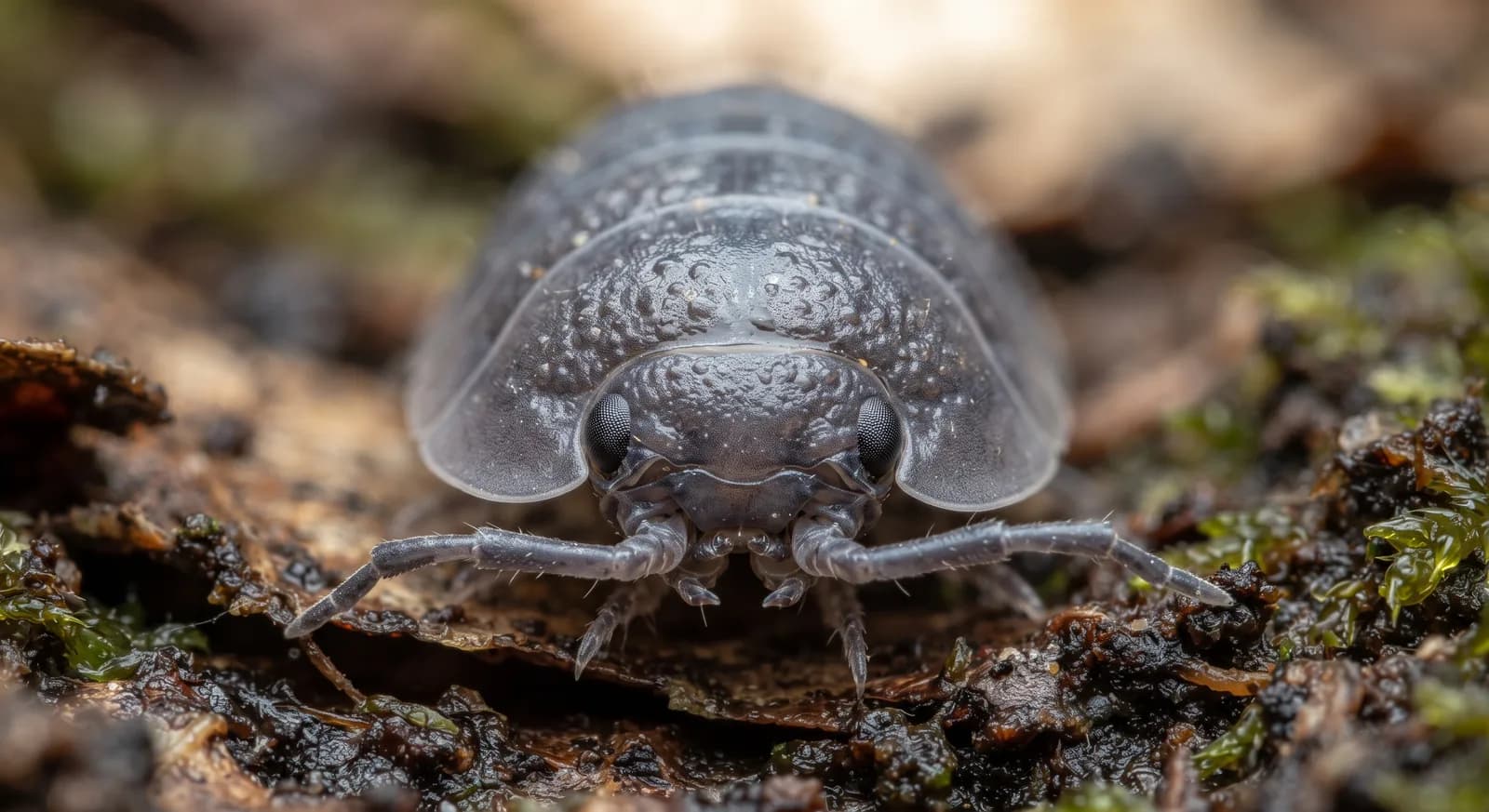
Social structure
Solitary
Lives and hunts alone, joining others only to breed.
Sighting difficulty
Unknown
AI-generated images: illustrations, not photographs.
Sources consulted: Wikipedia (Gammarus pulex); Pinkster (revisión del género Gammarus); Labaude et al. 2015, Parasites & Vectors 8; ScienceDirect (Gammarus pulex overview); ScienceDirect (Hughes 1989); Science Advances, How colonial animals evolve; Wikipedia, Zooid
Best time: All year round, under stones and among the submerged leaf litter of rivers and streams
Other species in the catalogue with the most in common with Freshwater Shrimp — same habitat, park, country, tags or family.
Based on what we already know about freshwater shrimp.
Share an experience, a fun fact or a tip for seeing the freshwater shrimp.
Be the first to comment.