One of the 23 eagles on WAnimals
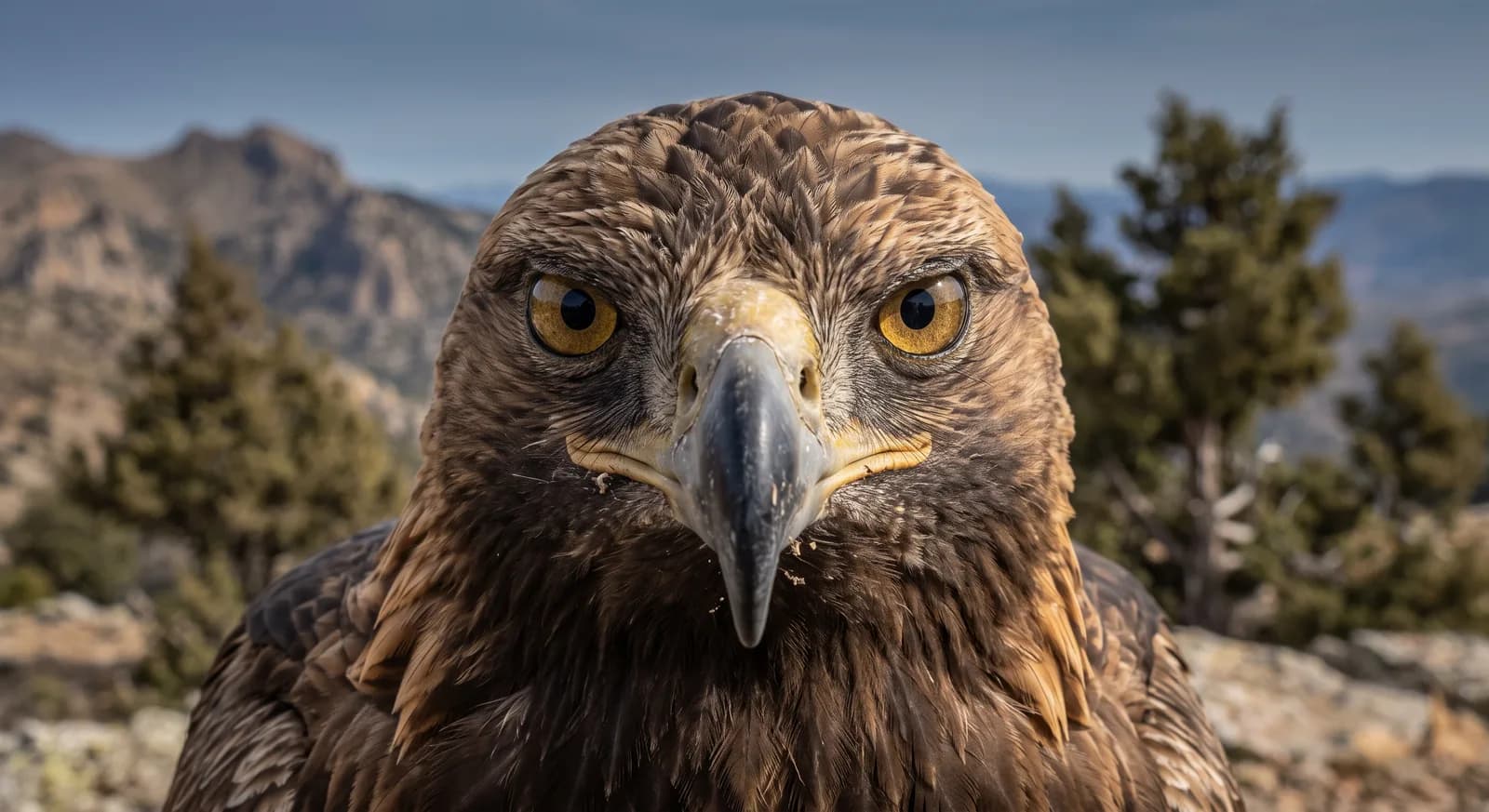
Birds · Accipitriformes · Accipitridae
Golden Eagle
Aquila chrysaetos
The species is abundant and widely distributed; it faces no significant short-term risk. See full glossary
It is one of the largest and most powerful birds of prey in the Northern Hemisphere. The first chick to hatch frequently attacks its smaller siblings, a behaviour known as cainism.
Weight
2.5 kg – 6.9 kg
Size
66 cm – 1 m
Lifespan
30 years
Diet
Carnivore
Feeds mainly on other animals.
Activity
Diurnal
Active mainly during the day.
Social structure
In pairs
Usually lives in pairs, sometimes for life.
Sighting difficulty
Easy
Estimated population
The Spanish population has grown from the 400-800 pairs estimated in the 1970s to 1,459-1,503 pairs in 2004; Andalusia is the region with the most (375 pairs, 21% of the total) and the Iberian System is the main stronghold (24%). The world population may exceed 50,000 pairs
Fun facts
- It can reach a wingspan of up to 2.34 metres.
- The first chick to hatch often attacks its siblings, a behaviour called cainism.
- It hunts medium-sized mammals such as hares, marmots and ground squirrels.
- sentidosIt can spot moving prey several kilometres away thanks to visual acuity several times sharper than a human's.
Life cycle & biology
- Skeleton type
- Vertebrate - internal bony skeleton (bird)
- Habitat & environment
- Mountainous country, tundra, scrubland and open grassland across the Northern Hemisphere
- Birth weight
- Born blind and helpless, ~110 g at birth
- Size at birth
- ~110 g at birth
- Sexual maturity
- 4-5 years
- Gestation / incubation
- 40-45 days
- Litter / clutch size
- 1 to 4 eggs per clutch (most commonly 2)
- Lifespan in captivity
- Documented record of up to 46-48 years
Sources consulted: A-Z Animals; SeaWorld/United Parks; PBS Nature; AnAge (genomics.senescence.info); Animal Diversity Web; US FWS; BioKIDS; SEO/BirdLife: los censos nacionales han pasado de 1.192-1.265 parejas en el primer estudio nacional a 1.459-1.503 en 2004, y las cuatro comunidades con más parejas presentan tendencia ascendente. A escala mundial las tendencias no están bien cuantificadas || SEO/BirdLife, III Atlas de las aves en época de reproducción en España, ficha del águila real (Bautista et al. 2022); BirdLife International || SEO/BirdLife, III Atlas de las aves en época de reproducción en España, ficha del águila real
Where to find it
See its range on the interactive mapBest time: All year round, as it is resident and territorial; the diving display flights from January to March are the most spectacular time to find it
Where to watch it
Parques y spots de buceo donde se ha documentado esta especie — se muestran 10 de 109 documentados.
Related species
Other species in the catalogue with the most in common with Golden Eagle — same habitat, park, country, tags or family.
Bonelli's Eagle
Aquila fasciata
 Least Concern
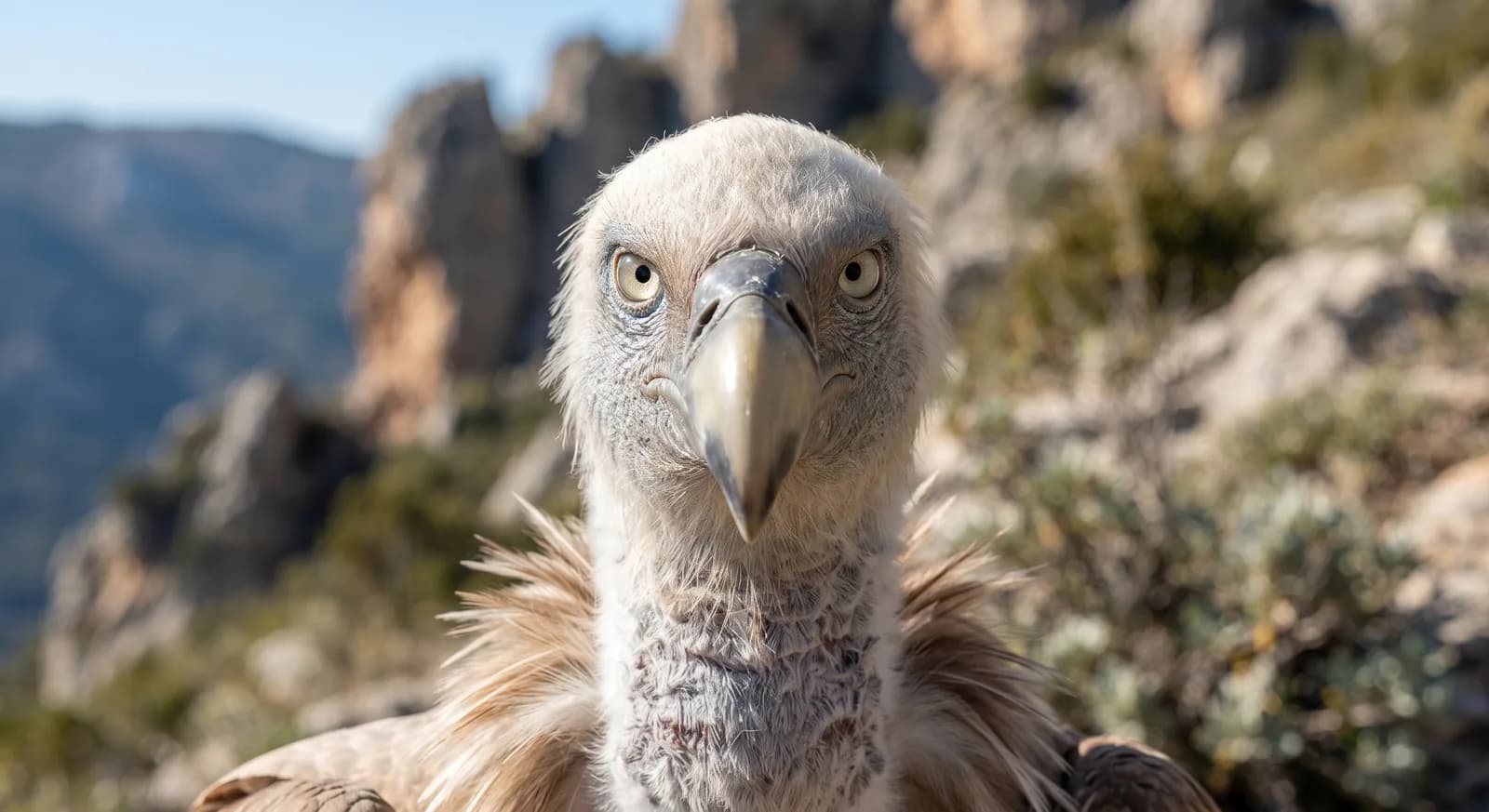
Griffon Vulture
Gyps fulvus
Lesser Spotted Eagle
Clanga pomarina
Red-tailed Hawk
Buteo jamaicensis
Bearded Vulture
Gypaetus barbatus
Booted Eagle
Hieraaetus pennatus
Keep exploring
Based on what we already know about golden eagle.
Comments
Share an experience, a fun fact or a tip for seeing the golden eagle.
Be the first to comment.