Birds · Accipitriformes · Accipitridae
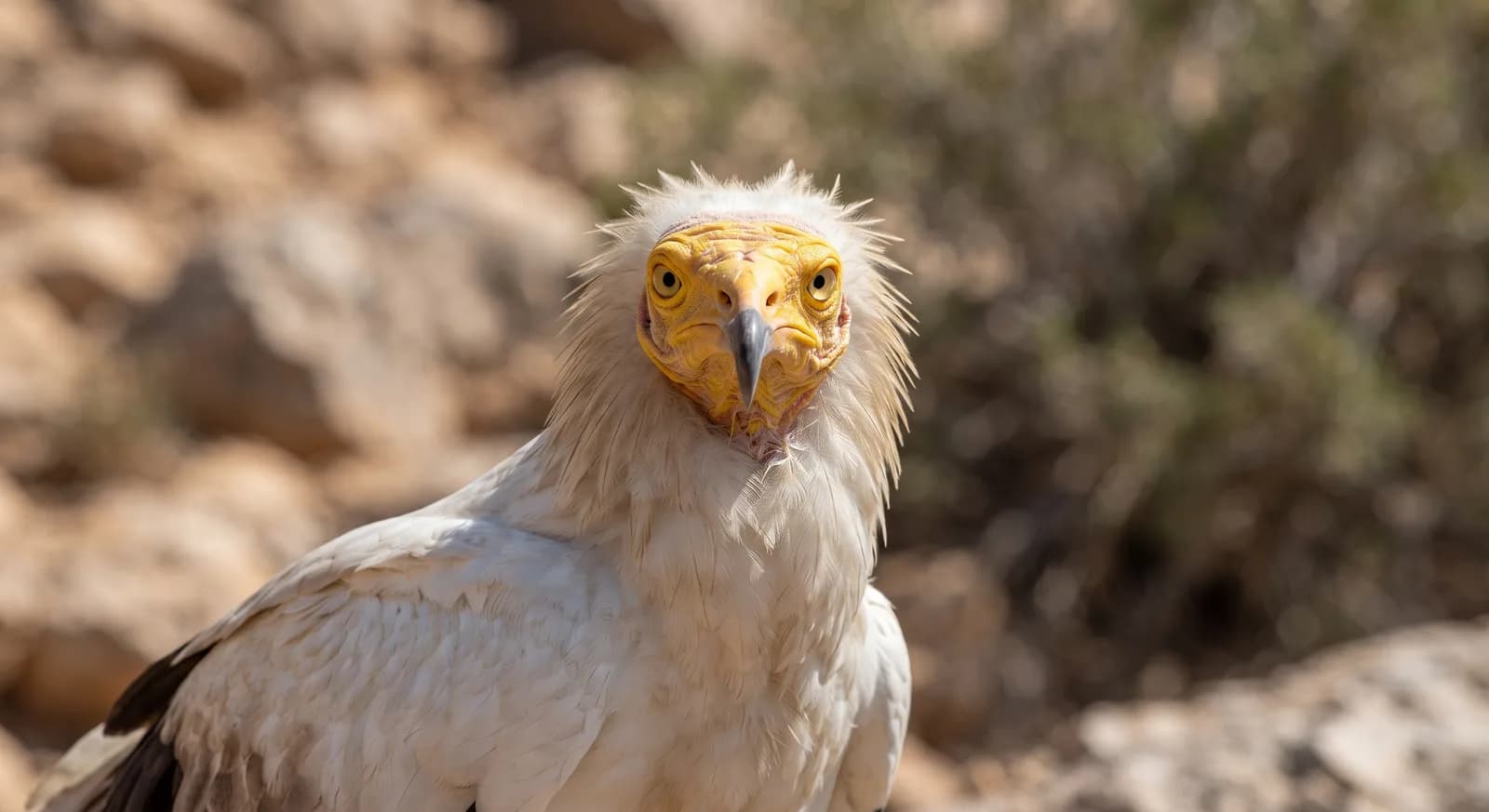
Egyptian Vulture
Neophron percnopterus
It faces a very high risk of extinction in the wild in the near future. See full glossary
It is one of the few birds in the world that uses tools: to break open ostrich eggs, whose shells are too thick for its beak, it throws stones at them again and again.
Weight
1.6 kg – 2.4 kg
Size
55 cm – 65 cm
Lifespan
20 years
Diet
Omnivore
Combines animal and plant food depending on availability.
Activity
Diurnal
Active mainly during the day.
Social structure
Solitary
Lives and hunts alone, joining others only to breed.
Sighting difficulty
Hard
Estimated population
1,490-1,567 pairs in Spain according to the fourth national survey of 2018, the highest figure recorded to date; Spain holds 32-47% of the 3,195-4,832 European pairs. Castile and León accounts for 22.9% of the Spanish total and the Canaries for 74 pairs of the endemic subspecies majorensis
Fun facts
- It feeds on carrion, the eggs of other birds (ostrich eggs included), insects and refuse.
- Its dark juvenile plumage lightens gradually until it reaches the characteristic white of the adult.
- It lives in open, arid and semi-arid country across southern Europe, the Middle East, India and Africa.
- inteligenciaIt can use stones as tools, throwing them at large eggs such as an ostrich's to crack the shell and get at the contents.
- historia naturalSome ancient cultures linked it with divine protection, and in Ancient Egypt it was depicted as a sacred symbol associated with certain goddesses.
Life cycle & biology
- Skeleton type
- Vertebrate - pneumatised bony skeleton (bird)
- Habitat & environment
- Open, arid and semi-arid country of southern Europe, the Middle East, India and Africa
- Birth weight
- Weight at hatching not found as a precise figure
- Size at birth
- Covered in reddish-white down at hatching
- Sexual maturity
- 4-7 years (an average age at first breeding of 7 documented in Spain)
- Gestation / incubation
- ~40-42 days
- Litter / clutch size
- 1 to 3 eggs per clutch (most commonly 2)
- Lifespan in captivity
- Documented record of 37 years in captivity
Sources consulted: AnAge (genomics.senescence.info); Birdfact; Oiseaux.net; Animal Diversity Web; Birds of the World; PMC (survival breeding success study, early life movements study); IUCN Red List / BirdLife International (En peligro a escala global); en España el IV censo nacional de 2018 detectó en cambio un ligero repunte respecto a 2008 || Del Moral y Molina (Eds.) 2018, El alimoche común en España, SEO/BirdLife; BirdLife International 2017 || SEO/BirdLife, ficha del alimoche común y III Atlas de las aves en época de reproducción en España
Where to find it
See its range on the interactive mapBest time: From March to August, when it is a summer visitor to the Iberian Peninsula; it leaves Spain for the Sahel in late summer. The Canarian population (the guirre majorero) is resident and can be seen all year round
Where to watch it
Parques y spots de buceo donde se ha documentado esta especie — se muestran 10 de 11 documentados.
Related species
Other species in the catalogue with the most in common with Egyptian Vulture — same habitat, park, country, tags or family.
 Least Concern
Short-toed Eagle
Circaetus gallicus
Black-winged Kite
Elanus caeruleus
Black Kite
Milvus migrans
 Least Concern
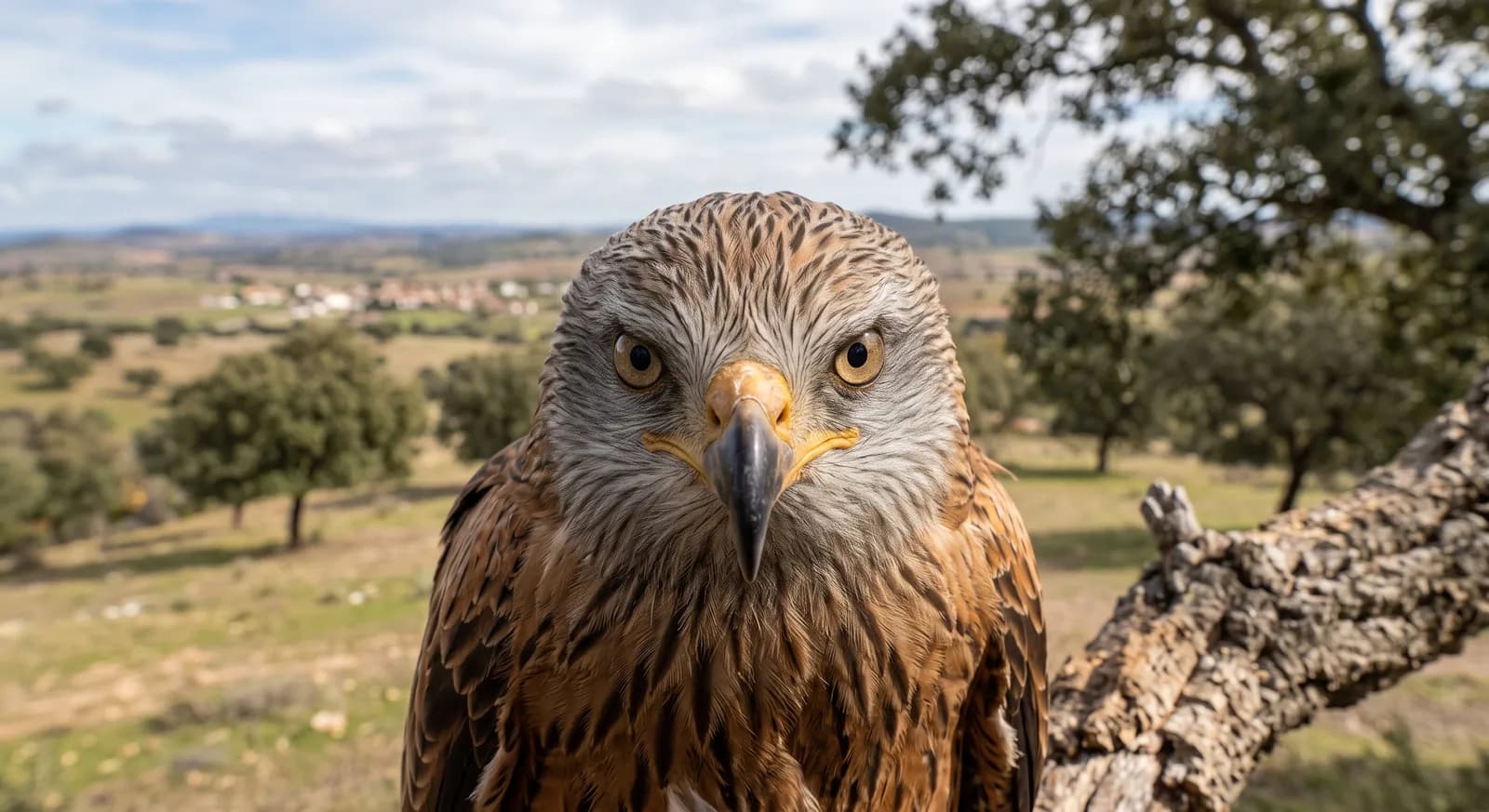
Red Kite
Milvus milvus
Eurasian Sparrowhawk
Accipiter nisus
Northern Goshawk
Accipiter gentilis
How to help
The egyptian vulture is classified as endangered. Organizations such as UICN, WWF y Wildlife Conservation Society work specifically on its conservation and that of its habitat; looking into their programs is a good starting point if you want to get involved.
It's documented in 9 real protected areas — part of why protecting these places matters for its conservation.
Keep exploring
Based on what we already know about egyptian vulture.
Comments
Share an experience, a fun fact or a tip for seeing the egyptian vulture.
Be the first to comment.