Skip to content
WAnimals
  • Map
  • Species
  • Parks
  • Diving
Log inCreate account
WAnimals

The guide for travellers and animal lovers: discover, plan and share your wild adventures around the world.

Discover wildlife

  • Species
  • Ecosystems
  • Glossary
  • Tags

Explore places

  • Map
  • Countries
  • Parks
  • Diving

Plan experiences

  • Guides

Learn

  • Blog

Resources

  • Help centre
  • Contact
  • Install the app

Follow us

Account

  • Log in
  • Create account

© 2026 WAnimals. All rights reserved.

About usHow we build our profilesTerms of servicePrivacyLegal notice
MapSpeciesParksDiving
  1. Home
  2. Species
  3. Asian Tiger Shrimp

One of the 2 prawns on WAnimals
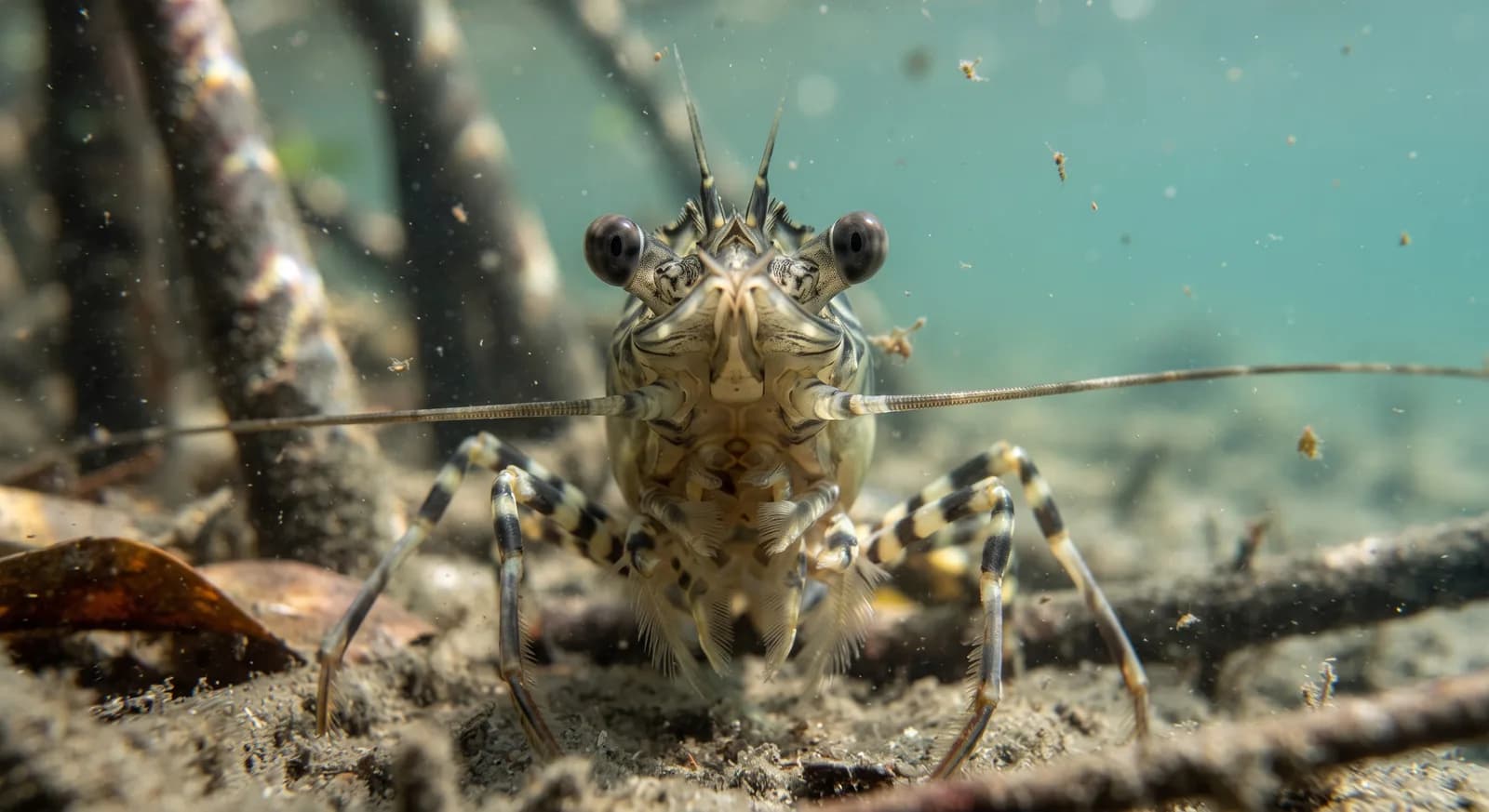
Asian Tiger Shrimp (Penaeus monodon)

Malacostracans · Decapoda · Penaeidae

Asian Tiger Shrimp

Penaeus monodon

Not Evaluated

It has not yet been assessed against the IUCN criteria.

Spotted something wrong?

The Asian tiger shrimp, or giant tiger prawn, is a marine decapod crustacean widely farmed for food. Its natural range is Indo-Pacific, from the eastern coasts of Africa and Arabia through to South-East Asia and the Sea of Japan. It can also be found in Australia, and a small number have colonised the Mediterranean by way of the Suez Canal. Populations have also invaded Hawaii and the Atlantic coasts of the United States.

Size

20 cm – 33 cm

Life expectancy

3 years

Diet

Omnivore

Combines animal and plant food depending on availability.
Activity

Nocturnal

Active mainly at night.

Social structure

Solitary

Lives and hunts alone, joining others only to breed.

Sighting difficulty

Unknown

Ocean
72countries32parks186dive sites1same family

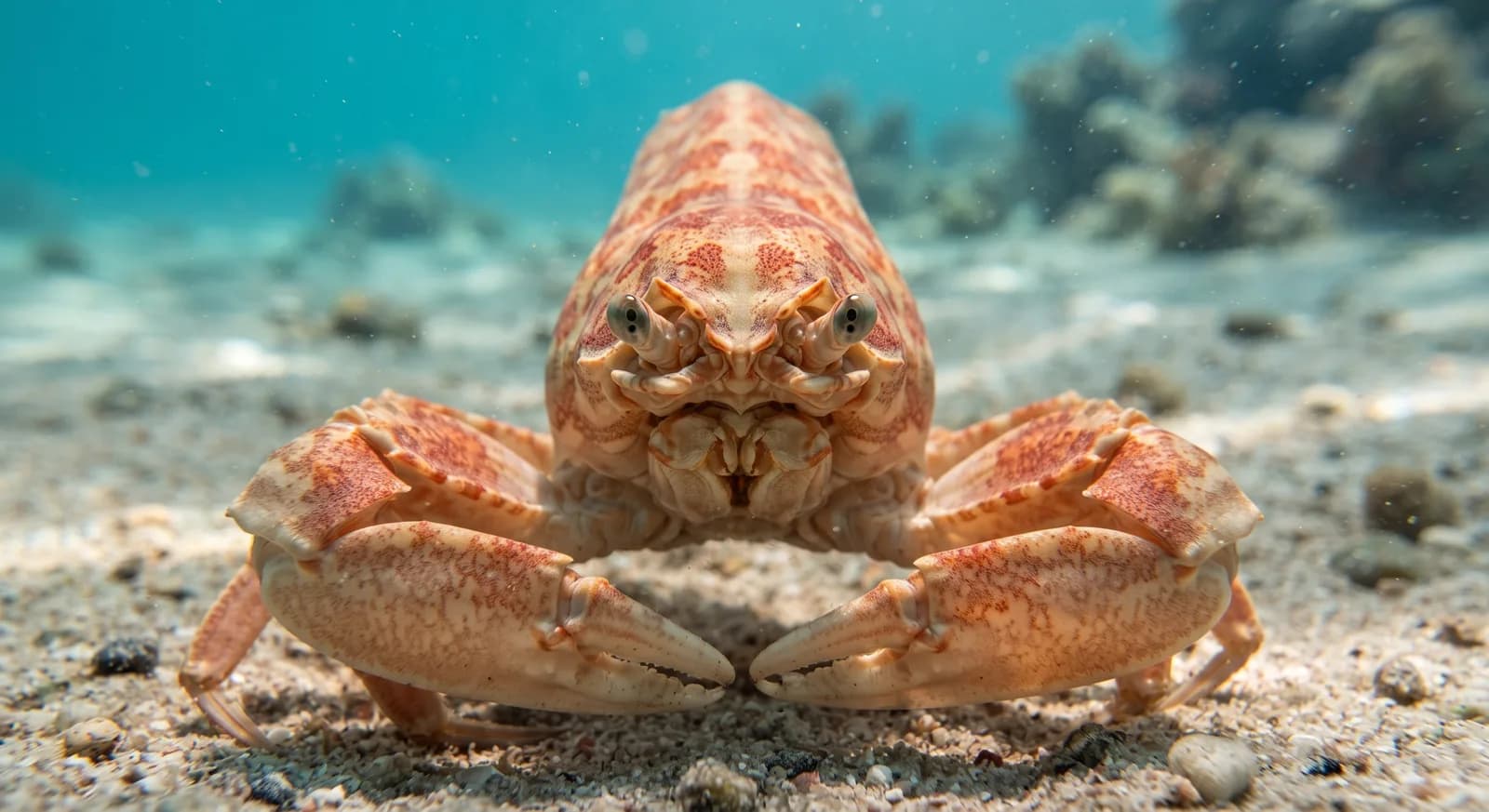
AI-generated images: illustrations, not photographs.

Fun facts

  • Its large-scale farming drove the clearance of enormous areas of mangrove in South-East Asia, an environmental impact that has marked the history of aquaculture.
  • It has established itself as an invader in the western Atlantic, from the United States to Brazil, after escapes from farms.
  • A single female can release close to a million eggs in one spawning.
  • This is the Asian tiger shrimp, the second most farmed shrimp species in the world, behind only the whiteleg shrimp.
  • Its farming transformed entire economies in South-East Asia: production went from 21,000 tonnes in 1981 to close to half a million in 1993, and in 2009 the trade was worth some 3.65 billion dollars.
  • And it also razed mangroves: much of the expansion of the farms was carried out by clearing coastal mangrove, one of the most productive ecosystems on the planet.
  • Since 2002 it has lost ground to the whiteleg shrimp, which grows faster and tolerates higher densities, and many Asian farms have switched species.
  • White spot syndrome virus is its great threat in farming: it can kill an entire pond in a few days.
  • It escaped from a South Carolina farm in 1988, when a flood released some 2,000 individuals, and since 2006 it has appeared regularly in the Gulf of Mexico and along the US Atlantic coast.
  • It tolerates salinities from 2 to 30, which explains why it colonises everything from mangroves to the open sea.

Life cycle and biology

Skeleton type
Invertebrate - chitin exoskeleton (crustacean)
Habitat and environment
Coastal bottoms and estuaries of the Indo-Pacific; juveniles in mangroves

Sources consulted: https://en.wikipedia.org/wiki/Penaeus_monodon

Where to find it

Loading map…

Where to see it

Parks and dive sites where this species has been documented — showing 20 of 218.

Related species

Other species in the catalogue with the most in common with Asian Tiger Shrimp — same habitat, park, country, tags or family.

Shares a park
Shares a park
Shares a park
Shares a park
Shares a park
Shares a park

Keep exploring

Based on what we already know about asian tiger shrimp.

Comments

Share an experience, a fun fact or a tip for seeing the asian tiger shrimp.

Be the first to comment.

See full glossary
This page in other languages: Español · Deutsch · Français · Português · Italiano

The pins mark the parks and dive sites where its presence is documented.

See its range on the interactive map→
KomodoIndonesia
AldabraSeychelles
SundarbansIndia
YakushimaJapan
Great Barrier ReefAustralia
NingalooAustralia
Rock Islands of PalauPalau
East RennellSolomon Islands
FakaravaFrench Polynesia
Mohéli Marine National ParkComoros
Blue Hole DahabEgypt
Ras Mohammed National ParkEgypt
Thistlegorm wreckEgypt
Elphinstone ReefEgypt
Brothers Islands (El Akhawein)Egypt
Sha'ab Rumi (Cousteau)Sudan
Musandam PeninsulaOman
Daymaniyat IslandsOman
Raja AmpatIndonesia
Komodo National ParkIndonesia
See all 32 parks
See all 186 dive sites
Spanner CrabNot Evaluated

Spanner Crab

Ranina ranina

Tiger CowrieNot Evaluated

Tiger Cowrie

Cypraea tigris

Endangered

Golden Sandfish

Holothuria scabra

Whale SharkEndangered

Whale Shark

Rhincodon typus

Humpback WhaleLeast Concern

Humpback Whale

Megaptera novaeangliae

Data Deficient

Flatback

Natator depressus

CountriesIndonesia
ParksKomodoIndonesia
TagsOmnivore
Omnivore
Nocturnal
Solitary
Ocean
Crustacean

Asia26

Oceania20

Africa15

South America6

North America5

Indonesia
Egypt
Philippines
Australia
Thailand
Malaysia
Bahrain
Bangladesh
Brunei
Cambodia
China
India
Indonesia
Iran
Japan
Kuwait
Malaysia
Maldives
Myanmar
Oman
Pakistan
Philippines
Qatar
Saudi Arabia
Singapore
Sri Lanka
Taiwan
Thailand
Timor-Leste
United Arab Emirates
Vietnam
Yemen
American Samoa
Australia
Cook Islands
Fiji
French Polynesia
Guam
Kiribati
Marshall Islands
Micronesia
Nauru
New Caledonia
Niue
Northern Mariana Islands
Palau
Papua New Guinea
Samoa
Solomon Islands
Tonga
Tuvalu
Vanuatu
Comoros
Djibouti
Egypt
Eritrea
Kenya
Madagascar
Mauritius
Mayotte
Mozambique
Réunion
Seychelles
Somalia
South Africa
Sudan
Tanzania
Brazil
Colombia
Ecuador
Guyana
Suriname
Venezuela
Cuba
Mexico
Nicaragua
Panama
United States