Skip to content
WAnimals
  • Map
  • Species
  • Parks
  • Diving
Log inCreate account
WAnimals

The guide for travellers and animal lovers: discover, plan and share your wild adventures around the world.

Discover wildlife

  • Species
  • Ecosystems
  • Glossary
  • Tags

Explore places

  • Map
  • Countries
  • Parks
  • Diving

Plan experiences

  • Guides

Learn

  • Blog

Resources

  • Help centre
  • Contact
  • Install the app

Follow us

Account

  • Log in
  • Create account

© 2026 WAnimals. All rights reserved.

About usHow we build our profilesTerms of servicePrivacyLegal notice
MapSpeciesParksDiving
  1. Home
  2. Species
  3. Spanish Fly

One of the 2 blister beetles on WAnimals

Spanish Fly (Lytta vesicatoria)

Insects · Coleoptera · Meloidae

Spanish Fly

Lytta vesicatoria

Not Evaluated

It has not yet been assessed against the IUCN criteria.

Spotted something wrong?

Lytta vesicatoria, popularly known as the Spanish fly, is a beetle of the family Meloidae.

Size

1 cm – 2.2 cm

Life expectancy

1 year

Diet

Herbivore

Feeds mainly on plants.

Activity

Diurnal

Active mainly during the day.

Social structure

Solitary

Lives and hunts alone, joining others only to breed.

Sighting difficulty

Unknown

Temperate forest
54countries129parks1same family

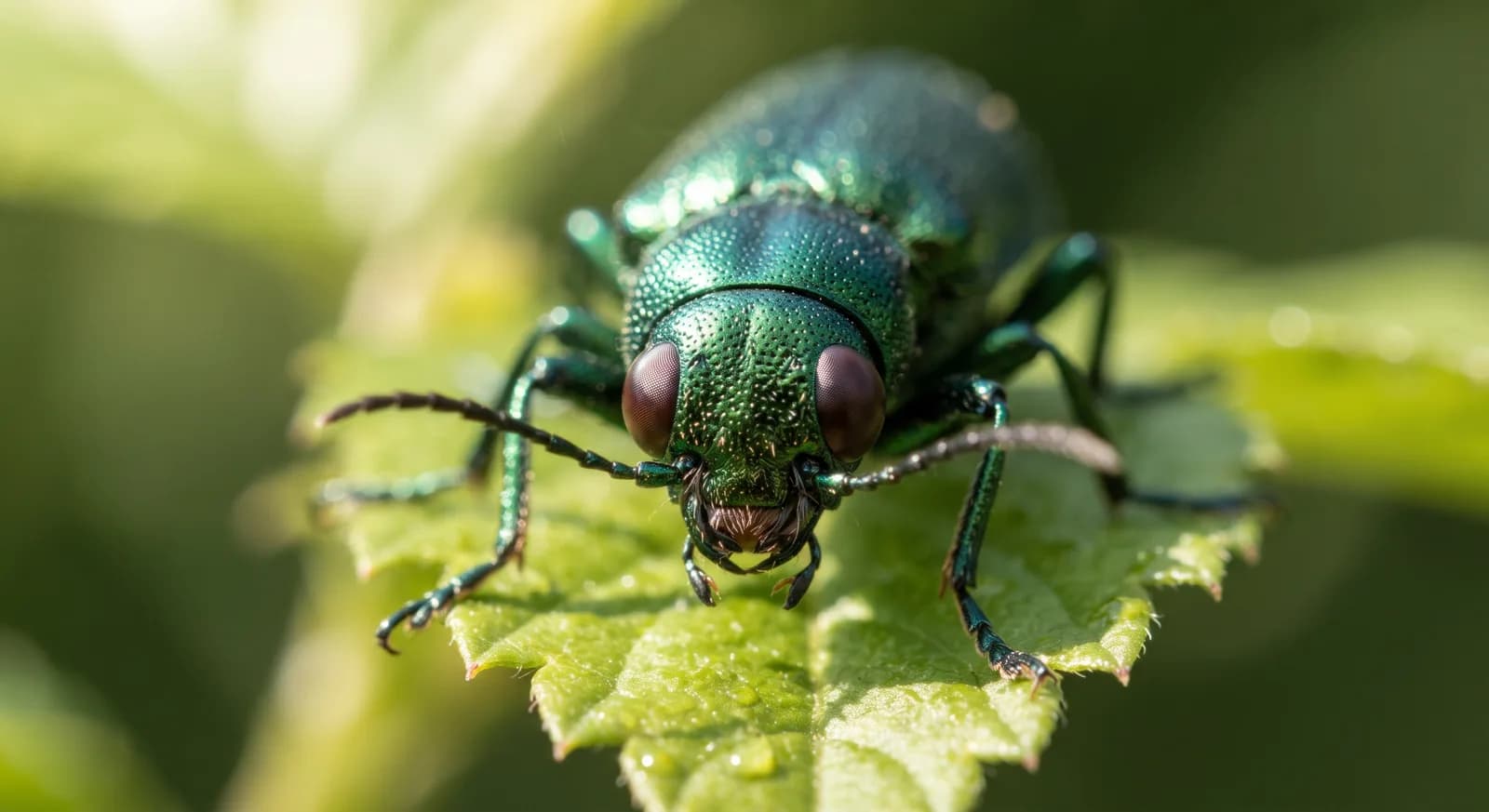
AI-generated images: illustrations, not photographs.

Fun facts

  • It is the source of so-called Spanish fly, a preparation with a reputation as an aphrodisiac that is in fact a poison: cantharidin irritates the urinary tract and has caused numerous deaths from minute doses.
  • Cantharidin has been used in dermatology to remove warts, applied under controlled conditions.
  • Its larvae are parasitic: they seek out the nests of solitary bees and devour the provisions and the brood.
  • This beetle was the source of cantharides, one of the most famous and dangerous pharmacological preparations in history, used for centuries as a blistering agent and as a supposed aphrodisiac.
  • The active compound is cantharidin, which raises blisters on contact and, if swallowed, severely damages the kidneys and the digestive tract. The lethal dose for a person is barely a few tens of milligrams.
  • Its reputation as an aphrodisiac comes from a real and dangerous side effect: it irritates the urinary tract and can cause priapism, a use that has led to documented fatal poisonings.
  • It undergoes hypermetamorphosis, like the oil beetle: from the eggs emerge mobile triungulins that seek out the nests of solitary bees, where they devour the eggs and provisions before turning into sedentary larvae.
  • Males gift cantharidin to females during mating, and the females incorporate it into their eggs to protect them.
  • Its smell is strong and unpleasant, and its aggregations can be detected from a distance.

Life cycle and biology

Skeleton type
Invertebrate - chitin exoskeleton (insect)
Habitat and environment
Ash, lilac and olive trees across southern and central Europe and western Asia; the adults gather in great numbers on the leaves of the host trees
Sexual maturity
Cantharidin is synthesised by the male, who transfers it to the female during copulation; the larval hosts are solitary bees of the genera Anthophora and Colletes, and also grasshoppers and crickets
Gestation / incubation
It shows hypermetamorphosis: the first-instar larva, called a triungulin, is mobile and climbs onto a flower to wait for a solitary bee; it latches on with the three claws on each leg and lets itself be carried to the nest, where it devours the bee larva and its provisions. The following instars are sedentary and legless
Litter / clutch size
The female lays the fertilised eggs in the ground, near the entrance to the nest of a solitary mining bee; in blister beetles the clutches run to thousands of eggs

Sources consulted: https://es.wikipedia.org/wiki/Lytta_vesicatoria; Ficha de especie de Lytta vesicatoria; fichas de biologia de Meloidae; ScienceDirect (Hughes 1989); Science Advances, How colonial animals evolve; Wikipedia, Zooid; Museo Nacional de Ciencias Naturales (CSIC), ficha de Meloidae; Fichas naturalistas ibericas de Lytta vesicatoria; fichas naturalistas ibericas; La Abeja Reina, ficha de Meloidae
Where to find it

Best time: May and June, on ash, lilac and privet

Loading map…

Where to see it

Parks and dive sites where this species has been documented — showing 10 of 129.

Related species

Other species in the catalogue with the most in common with Spanish Fly — same habitat, park, country, tags or family.

Same taxonomic family
Shares a park
Shares a park
Shares a park
Shares a park
Shares a park

Keep exploring

Based on what we already know about spanish fly.

Comments

Share an experience, a fun fact or a tip for seeing the spanish fly.

Be the first to comment.

See full glossary
This page in other languages: Español · Deutsch · Français · Português · Italiano

The pins mark the parks where its presence is documented.

See its range on the interactive map→
Picos de EuropaSpain
Ordesa y Monte PerdidoSpain
Aiguestortes i Estany de Sant MauriciSpain
Peneda-GeresPortugal
Abruzzo, Lazio and MoliseItaly
Alta MurgiaItaly
Mount OlympusGreece
PlitviceCroatia
DurmitorMontenegro
BiałowieżaPoland
See all 129 parks
Not Evaluated

Red-striped Oil Beetle

Berberomeloe majalis

Red Wood AntNear Threatened

Red Wood Ant

Formica rufa

Least Concern

Rose-ringed Parakeet

Psittacula krameri

Least Concern

Jersey Tiger

Euplagia quadripunctaria

Not Evaluated

Duke of Burgundy Fritillary

Hamearis lucina

Least Concern

Rosalia Longicorn

Rosalia alpina

CountriesSpain
ParksPicos de EuropaSpain
TagsHerbivore
Herbivore
Diurnal
Colonial
Insect
Temperate forest
SpainItalyPolandGermanyGreeceHungary

Europe41

AlbaniaAndorraAustriaBelarusBelgiumBosnia and HerzegovinaBulgariaCroatiaCyprusCzechiaDenmarkEstoniaFinlandFranceGermanyGreeceHungaryIrelandItalyLatviaLiechtensteinLithuaniaLuxembourgMaltaMoldovaMonacoMontenegroNetherlandsNorth MacedoniaNorwayPolandPortugalRomaniaSerbiaSlovakiaSloveniaSpainSwedenSwitzerlandUkraineUnited Kingdom

Asia10

ArmeniaAzerbaijanGeorgiaIranIsraelKazakhstanLebanonRussiaSyriaTürkiye

Africa3

AlgeriaMoroccoTunisia