Insects · Lepidoptera · Notodontidae
Thaumetopoea pityocampa
It has not yet been assessed against the IUCN criteria.
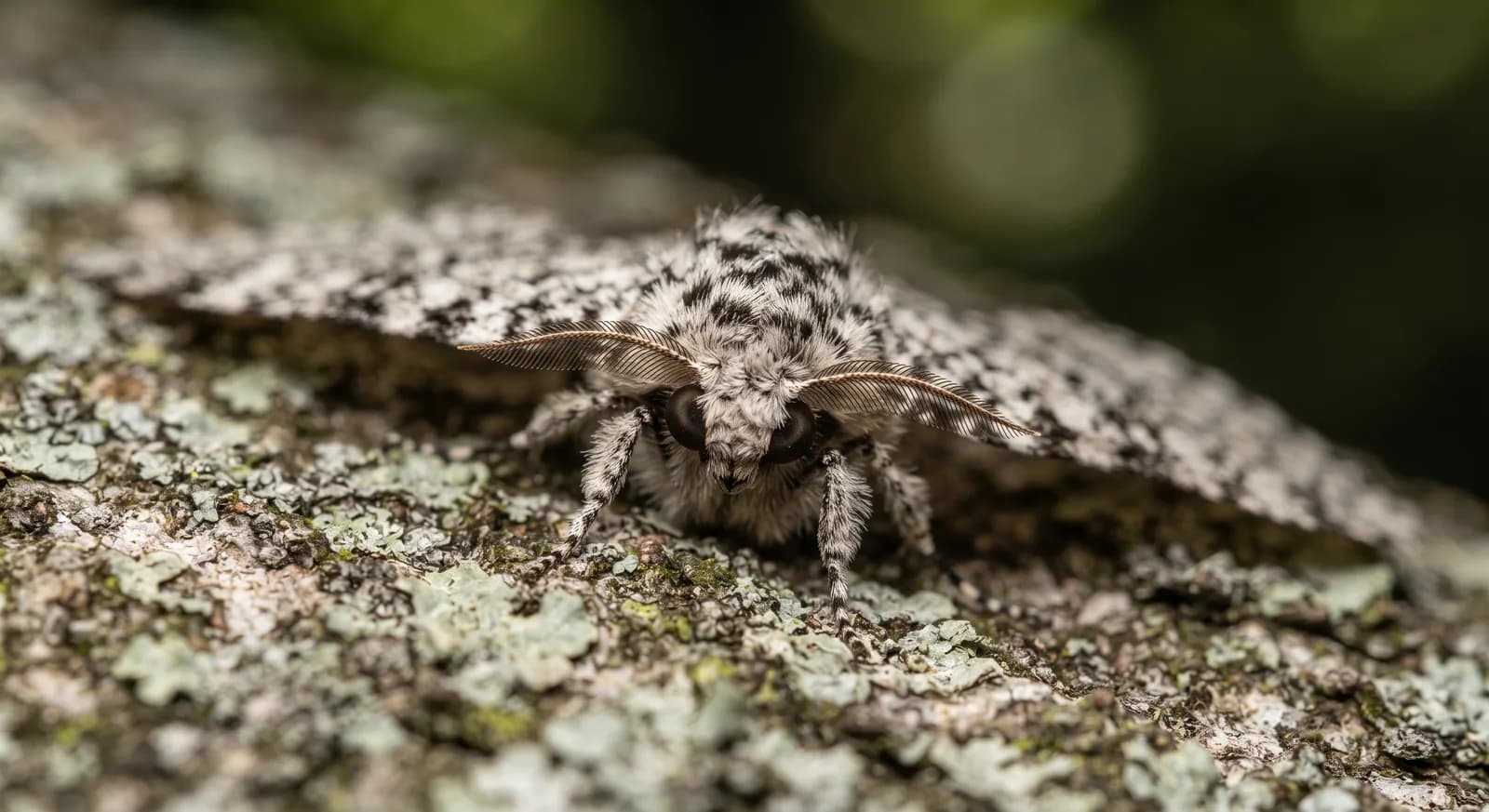
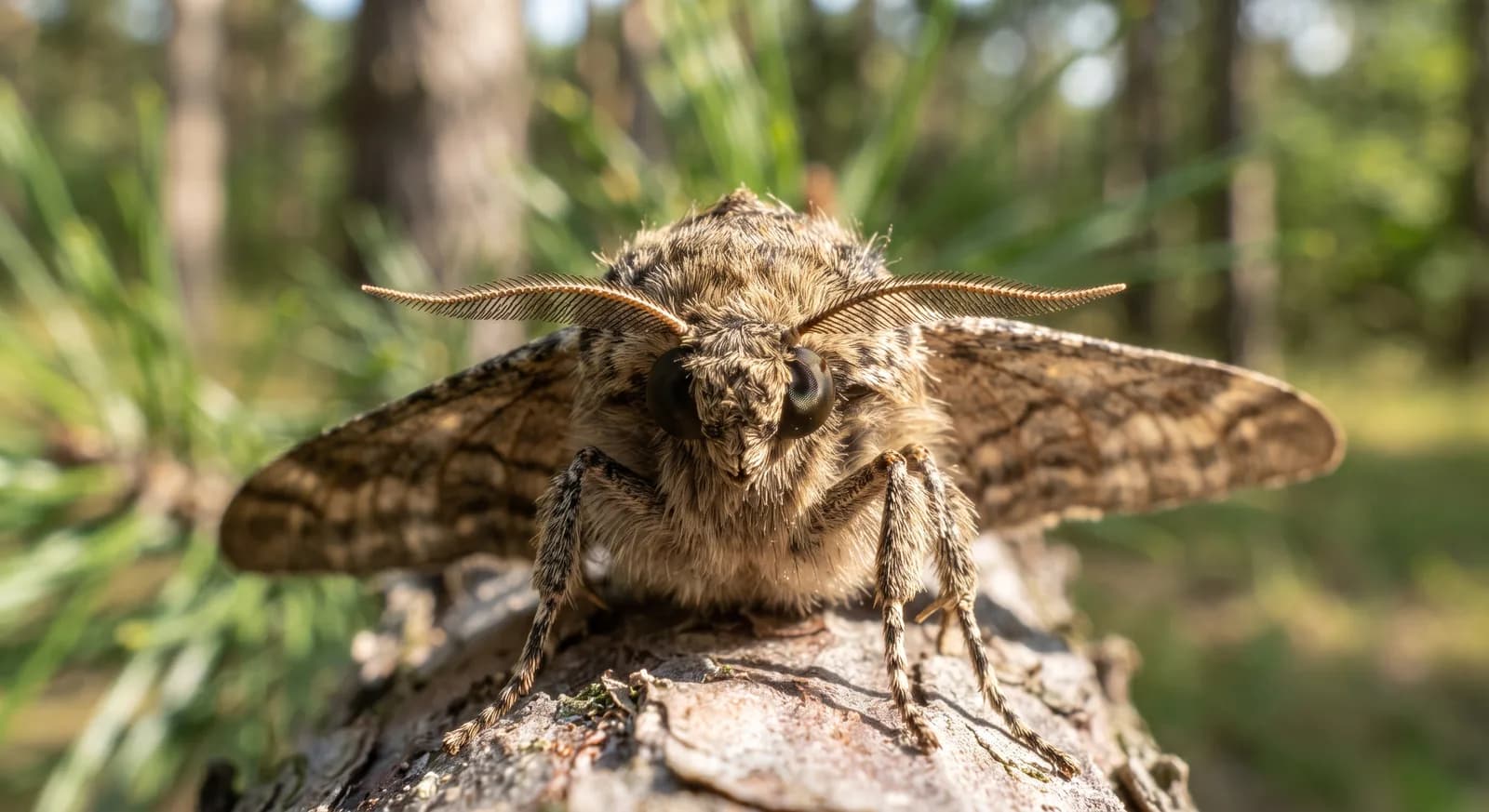
A grey moth with three cross-bands on the wings, unobtrusive as an adult but unmistakable in its larval stage: dark brown caterpillars with orange bands and a dense covering of urticating hairs, which travel in single file and weave tents of white silk in the tops of pine trees.
Size
3 cm – 4 cm
Diet
Herbivore
Feeds mainly on plants.
Activity
Nocturnal
Active mainly at night.
Social structure
Colony
Lives in large concentrations, often for breeding reasons.
Sighting difficulty
Unknown
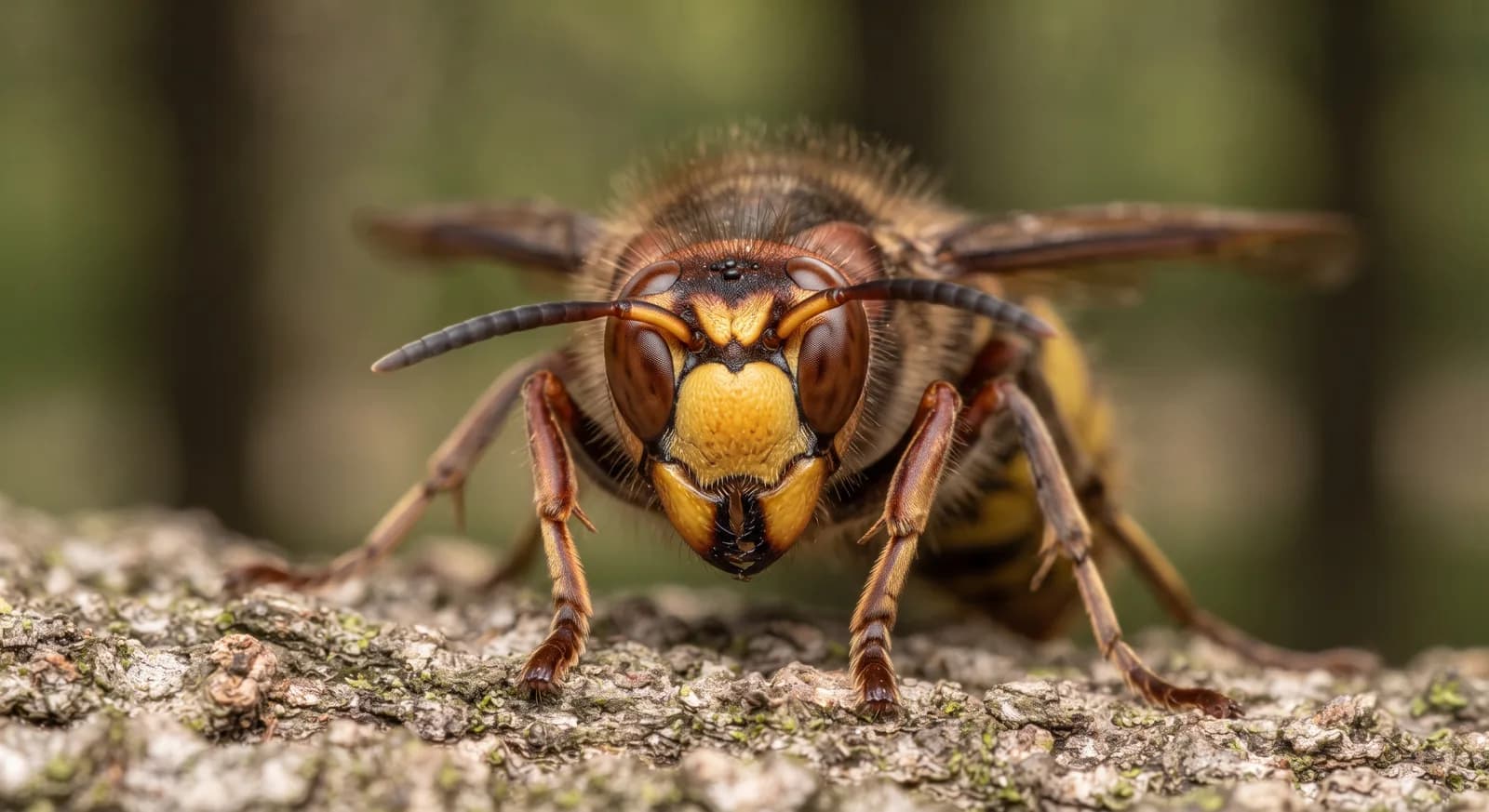
AI-generated images: illustrations, not photographs.
Sources consulted: Generalitat Valenciana - Servicio de Sanidad Forestal; Comunidad de Madrid; Gobierno de Aragón (Sanidad Forestal); Vega et al., Actas Dermo-Sifiliográficas 2011; Koppert; Junta de Andalucía
Best time: The silk nests are visible in winter; the descending processions, between February and April; the moths, in July and August
Parks and dive sites where this species has been documented — showing 10 of 45.
Other species in the catalogue with the most in common with Pine Processionary — same habitat, park, country, tags or family.
Based on what we already know about pine processionary.
Share an experience, a fun fact or a tip for seeing the pine processionary.
Be the first to comment.
The pins mark the parks where its presence is documented.