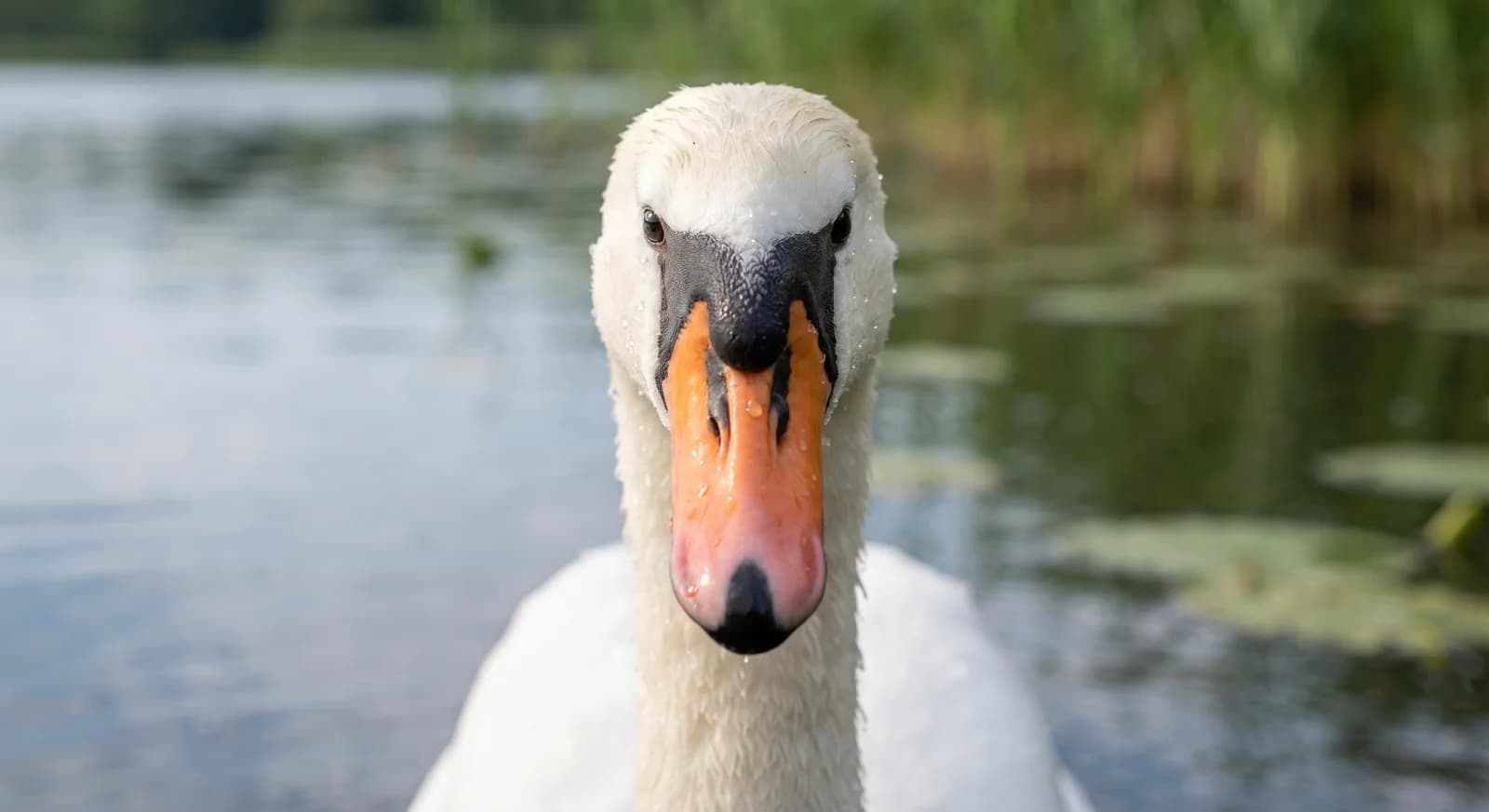
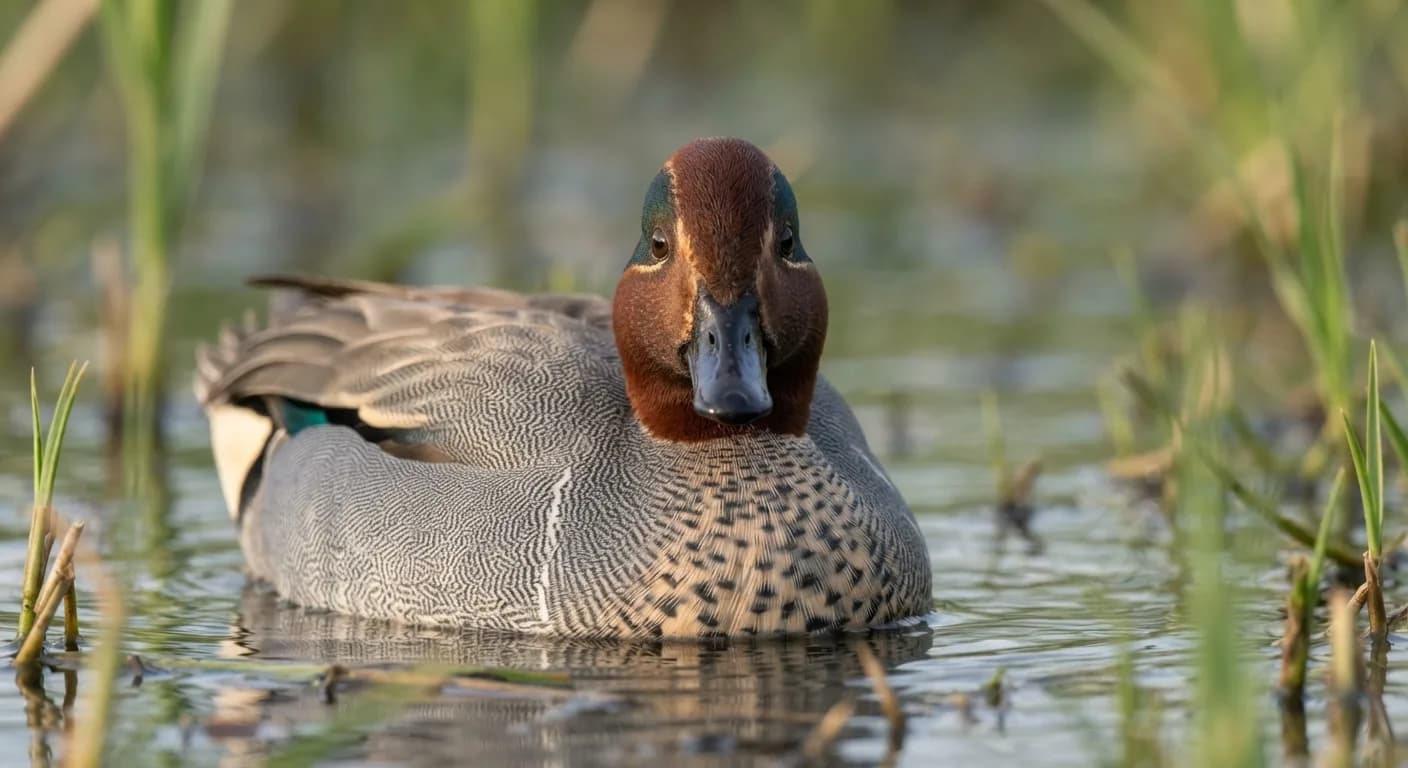
One of the 10 ducks on WAnimals

Birds · Anseriformes · Anatidae
Netta rufina
The species is abundant and widely distributed; it faces no significant short-term risk.
A large diving duck with a reddish, bulky head in the male and an intensely red bill. Its scientific name combines the Greek netta, duck, and the Latin rufina, golden red. Unlike other diving ducks, the Netta are reluctant to dive and feed more like dabbling ducks.
Weight
1.1 kg on average
Size
up to 57 cm
Diet
Herbivore
Feeds mainly on plants.
Activity
Diurnal
Active mainly during the day.
Social structure
Colony
Lives in large concentrations, often for breeding reasons.
AI-generated images: illustrations, not photographs.
Sources consulted: IUCN Red List 2016 (e.T22680348A86012189) · Camacho, C. y Molina, B. (Enciclopedia Virtual de los Vertebrados Españoles, MNCN-CSIC) · Suárez y Uríos 1999 · Mateo et al. 2000 · Defos du Rau et al. 2005 · Jobling 2010, The Helm Dictionary of Scientific Bird Names · Pallas 1773 · Kaup 1829
Best time: All year round in the marshes and lagoons of eastern and southern Spain
Parks and dive sites where this species has been documented — showing 10 of 59.
Other species in the catalogue with the most in common with Red-crested Pochard — same habitat, park, country, tags or family.
Based on what we already know about red-crested pochard.
The pins mark the parks where its presence is documented.