One of the 5 mosquitoes on WAnimals
Insects · Diptera · Culicidae
Northern House Mosquito
Culex pipiens
The species is abundant and widely distributed; it faces no significant short-term risk. See full glossary
It is one of the main vectors of West Nile virus and several forms of encephalitis, passed on by feeding first on infected birds and then on people.
Size
0.4 cm – 1 cm
Diet
Carnivore
Feeds mainly on other animals.
Activity
Nocturnal
Active mainly at night.
Social structure
Solitary
Lives and hunts alone, joining others only to breed.
Sighting difficulty
Easy
Fun facts
- Only the female takes blood, which she needs to develop her eggs.
- It is one of the main vectors of West Nile virus.
- Its eggs are grouped into small boat-shaped rafts that float on the water.
- It is the common house mosquito, the one that buzzes around the bedroom in summer. That buzz is the beating of its wings, and it has a purpose: males and females adjust their wingbeat frequency to synchronise during courtship.
- It is the main vector of West Nile virus in Europe and North America, a virus that circulates among birds and for which people and horses are accidental hosts.
- It has two very different ecological forms: the surface form, which bites mainly birds and needs to hibernate and to mate in swarms, and the underground form, which lives in sewers and metro systems, bites mammals, does not hibernate and can lay eggs without a blood meal.
- That underground form starred in a famous episode: the London Underground population, isolated below ground, was studied throughout the twentieth century as a case of speciation in progress, and during the bombing raids of the Second World War it tormented those sheltering in the tunnels.
- The female lays her eggs clustered in a floating raft of a couple of hundred, which stays afloat like a cork.
Life cycle & biology
- Skeleton type
- Invertebrate - chitin exoskeleton (insect)
- Habitat & environment
- Urban, suburban and rural areas across the temperate northern hemisphere, tied to standing or polluted water
- Birth weight
- A tiny egg under 1 mm, laid in floating rafts of 100-350
- Size at birth
- A fast-growing larva (a wriggler) through 4 instars in standing water
- Sexual maturity
- Reached once metamorphosis is complete, barely days after the egg hatches
- Gestation / incubation
- A full cycle from egg to adult of 1 to 2 weeks depending on temperature (under a week in summer)
- Litter / clutch size
- 100 to 350 eggs per floating raft, and a female may produce several rafts in her life
Sources consulted: MosquitoMagnet; CDC Culex Life Cycle; Indiana Dept. of Health; Britannica; bioRxiv (biocontrol predation study); Ohioline Ohio State University; ScienceInsights; Restored CDC
Where to find it
See its range on the interactive mapRelated species
Other species in the catalogue with the most in common with Northern House Mosquito — same habitat, park, country, tags or family.
African Malaria Mosquito
Anopheles gambiae
Yellow Fever Mosquito
Aedes aegypti
Tiger Mosquito
Aedes albopictus
Water Opossum
Chironectes minimus
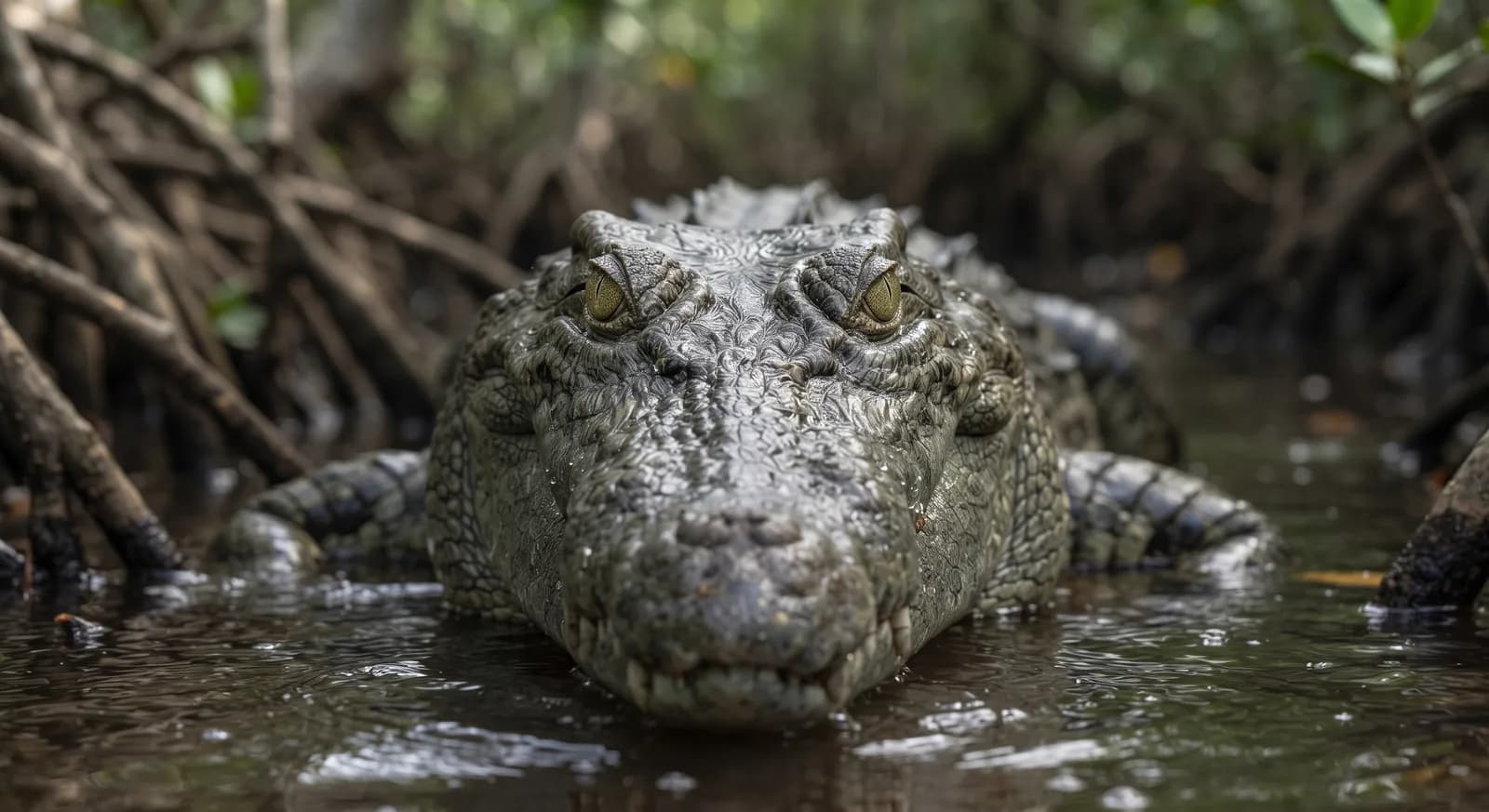 Least Concern
Saltwater Crocodile
Crocodylus porosus
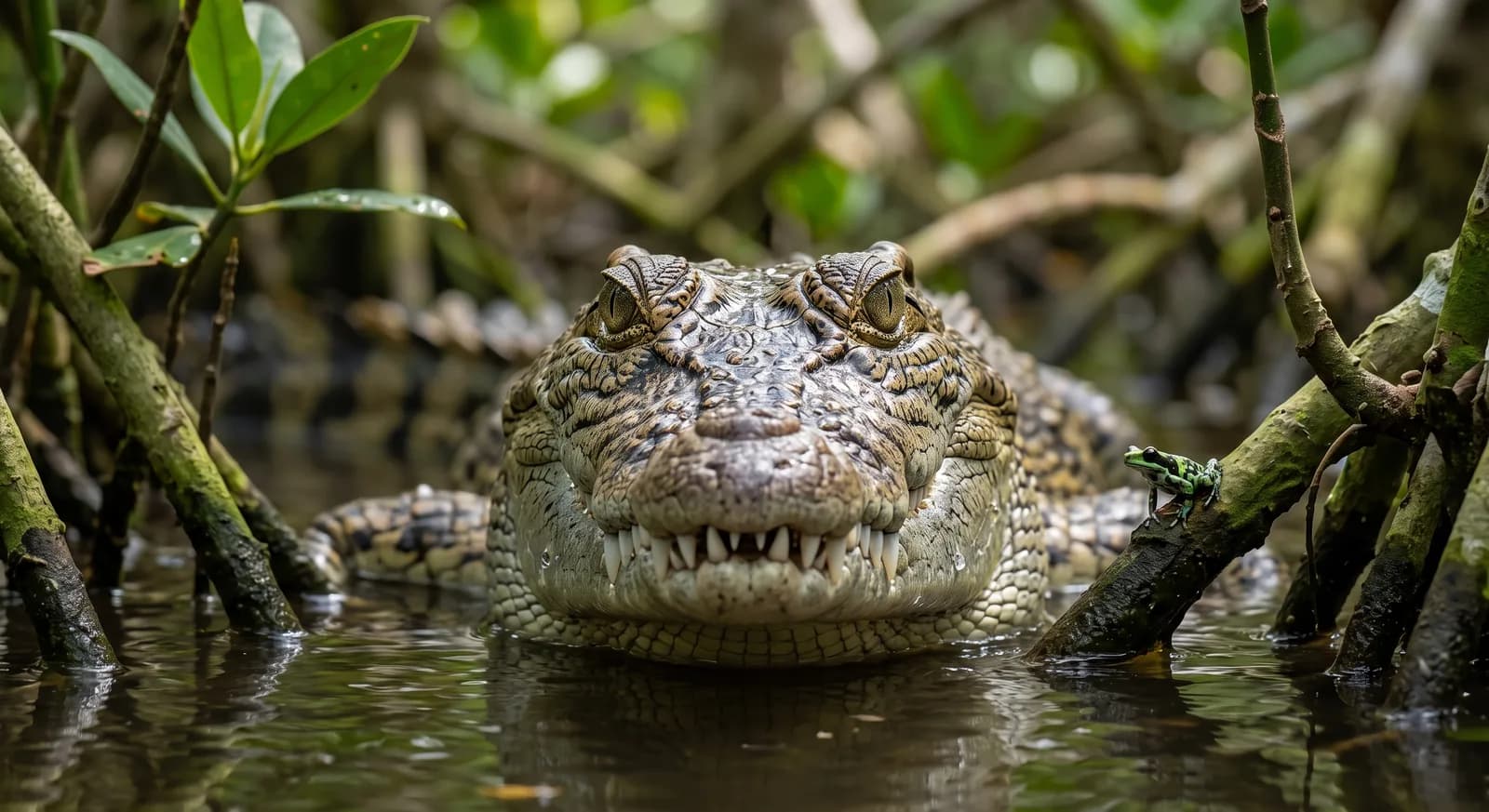 Least Concern
Morelet's Crocodile
Crocodylus moreletii
Keep exploring
Based on what we already know about northern house mosquito.
Comments
Share an experience, a fun fact or a tip for seeing the northern house mosquito.
Be the first to comment.