- Skeleton type
- Invertebrate - chitin exoskeleton (insect)
- Habitat and environment
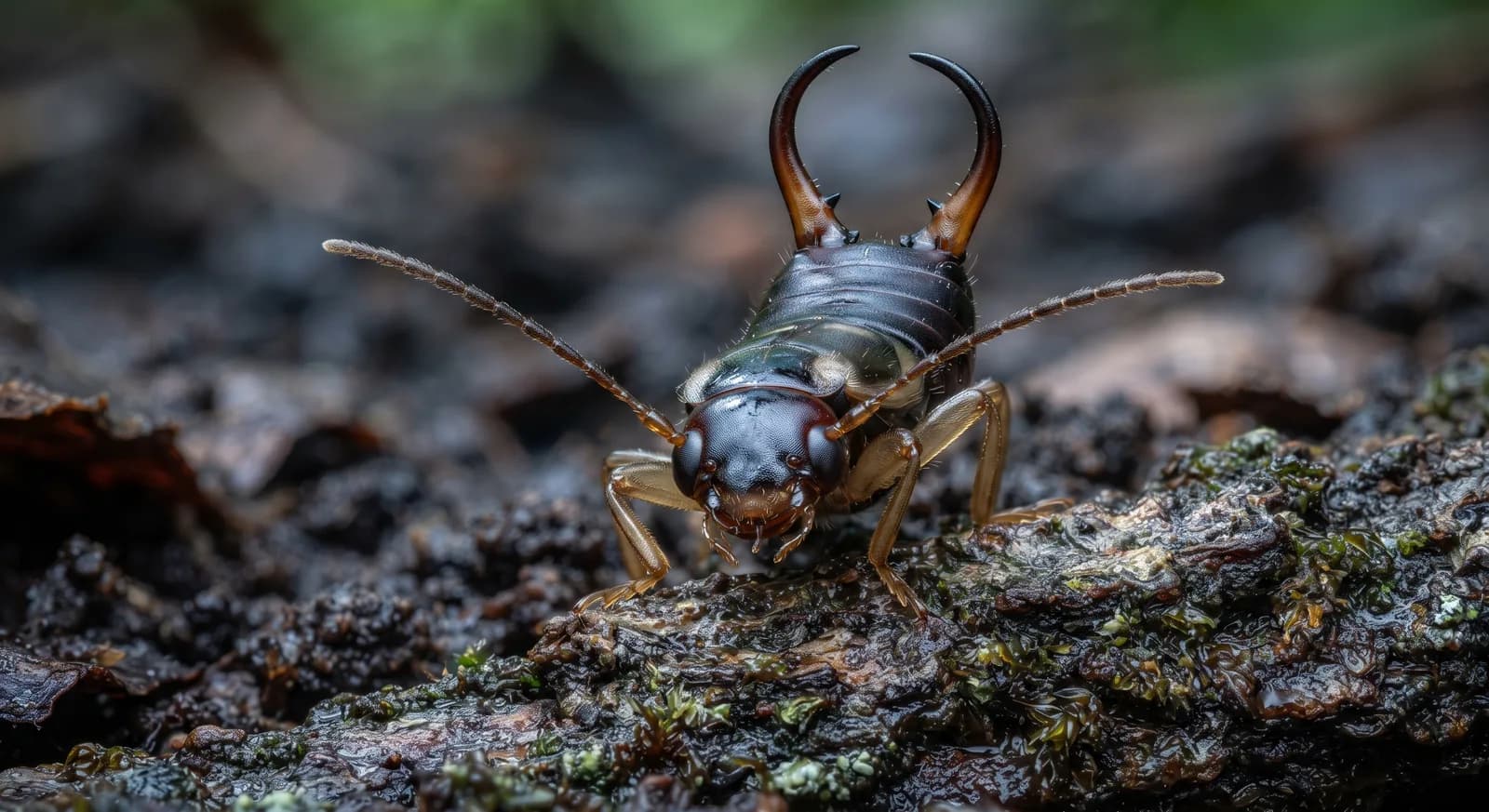
- Gardens, orchards, crevices and damp ground across Europe; widely introduced to North America and Australia
- Birth weight
- Eggs laid in an underground burrow and actively tended by the mother
- Size at birth
- A nymph like a miniature adult on hatching, with no developed wings
- Sexual maturity
- Once the 4 nymphal stages are complete (several months)
- Gestation / incubation
- 20-70 days depending on the time of year (faster in summer, slower in spring)
- Litter / clutch size
- 30 to 55 eggs in the first clutch, with a smaller second one
Sources consulted: University of Florida Entomology (EENY483) · PMC (Australian lifecycle study, genome assembly study) · OpenLearning.blog · Beetlesbug.com · Penn State Extension · Ficha de especie de Forficula auricularia · Ficha de especie de Forficula auricularia (Crumb, Eide & Bonn 1941 · Gingras & Tourneur 2001)