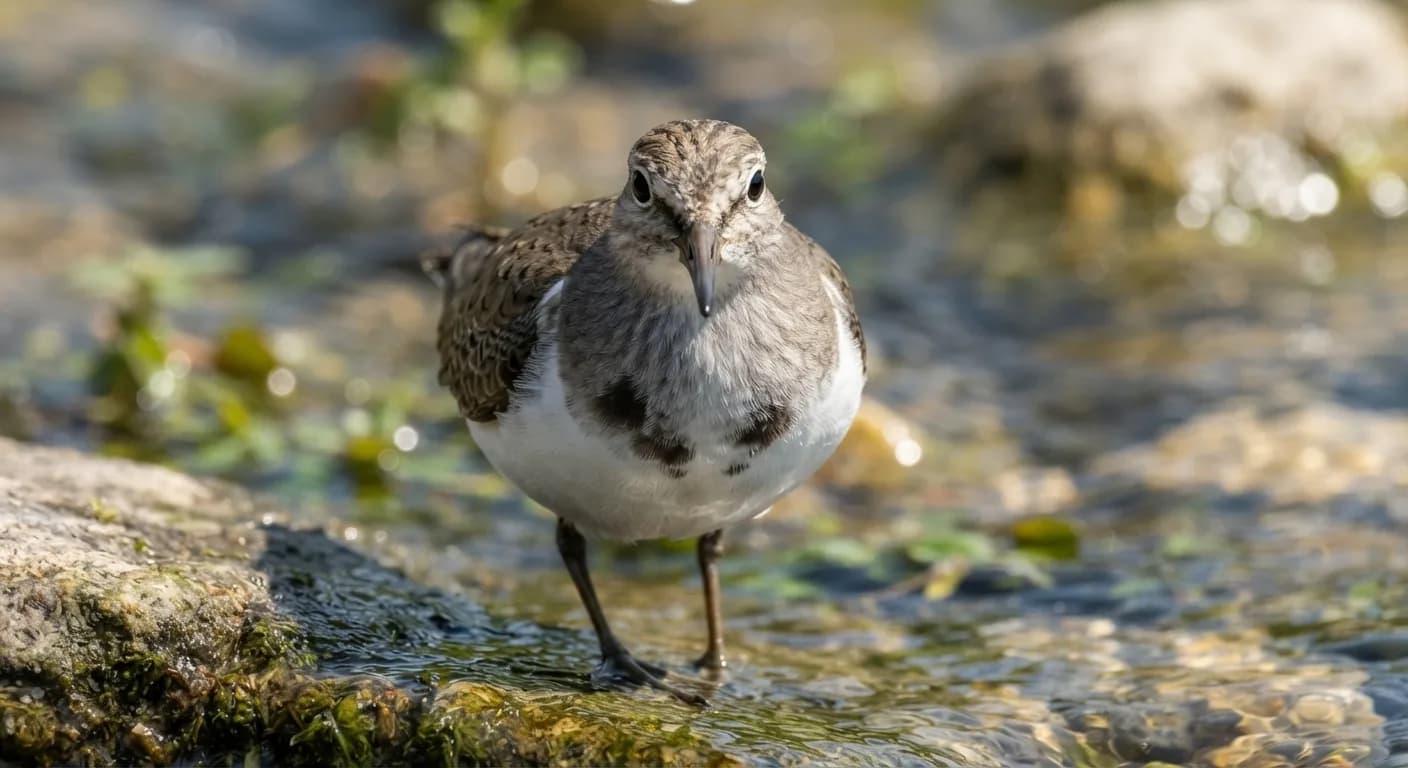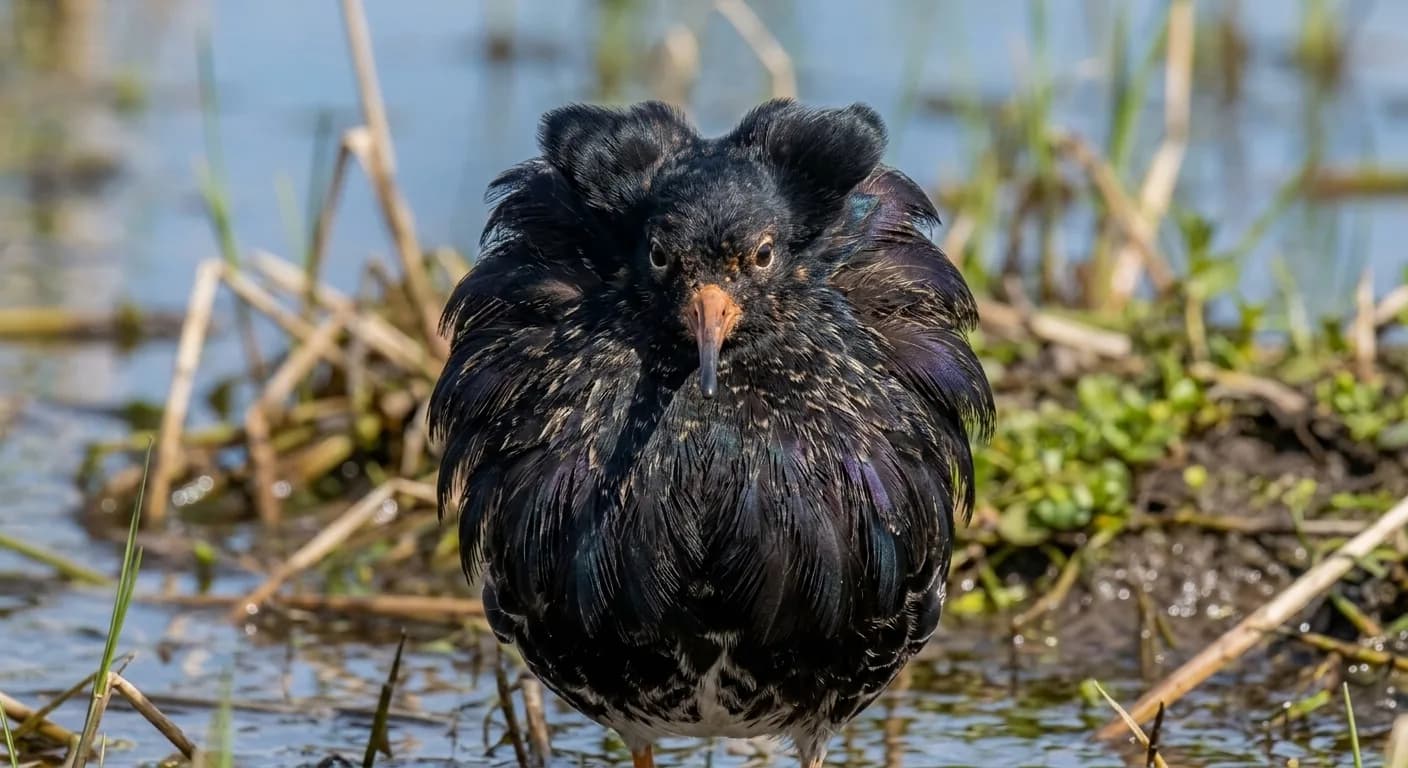
Birds · Charadriiformes · Scolopacidae
Calidris pugnax
The species is abundant and widely distributed; it faces no significant short-term risk.
The ruff is a wader with one of the most extraordinary breeding systems in the animal kingdom. In spring the males grow ruffs and head tufts of feathers in colours that differ sharply from one individual to another and gather at collective leks where they compete in front of the females. There are three genetic types of male, with completely different strategies, determined by a supergene inherited as a single block.
Weight
102 g – 170 g
Size
20 cm – 32 cm
Life expectancy
14 years
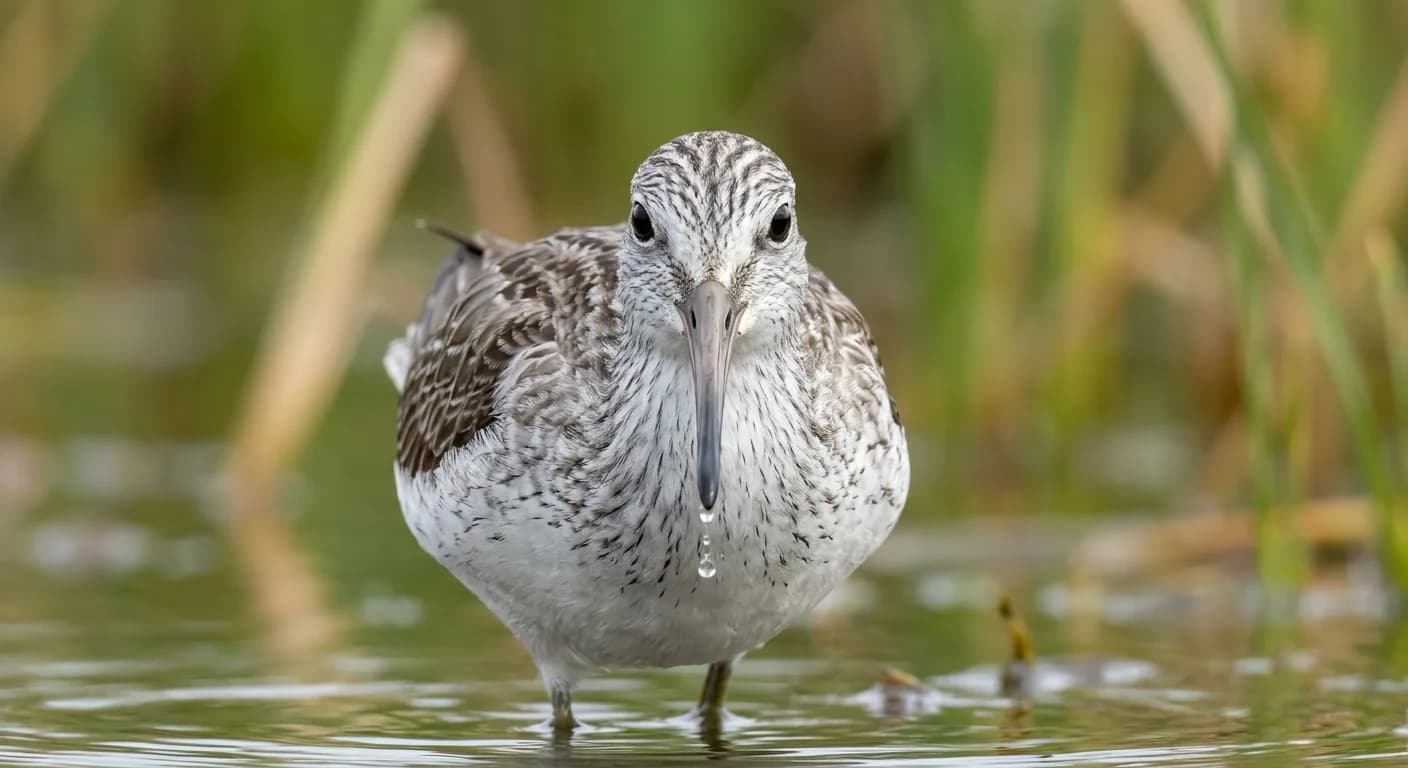
Diet
Insectivore
Feeds mainly on insects and other invertebrates.
Activity
Diurnal
Active mainly during the day.
Social structure
Solitary
Lives and hunts alone, joining others only to breed.
Sighting difficulty
Easy
AI-generated images: illustrations, not photographs.
Sources consulted: https://es.wikipedia.org/wiki/Calidris_pugnax
Best time: From March to April and from August to October in Iberian rice fields and marshes, on passage; in spring the males show their breeding ruffs.
Parks and dive sites where this species has been documented — showing 10 of 37.
Other species in the catalogue with the most in common with Ruff — same habitat, park, country, tags or family.
Based on what we already know about ruff.
Share an experience, a fun fact or a tip for seeing the ruff.
Be the first to comment.
The pins mark the parks where its presence is documented.