Skip to content
WAnimals
  • Map
  • Species
  • Parks
  • Diving
Log inCreate account
WAnimals

The guide for travellers and animal lovers: discover, plan and share your wild adventures around the world.

Discover wildlife

  • Species
  • Ecosystems
  • Glossary
  • Tags

Explore places

  • Map
  • Countries
  • Parks
  • Diving

Plan experiences

  • Guides

Learn

  • Blog

Resources

  • About us
  • How we build our profiles
  • Help centre
  • Contact
  • Install the app

Follow us

Account

  • Log in
  • Create account

© 2026 WAnimals. All rights reserved.

Terms of servicePrivacyCookiesLegal notice
MapSpeciesParksDiving
  1. Home
  2. Species
  3. Common Greenshank

Common Greenshank (Tringa nebularia)

Birds · Charadriiformes · Scolopacidae

Common Greenshank

Tringa nebularia

Least Concern

The species is abundant and widely distributed; it faces no significant short-term risk.

Spotted something wrong?

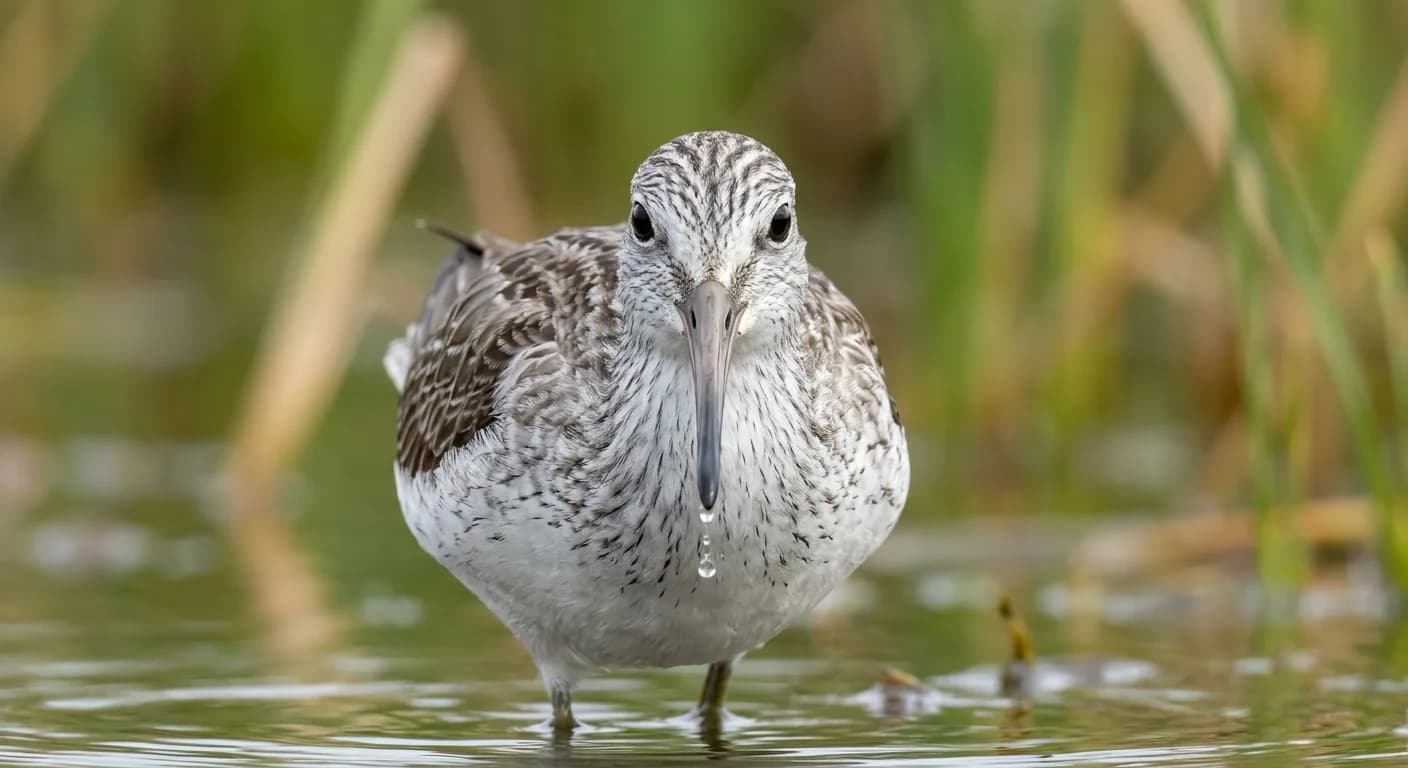
The common greenshank is a slender, pale wader with greenish legs and a long bill slightly upturned at the tip. It breeds in the peat bogs of the taiga in Scandinavia and Siberia and spends the winter in marshes and estuaries of Africa, Asia and southern Europe, including the Spanish coast. It actively chases small fish and crustaceans by running through shallow water, a more dynamic style of hunting than that of most waders.

Weight

125 g – 290 g

Size

30 cm – 35 cm

Life expectancy

17 years
Diet

Carnivore

Feeds mainly on other animals.

Activity

Diurnal

Active mainly during the day.

Social structure

Solitary

Lives and hunts alone, joining others only to breed.

Temperate forestTundraOceanFreshwater
97countries61parks13same family

AI-generated images: illustrations, not photographs.

Fun facts

  • GeneralIt runs through the shallows after small fish with its bill open.
  • It hunts on the run: instead of probing the mud like other waders, it chases fry and shrimp through shallow water in zigzag dashes, sometimes sweeping the water sideways with its bill.
  • Its fluting three-syllable call is one of the most characteristic sounds of the Spanish marshes in winter, and usually gives it away before it is seen.
  • It breeds in taiga peat bogs thousands of kilometres away and turns up in the saltpans of southern Spain from July, as soon as the breeding season is over.

Life cycle and biology

Skeleton type
Vertebrate - internal bony skeleton (bird)
Habitat and environment
Peat bogs and clearings in the taiga for breeding; marshes, salt pans and estuaries in winter
Birth weight
Precocial: born covered in down and leaves the nest within a few hours
Size at birth
Precocial: born covered in down and leaves the nest within a few hours
Sexual maturity
12 months
Gestation / incubation
24 days of incubation
Litter / clutch size
4 eggs

Sources consulted: Wikipedia (es): Tringa nebularia

Where to find it

Best time: From August to April in Iberian marshes, saltpans and rice fields; it is easily detected by its loud, repeated three-note call.

Loading map…

Where to see it

Parks and dive sites where this species has been documented — showing 10 of 61.

Related species

Other species in the catalogue with the most in common with Common Greenshank — same habitat, park, country, tags or family.

Same taxonomic family

Keep exploring

Based on what we already know about common greenshank.

Share an experience, a fun fact or a tip for seeing the common greenshank.
One of the 2 shanks on WAnimals
See full glossary
This page in other languages: Español · Deutsch · Français · Português · Italiano

The pins mark the parks where its presence is documented.

See its range on the interactive map→
Doñana National ParkSpain
SarekSweden
PadjelantaSweden
JotunheimenNorway
HardangerviddaNorway
Pallas-YllästunturiFinland
Urho KekkonenFinland
CairngormsUnited Kingdom
IchkeulTunisia
Banc d'ArguinMauritania
See all 61 parks
Least Concern

Common Redshank

Tringa totanus

Least Concern

Sanderling

Calidris alba

Common SandpiperLeast Concern

Common Sandpiper

Actitis hypoleucos

WhimbrelLeast Concern

Whimbrel

Numenius phaeopus

Least Concern

Common Snipe

Gallinago gallinago

Least Concern

Eurasian Woodcock

Scolopax rusticola

CountriesFinland
ParksDoñana National ParkSpain
TagsCarnivore
Carnivore
Diurnal
Solitary
Bird
Temperate forest
Tundra
Ocean
Freshwater

Asia34

Europe29

Africa26

Oceania7

North America1

Finland
Norway
Sweden
Germany
Netherlands
Spain
Bahrain
Bangladesh
Brunei
Cambodia
China
India
Indonesia
Iran
Iraq
Israel
Japan
Kazakhstan
Kuwait
Lebanon
Malaysia
Maldives
Mongolia
Myanmar
Oman
Pakistan
Philippines
Qatar
Russia
Saudi Arabia
Singapore
Sri Lanka
Syria
Taiwan
Thailand
Timor-Leste
Türkiye
United Arab Emirates
Vietnam
Yemen
Albania
Belarus
Belgium
Bosnia and Herzegovina
Croatia
Cyprus
Denmark
Estonia
Finland
France
Germany
Greece
Iceland
Ireland
Italy
Latvia
Lithuania
Malta
Monaco
Montenegro
Netherlands
Norway
Poland
Portugal
Slovenia
Spain
Sweden
Ukraine
United Kingdom
Algeria
Comoros
Djibouti
Egypt
Eritrea
Gambia
Ghana
Guinea-Bissau
Kenya
Libya
Madagascar
Mauritania
Mauritius
Mayotte
Morocco
Mozambique
Namibia
Nigeria
Réunion
Senegal
Seychelles
Somalia
South Africa
Sudan
Tanzania
Tunisia
Australia
Guam
Marshall Islands
Micronesia
New Zealand
Northern Mariana Islands
Palau
Greenland