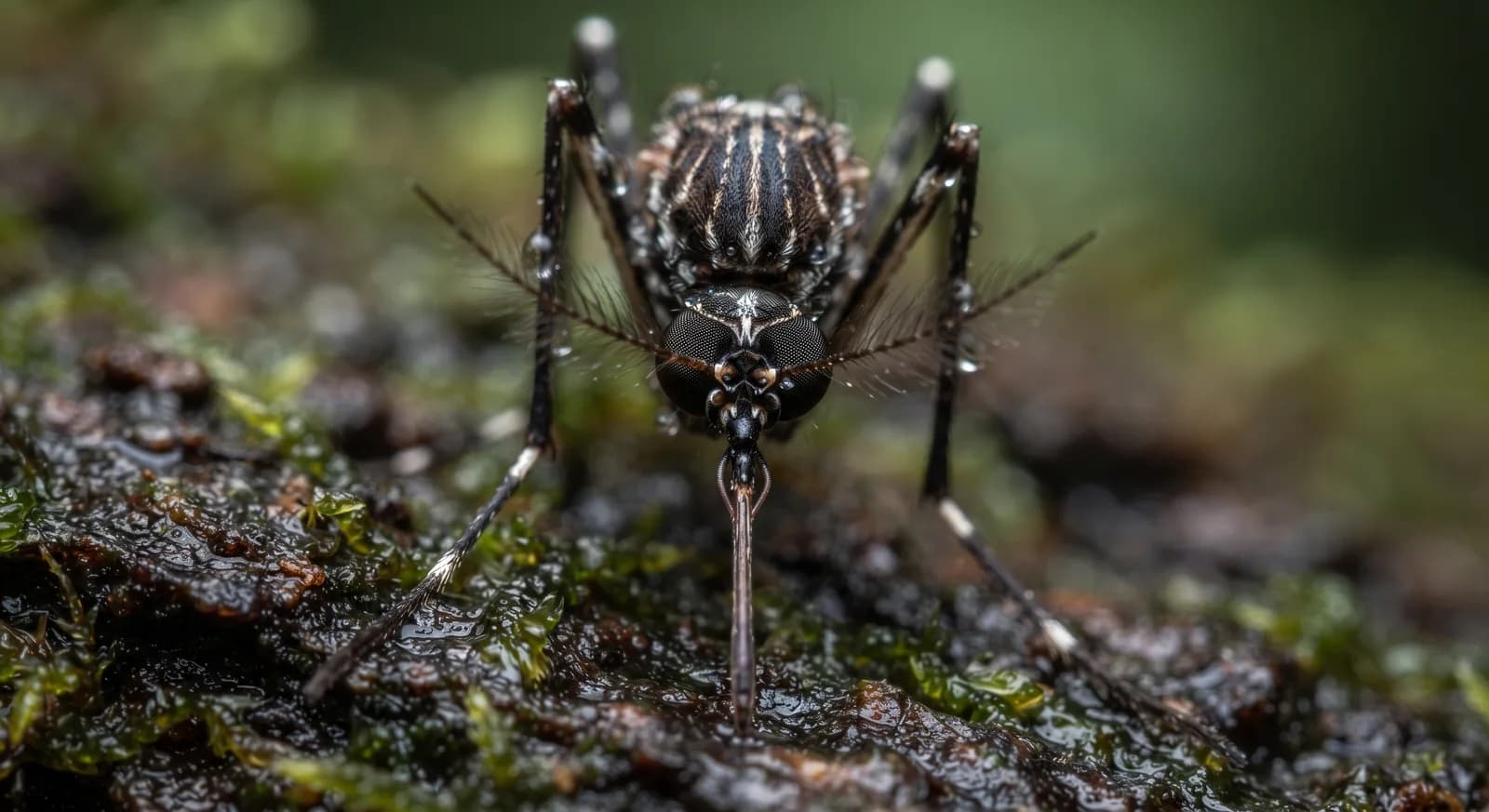
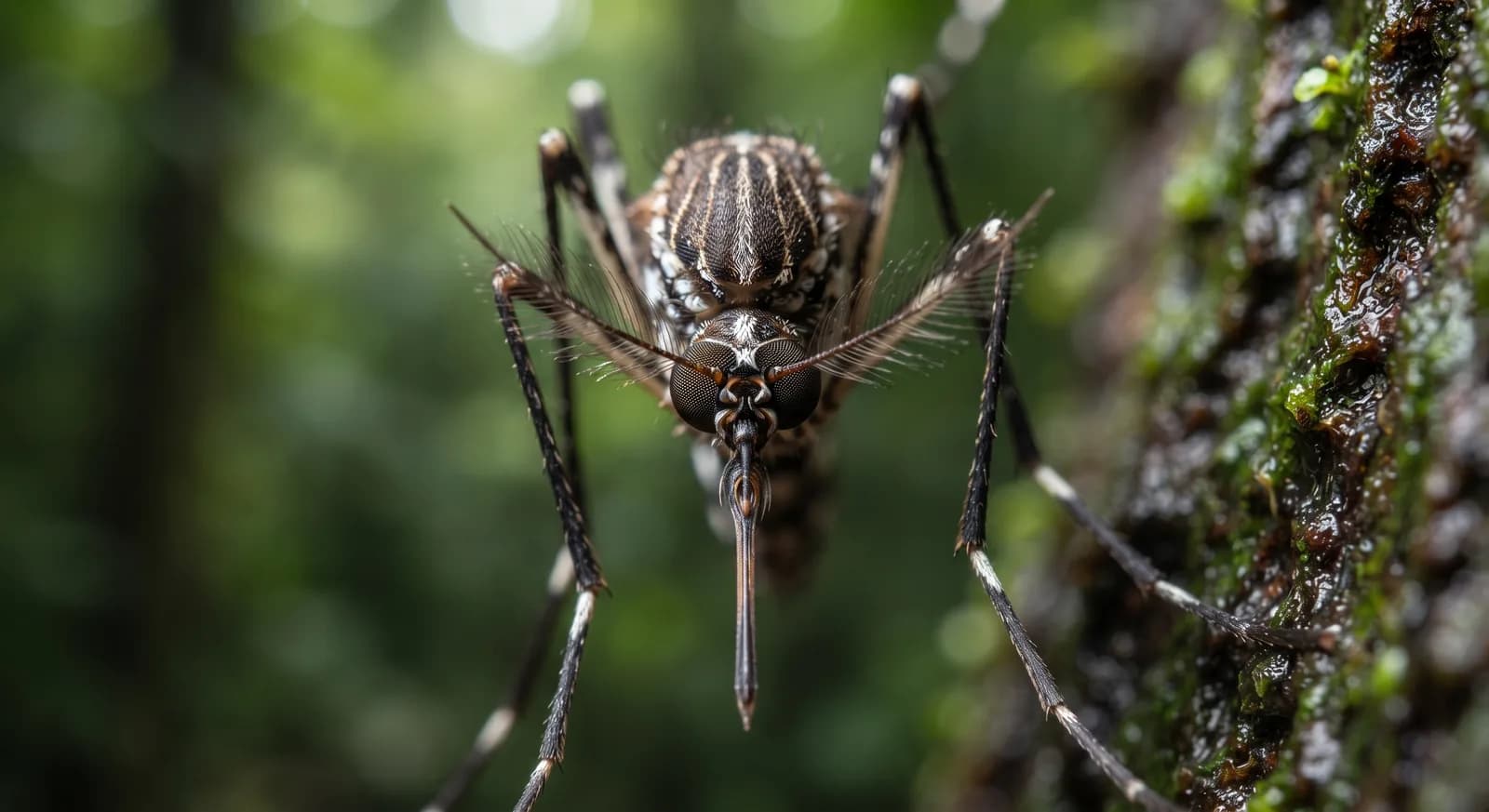
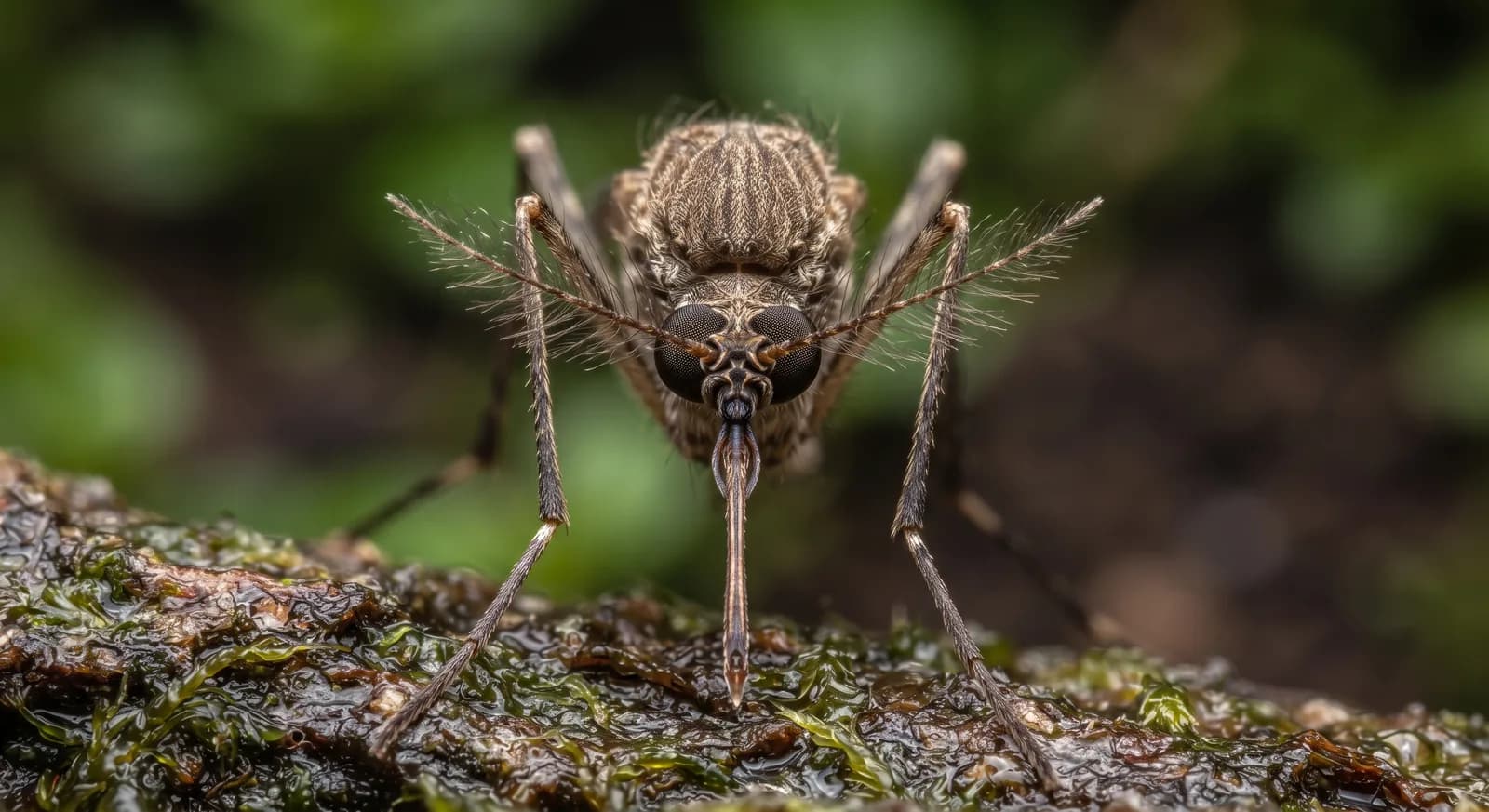
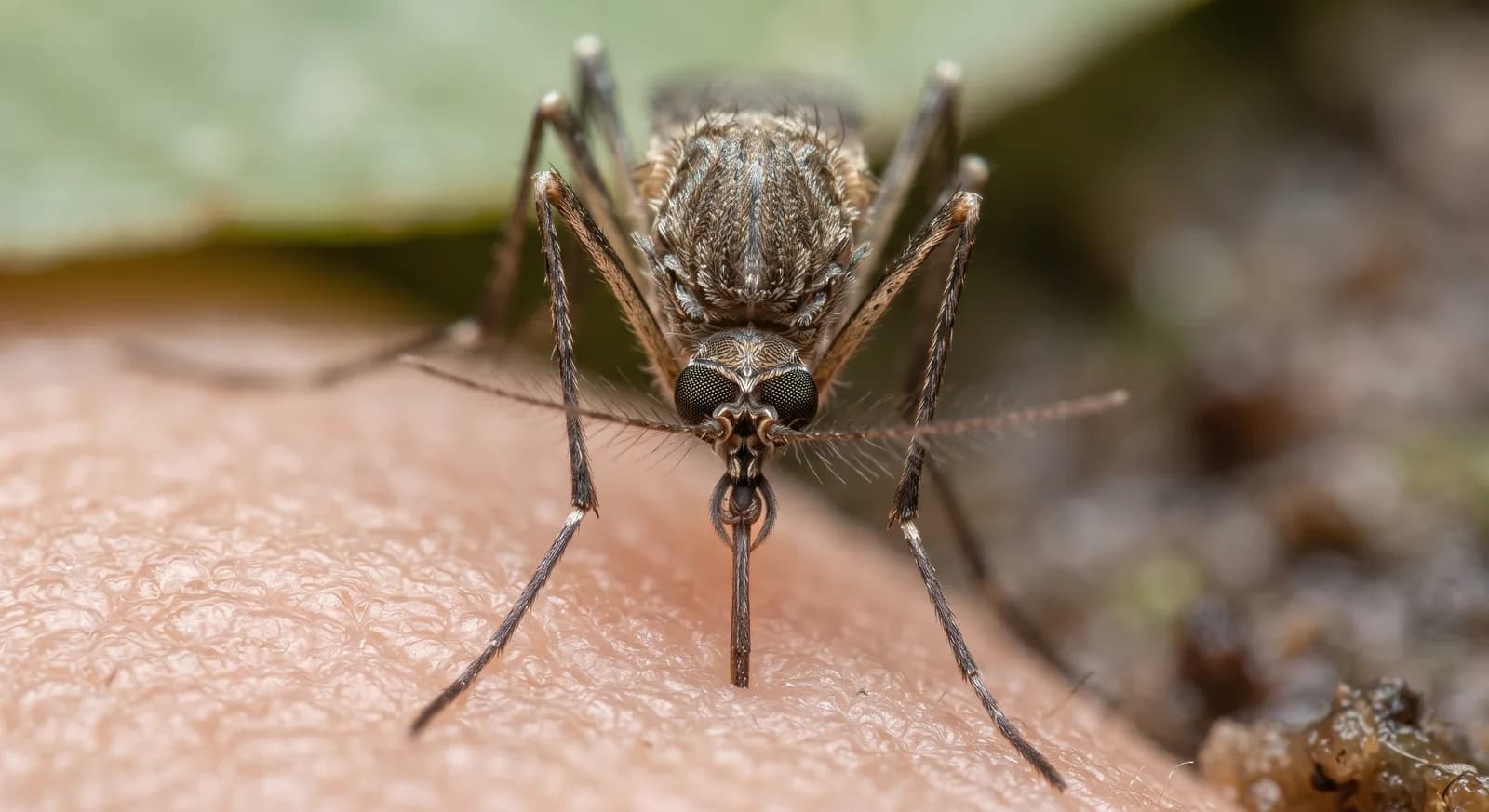
Aedes aegypti, better known as the yellow fever mosquito, is a mosquito that can carry the dengue and yellow fever viruses, as well as other diseases such as chikungunya, Zika fever and Mayaro virus. It is a member of the subgenus Stegomyia, within the genus Aedes.
Size
0.4 cm – 0.7 cm
Diet
Carnivore
Feeds mainly on other animals.
Activity
Diurnal
Active mainly during the day.
Social structure
Solitary
Lives and hunts alone, joining others only to breed.
AI-generated images: illustrations, not photographs.
Fun facts
It breeds almost exclusively in artificial containers of clean water: plant pot saucers, tyres, drums and guttering, which has made it a fully urban mosquito.
Its eggs survive for months when dry and hatch as soon as they are wetted, so they travel the world inside used tyres and ornamental plants.
Two new techniques are used against it: releasing sterile males and introducing the bacterium Wolbachia, which stops the mosquito from transmitting the viruses.
It transmits dengue, yellow fever, Zika and chikungunya, and it is the urban mosquito par excellence: it breeds in any container holding clean water in and around houses.
It bites by day, above all at dawn and dusk, which makes bed nets of little use against it.
It is an intermittent biter: it interrupts and resumes feeding several times and on several people, which multiplies its effectiveness as a transmitter.
Its eggs withstand desiccation for months. Laid on the dry wall of a container, they wait for the first rain to hatch, and that is the mechanism by which it travels around the world in used tyres.
A remarkable strategy is being deployed against it: infecting it with the bacterium Wolbachia, which blocks the replication of the dengue virus inside the mosquito itself and spreads through the population on its own. Trials by the World Mosquito Program in Indonesia managed to cut dengue cases by around 77%.
It is native to Africa and spread with the slave trade and maritime traffic from the 17th century onwards.
Life cycle and biology
Skeleton type
Invertebrate - chitin exoskeleton (insect)
Habitat and environment
Tropical and subtropical urban areas, in containers of standing water
Size at birth
Smooth, ovoid and elongated egg of about 1 mm; white when laid and glossy black within minutes
Sexual maturity
The female needs a blood meal to mature each batch of eggs; the number of eggs depends on the size of that meal
Gestation / incubation
The egg develops in barely two days in a warm climate and up to a week in a temperate one; once submerged it hatches at once
Litter / clutch size
100 to 200 eggs per clutch after each blood meal, with up to five clutches over a lifetime; the eggs are laid one by one, not in a raft
Sources consulted: https://es.wikipedia.org/wiki/Aedes_aegypti; Dengue Virus Net, ciclo de vida de Aedes aegypti; Estudio de vuelo libre de Aedes aegypti; datos morfometricos de ala (1,67-3,83 mm); Estudio de vuelo libre de Aedes aegypti (arXiv 1205.5260); Dengue Virus Net; CDC, ciclo de vida de los mosquitos Aedes
Where to find it
Best time: It breeds in artificial water containers, in and around dwellings; the eggs survive dry for more than a year, which makes control enormously difficult
Loading map…
Related species
Other species in the catalogue with the most in common with Yellow Fever Mosquito — same habitat, park, country, tags or family.
Same taxonomic family
Same taxonomic family
Same taxonomic family
Related to
Related to
Related to
Keep exploring
Based on what we already know about yellow fever mosquito.
Comments
Share an experience, a fun fact or a tip for seeing the yellow fever mosquito.