Bony fish · Beryciformes · Anoplogastridae
Fangtooth
Anoplogaster cornuta
The species is abundant and widely distributed; it faces no significant short-term risk. See full glossary
The fangtooth is a deep-sea fish of the family Anoplogastridae. It lives in deep water, distributed across tropical and temperate zones. The family contains only two very similar species with no known close relatives: Anoplogaster cornuta, which is found worldwide, and Anoplogaster brachycera, which is found in the tropical Pacific and in the Atlantic.
Size
10 cm – 18 cm
Lifespan
3 years
Diet
Carnivore
Feeds mainly on other animals.
Social structure
Solitary
Lives and hunts alone, joining others only to breed.
Sighting difficulty
Easy
Fun facts
- GeneralIt has the largest teeth in the ocean relative to body size.
- anatomíaRelative to the size of its head, it has some of the largest teeth in the whole ocean.
- The lower ones are so long that they do not fit in its mouth and slot into two sheaths on either side of the brain.
- The juveniles are so unlike the adults, with spines on the head and no fangs, that for years they were classified as a different species.
- Its skin, black and velvety, absorbs almost all the light that reaches it and makes it invisible against the biological lanterns of other animals.
- Relative to body size it has the largest teeth of any fish: the lower fangs are so long that they fit into sockets on either side of the brain when it closes its mouth.
- Adults and juveniles are so different that in the nineteenth century they were described as separate species: the young are grey, with long spines on the head and no fangs, and filter plankton with their gill rakers.
- Unlike many deep-sea fish, it does retain a swim bladder.
Life cycle & biology
- Habitat & environment
- The bathypelagic zone (500-5,000 m)
- Sexual maturity
- From about 13 cm
Sources consulted: https://es.wikipedia.org/wiki/Anoplogaster_cornuta
Where to find it
See its range on the interactive mapRelated species
Other species in the catalogue with the most in common with Fangtooth — same habitat, park, country, tags or family.
Spotted Wobbegong
Orectolobus maculatus
Horn Shark
Heterodontus francisci
 Least Concern
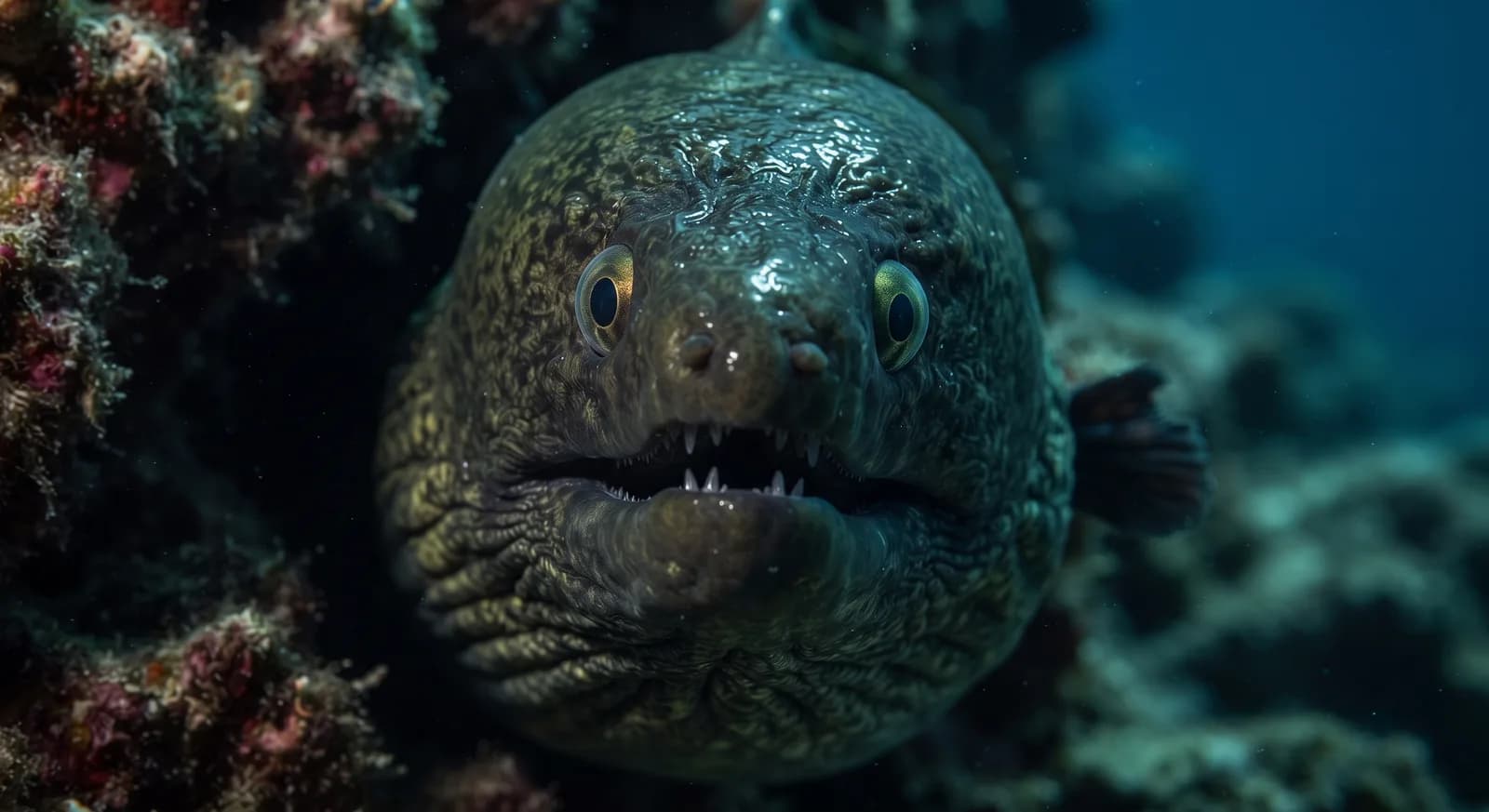
Green Moray
Gymnothorax funebris
Moray Eel
Muraena helena
 Least Concern
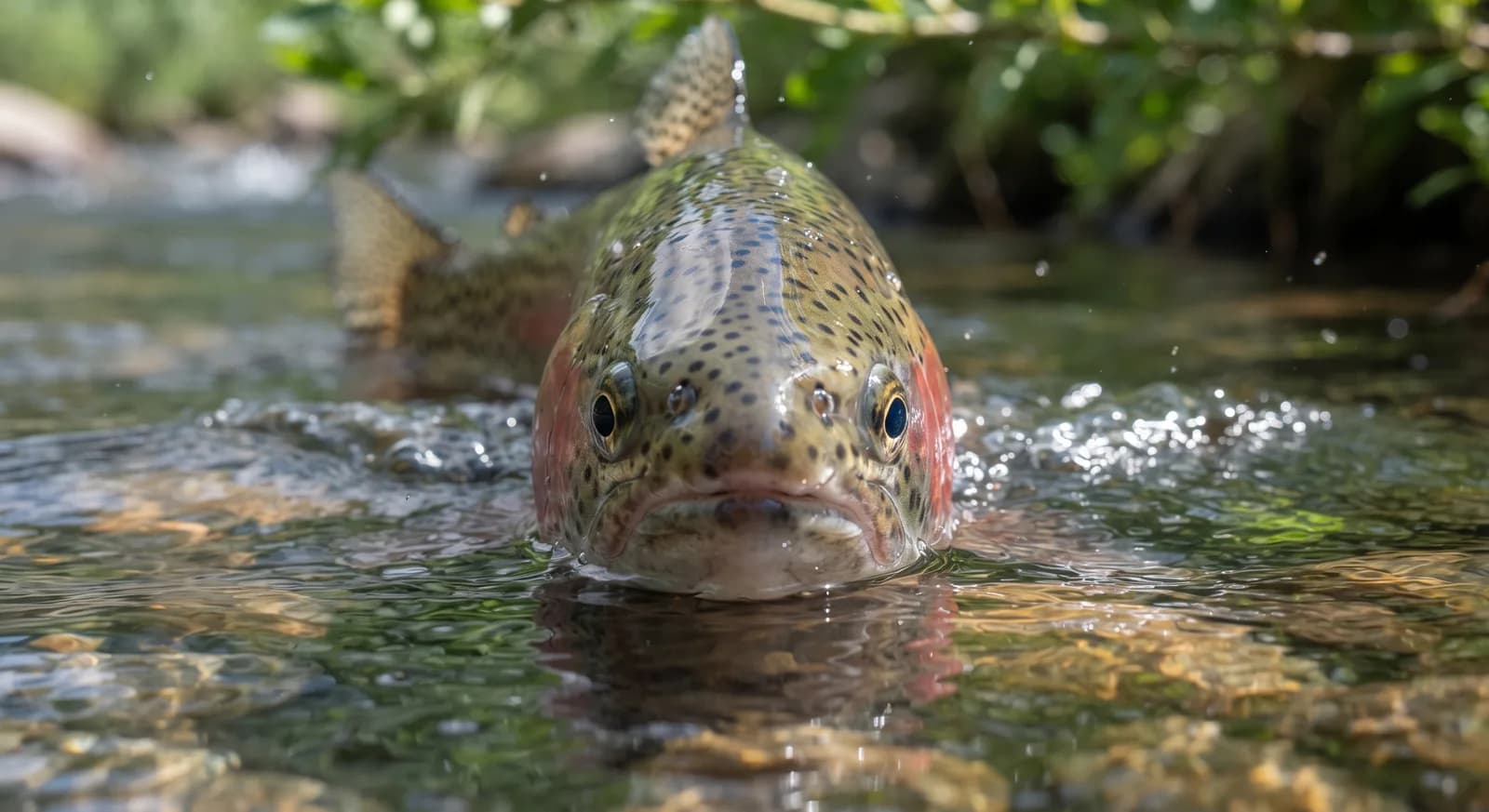
Rainbow Trout
Oncorhynchus mykiss
European Hake
Merluccius merluccius
Keep exploring
Based on what we already know about fangtooth.
Comments
Share an experience, a fun fact or a tip for seeing the fangtooth.
Be the first to comment.