One of the 3 anglers on WAnimals
Bony fish · Lophiiformes · Melanocetidae
Humpback Anglerfish
Melanocetus johnsonii
The species is abundant and widely distributed; it faces no significant short-term risk. See full glossary
The humpback anglerfish — known in Spanish as pez diablo de Johnson or rape abisal — is a deep-sea fish belonging to the family Melanocetidae, which is found in the depths of every ocean in the world.
Size
3 cm – 18 cm
Diet
Carnivore
Feeds mainly on other animals.
Social structure
Solitary
Lives and hunts alone, joining others only to breed.
Sighting difficulty
Easy
Fun facts
- GeneralThe female fishes with a glowing lure; the male is a tenth her size and does not hunt.
- reproducciónThe males, far smaller than the females, fuse to them physically and share their circulation for the rest of their lives.
- The light of the lure is not produced by the fish: it comes from bioluminescent bacteria housed in the bulb, which the anglerfish feeds and whose light it can control.
- In this species the male attaches to the female only temporarily and lets go again, unlike other deep-sea anglerfish in which the fusion is permanent and lifelong.
- Its stomach is so elastic that it can swallow prey larger than itself, a decisive advantage where food turns up only every several days.
- The male measures about 3 cm and the female up to 18: one of the most extreme cases of sexual dimorphism known.
- It can swallow prey larger than itself. A specimen of 6.6 cm had a viperfish of about 24 cm in its stomach.
- Its luminous lure does not glow on its own: the light is produced by symbiotic bacteria housed in the esca, the bulb at the tip of the rod.
- The bacterium was thought to depend entirely on the fish, because its genome is reduced to half that of a free-living bacterium. Later analyses showed the symbiosis is facultative: each can survive without the other.
- It is oviparous and its eggs float in gelatinous rafts; the larvae live in the top 100 m before descending.
- It owes its name to James Yate Johnson, the British naturalist who discovered it in Madeira.
Life cycle & biology
- Skeleton type
- Vertebrate - internal bony skeleton (fish)
- Habitat & environment
- The bathypelagic zone (1,000-4,000 m)
Sources consulted: https://es.wikipedia.org/wiki/Melanocetus_johnsonii
Where to find it
See its range on the interactive mapRelated species
Other species in the catalogue with the most in common with Humpback Anglerfish — same habitat, park, country, tags or family.
Spotted Wobbegong
Orectolobus maculatus
Horn Shark
Heterodontus francisci
 Least Concern
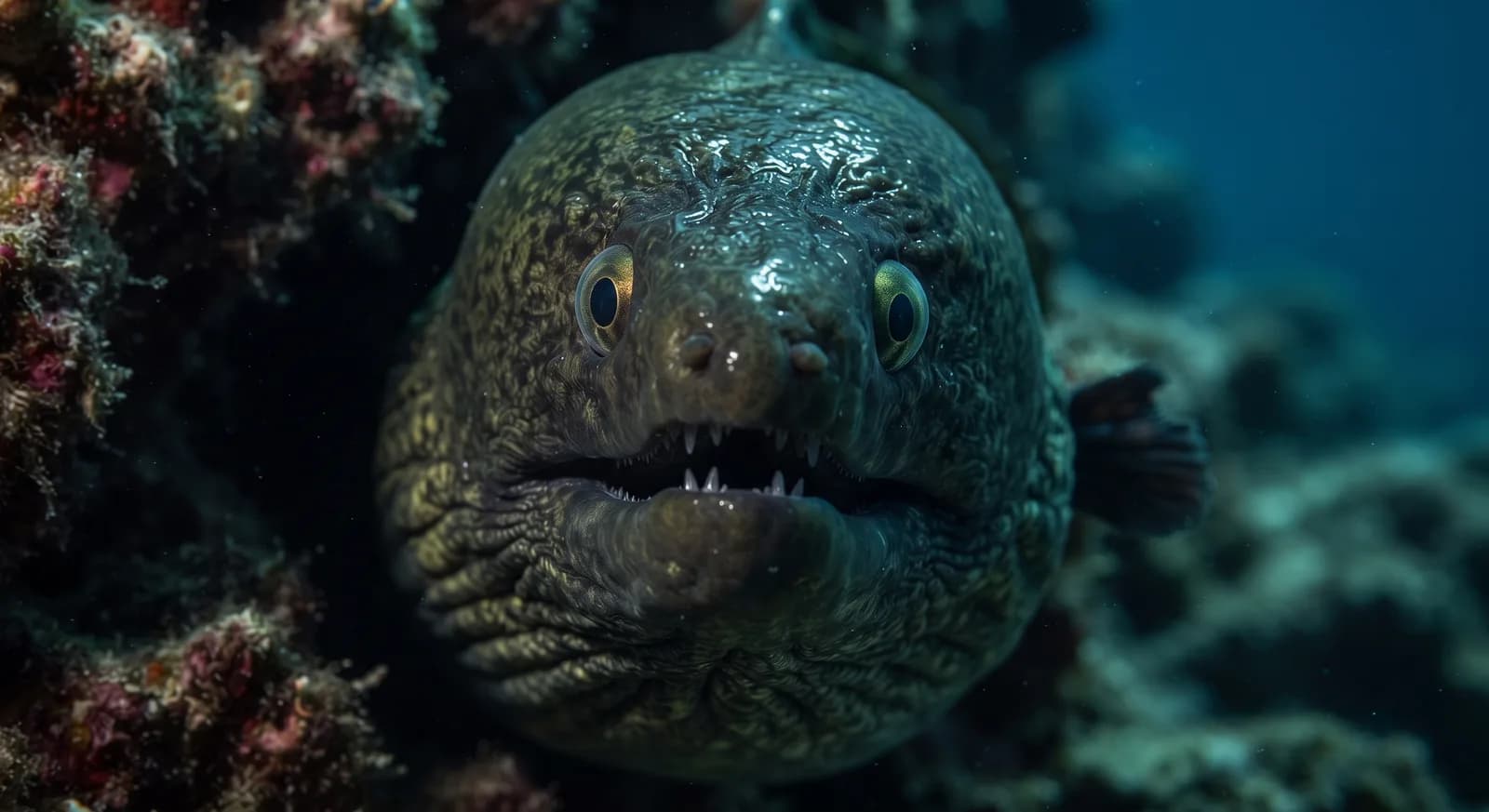
Green Moray
Gymnothorax funebris
Moray Eel
Muraena helena
 Least Concern
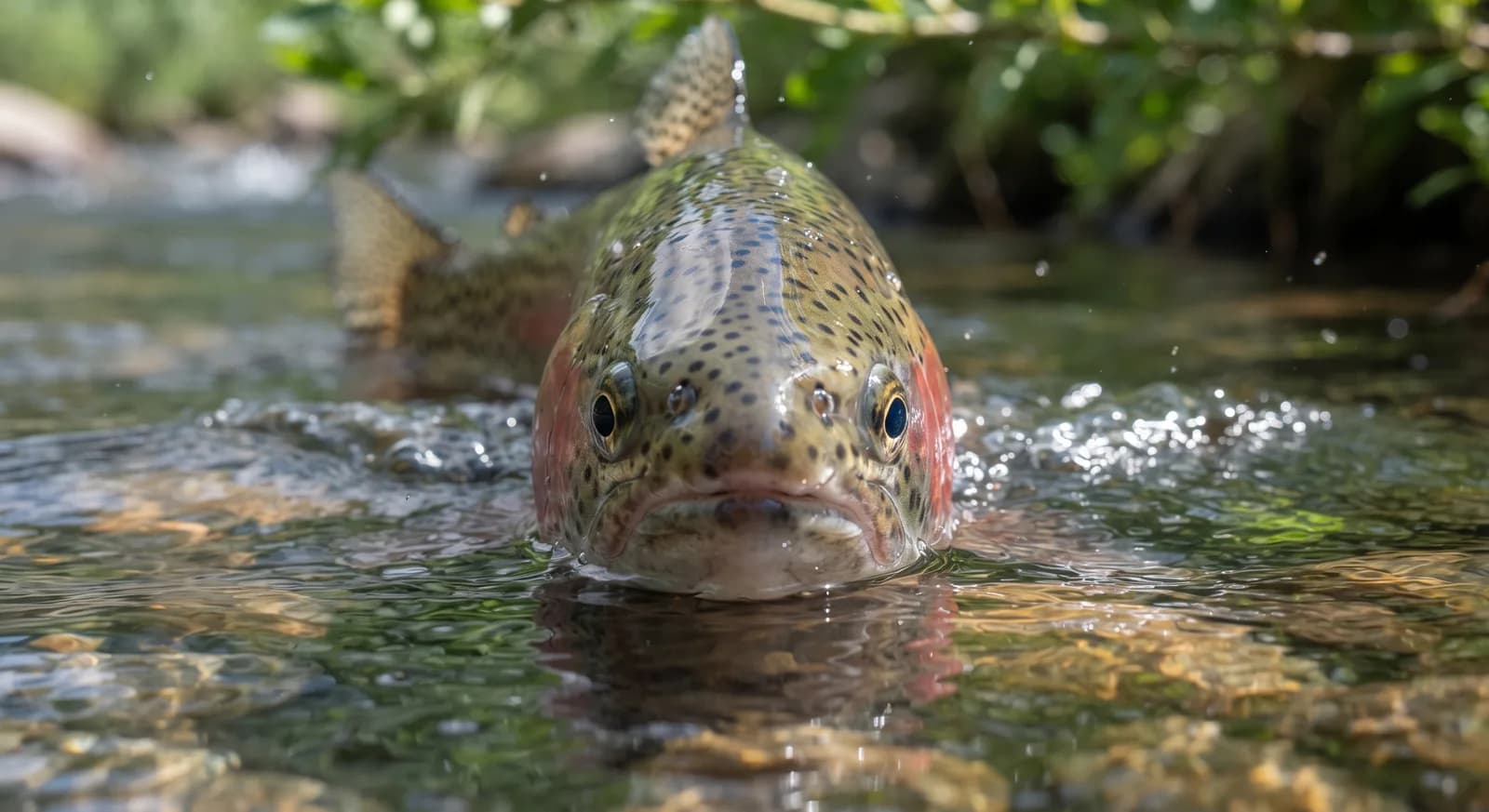
Rainbow Trout
Oncorhynchus mykiss
European Hake
Merluccius merluccius
Keep exploring
Based on what we already know about humpback anglerfish.
Comments
Share an experience, a fun fact or a tip for seeing the humpback anglerfish.
Be the first to comment.