One of the 6 squid on WAnimals
Cephalopods · Vampyromorphida · Vampyroteuthidae
Vampire Squid
Vampyroteuthis infernalis
It has not yet been assessed against the IUCN criteria. See full glossary
A deep-sea cephalopod of reddish brown, with eight arms joined by a membrane it can fold over itself like a cloak. It is neither an octopus nor a squid: it is the only living representative of its own order, Vampyromorpha. It lives in the oxygen minimum zone of temperate and tropical oceans, where its extremely slow metabolism lets it thrive at oxygen concentrations lethal to almost any other cephalopod.
Size
15 cm – 30 cm
Lifespan
8 years
Diet
Omnivore
Combines animal and plant food depending on availability.
Social structure
Solitary
Lives and hunts alone, joining others only to breed.
Sighting difficulty
Unknown
Fun facts
- GeneralIt does not hunt: it feeds on marine snow, the debris that drifts down from the surface.
- fisiologíaFor all its name it is no active predator: it gathers organic particles with retractable filaments in deep water with very little oxygen.
- fisiologíaIt can live in stretches of ocean where oxygen runs extremely low, and where most predators cannot compete with it for the same food.
- Instead of ink it expels a cloud of mucus carrying thousands of luminous particles to bewilder predators.
- Unlike almost all cephalopods, it does not die after a single spawning: the female lays in several batches over the course of her life.
- It is neither a squid nor an octopus: it is the sole survivor of a lineage that split from both some 165 million years ago.
- It is the only cephalopod that does not eat living prey. It feeds on marine snow, the constant rain of organic debris falling from the surface, gathering it by extending two sticky filaments up to eight times its body length, like a fishing rod.
- It then draws the filament between its arms: the suckers secrete mucus that binds the particles into a ball, and finger-like cirri carry it to the mouth.
- It lives where almost nothing can: it has the lowest mass-specific metabolism of any cephalopod and the highest-affinity oxygen-binding haemocyanin known in the group.
- It breaks another cephalopod rule: instead of breeding once and dying, it breeds repeatedly over a life of some eight years.
- Its defence is not ink but light: it releases a cloud of sticky bioluminescent mucus and wraps itself in its own membranous cloak.
- Carl Chun named it in 1903 for its dark red colour, its red eyes and the cloak-like web between its arms.
Life cycle & biology
- Habitat & environment
- The oxygen minimum zone (600-1,200 m)
Sources consulted: Chun (1903); Hoving y Robison (2012), Proceedings of the Royal Society B; MBARI; Golikov et al. (2019), Scientific Reports
Where to find it
See its range on the interactive mapRelated species
Other species in the catalogue with the most in common with Vampire Squid — same habitat, park, country, tags or family.
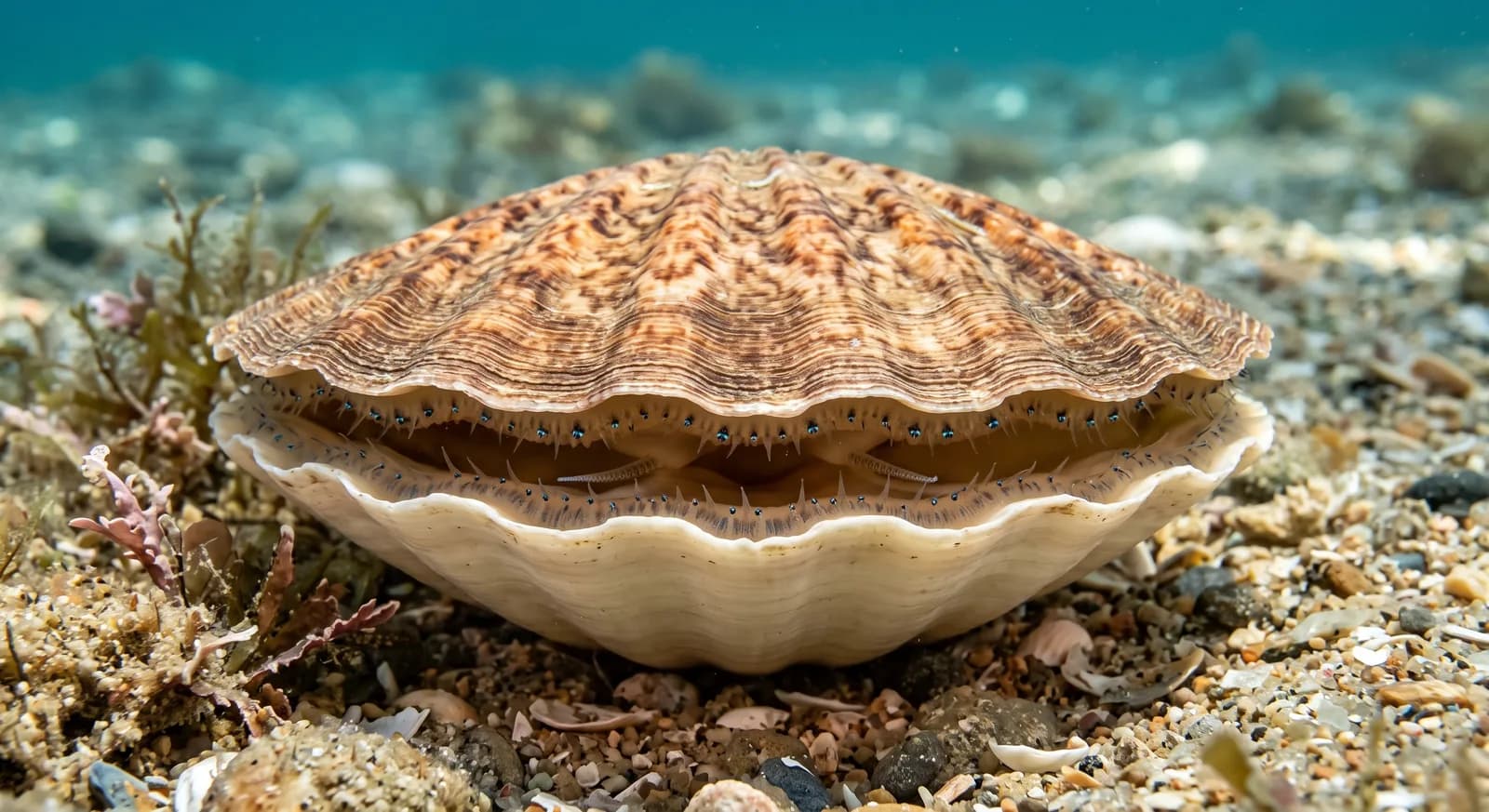 Not Evaluated
Great Scallop
Pecten maximus
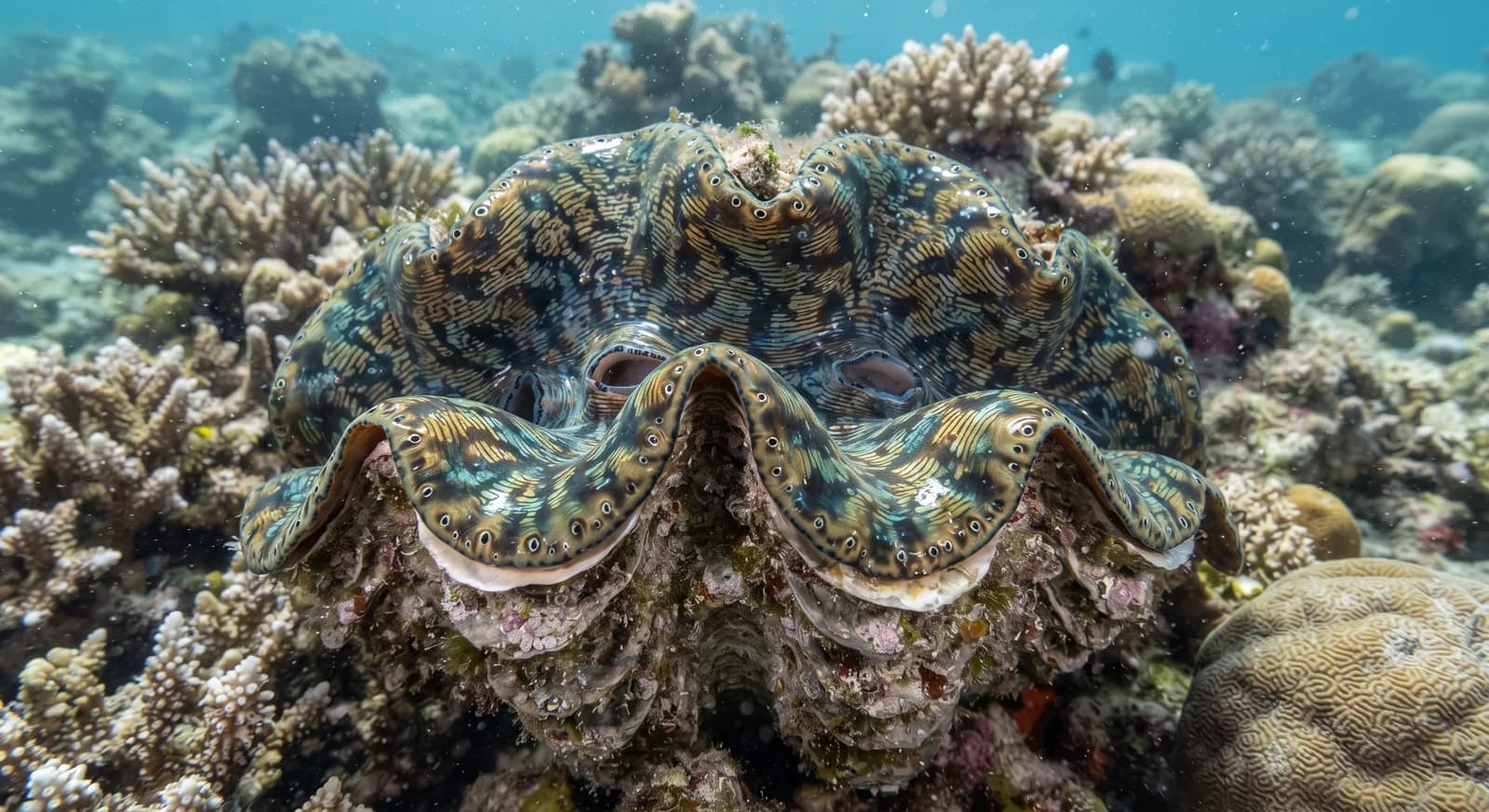 Critically Endangered
Giant Clam
Tridacna gigas
Sand Gaper
Mya arenaria
Northern Nutclam
Nuculana pernula
Old Cardita
Cardites antiquatus
Tiger Cowrie
Cypraea tigris
Keep exploring
Based on what we already know about vampire squid.
Comments
Share an experience, a fun fact or a tip for seeing the vampire squid.
Be the first to comment.