One of the 2 pilot whales on WAnimals
Mammals · Artiodactyla · Delphinidae
Risso's Dolphin
Grampus griseus
The species is abundant and widely distributed; it faces no significant short-term risk. See full glossary
Risso's dolphin — known in Spanish as calderón gris or delfín de Risso — is a large odontocete with a blunt head, no distinct beak and a tall, falcate dorsal fin. It is teuthophagous: it feeds almost exclusively on squid, which it hunts at night when they rise towards the surface, diving to several hundred metres. It lives in groups of between ten and thirty animals and is found throughout almost all temperate and warm seas, including the Mediterranean, where it is regular in the Alborán Sea and the Gulf of Lion.
Weight
300 kg – 500 kg
Size
2.6 m – 4 m
Lifespan
35 years
Diet
Carnivore
Feeds mainly on other animals.
Activity
Nocturnal
Active mainly at night.
Social structure
Herd
Lives in large groups as a strategy against predators.
Sighting difficulty
Easy
Fun facts
- anatomíaIts skin is usually covered in white scars, from fights with others of its kind and from struggles with the squid it mainly eats.
- Adults are covered in white scars caused by the teeth of other Risso's dolphins and by the beaks and suckers of squid; with age they come to look almost white.
- It has teeth only in the lower jaw, between two and seven pairs, because it swallows its prey whole.
- It is born dark grey and turns almost white with age, because it accumulates scars. The criss-cross scratches are made by other Risso's dolphins with their teeth, and the circular marks are left by squid, lampreys and the cookiecutter shark.
- It has two to seven pairs of teeth, and only in the lower jaw. That is an extremely low count for a cetacean, and it is thought to keep them mainly for their role in fights between males.
- It is a strict teuthophage: it eats almost exclusively squid, and hunts mostly at night.
- It dives to more than 600 m by emptying its lungs and descending almost vertically with several spins, a technique that saves it time and leaves it more minutes for hunting below.
- An individual called Pelorus Jack accompanied for years the ships entering Admiralty Bay, in New Zealand, and came to be protected by a specific decree.
- It is the fifth-largest member of the dolphin family.
Life cycle & biology
- Skeleton type
- Vertebrate - internal bony skeleton (mammal)
- Habitat & environment
- Temperate and tropical waters of every ocean, above all over the continental slope
- Sexual maturity
- 10 years
- Gestation / incubation
- 12 months
- Litter / clutch size
- 1
Sources consulted: https://www.iucnredlist.org/ | https://animaldiversity.org/ | https://es.wikipedia.org/
Where to find it
See its range on the interactive mapWhere to watch it
Parques y spots de buceo donde se ha documentado esta especie — se muestran 20 de 150 documentados.
Related species
Other species in the catalogue with the most in common with Risso's Dolphin — same habitat, park, country, tags or family.
Spinner Dolphin
Stenella longirostris
White-beaked Dolphin
Lagenorhynchus albirostris
 Least Concern
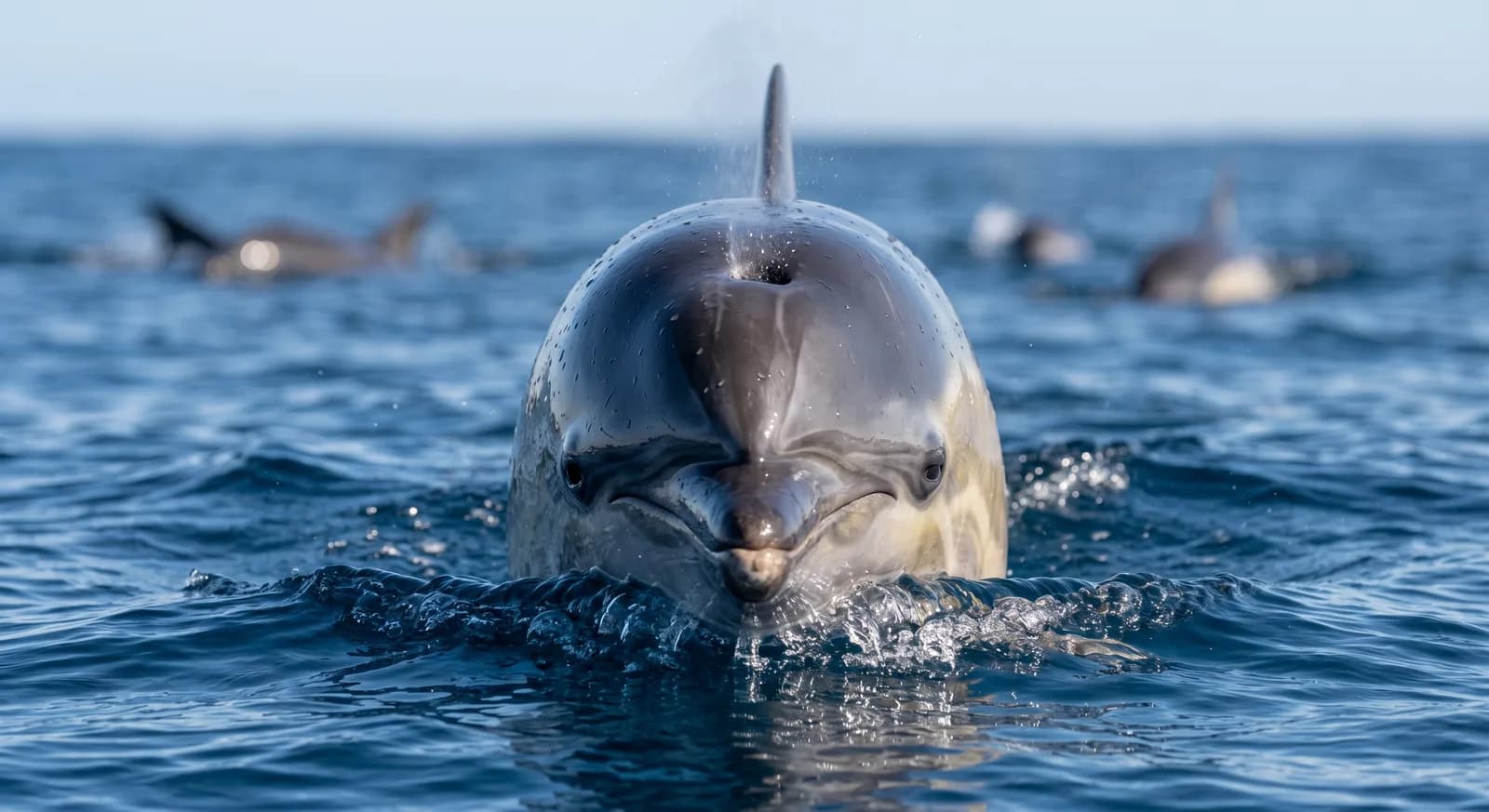
Short-beaked Common Dolphin
Delphinus delphis
Striped Dolphin
Stenella coeruleoalba
 Least Concern
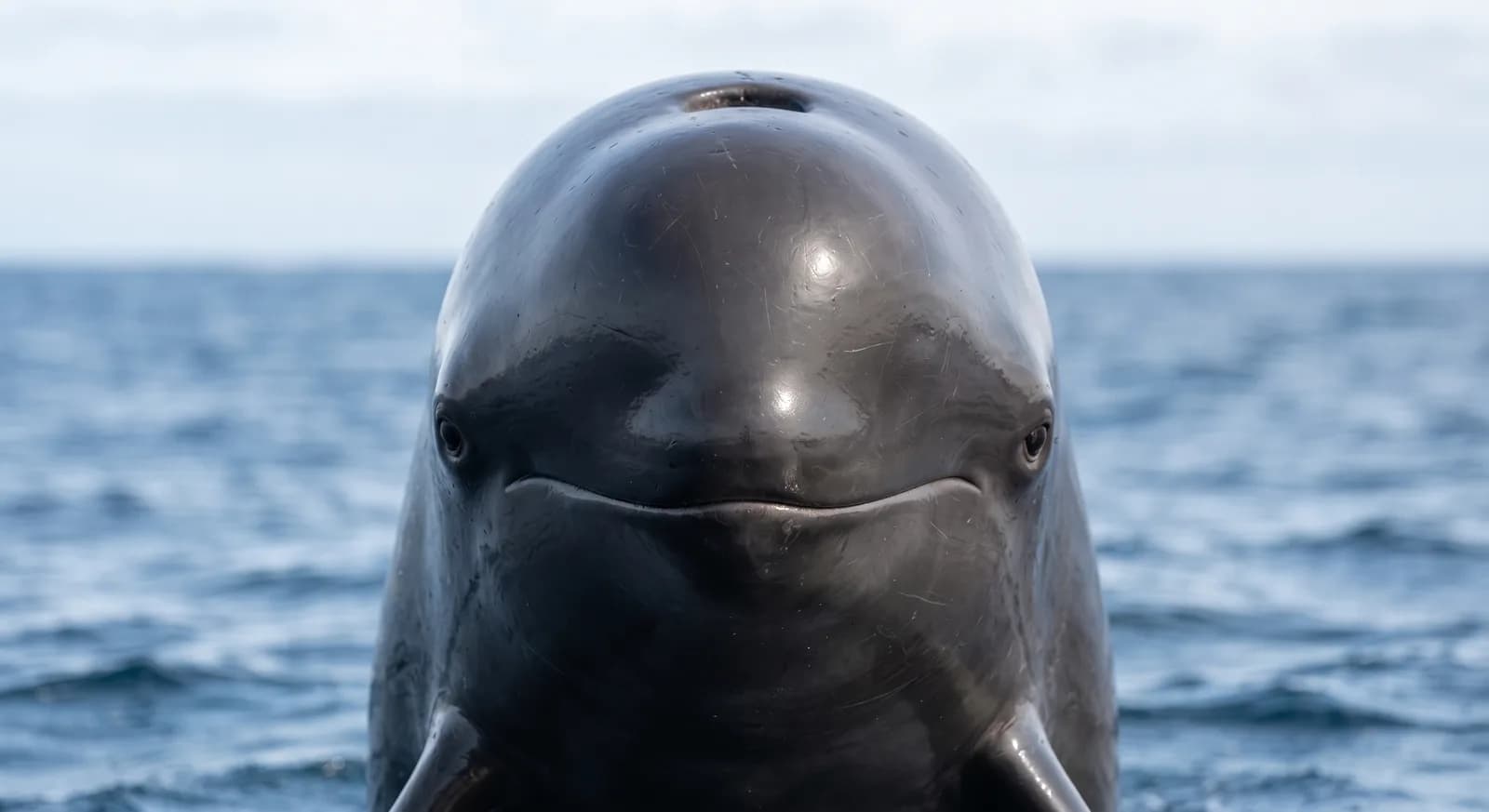
Long-finned Pilot Whale
Globicephala melas
Atlantic Spotted Dolphin
Stenella frontalis
Keep exploring
Based on what we already know about risso's dolphin.
Comments
Share an experience, a fun fact or a tip for seeing the risso's dolphin.
Be the first to comment.