Skip to content
WAnimals
  • Map
  • Species
  • Parks
  • Diving
Log inCreate account
WAnimals

The guide for travellers and animal lovers: discover, plan and share your wild adventures around the world.

Discover wildlife

  • Species
  • Ecosystems
  • Glossary
  • Tags

Explore places

  • Map
  • Countries
  • Parks
  • Diving

Plan experiences

  • Guides

Learn

  • Blog

Resources

  • About us
  • How we build our profiles
  • Help centre
  • Contact
  • Install the app

Follow us

Account

  • Log in
  • Create account

© 2026 WAnimals. All rights reserved.

Terms of servicePrivacyCookiesLegal notice
MapSpeciesParksDiving
  1. Home
  2. Species
  3. Oarfish
Oarfish (Regalecus glesne)

Bony fish · Lampriformes · Regalecidae

Oarfish

Regalecus glesne

Least Concern

The species is abundant and widely distributed; it faces no significant short-term risk.

Spotted something wrong?

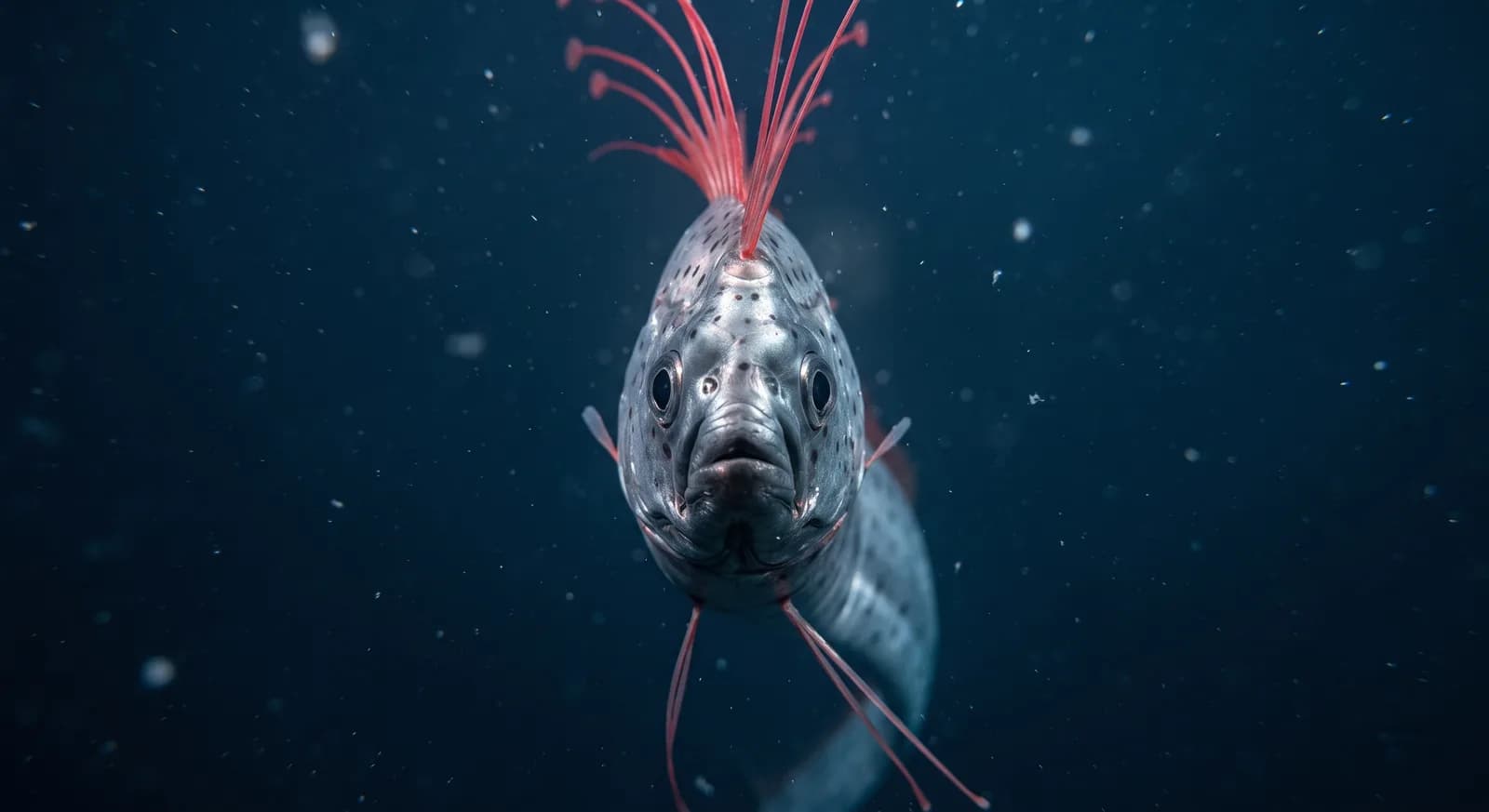
It is the longest bony fish in the world, and its undulating movement and serpentine looks have long been proposed as the origin of a great many sea-serpent sightings.

Weight

up to 600 kg

Size

up to 8 m

Life expectancy

7 years
Diet

Omnivore

Combines animal and plant food depending on availability.

Activity

Nocturnal

Active mainly at night.

Social structure

Solitary

Lives and hunts alone, joining others only to breed.

Ocean
110countries1dive sites

AI-generated images: illustrations, not photographs.

Fun facts

  • It is so seldom seen alive that most of what is known about it comes from stranded or dying fish.
  • It feeds by straining krill, small fish, squid and other crustaceans through its gill rakers.
  • It lives in the mesopelagic zone of every ocean except the polar regions, between 200 and 1,000 metres deep.
  • anatomíaIt can exceed 8 metres in length, and its occasional appearance at the surface has inspired historical sea-serpent legends.
  • It is the longest bony fish in the world. The verified record is 7.6 m and 272 kg, a specimen caught around 1885 off Maine; lengths of up to 8 m are accepted and there are reports of 11.
  • Historical measurements of 15 or 17 metres are now considered very probably inaccurate.
  • It swims vertically, body upright, undulating the extremely long red dorsal fin that runs the whole length of its back. That fin has between 414 and 449 rays.
  • It has no scales: its silvery sheen comes from a layer of guanine, and it lacks both anal and caudal fins.
  • It self-amputates its tail. Every captured specimen of its relative Regalecus russelii above a metre and a half had the tail amputated; the wound heals over but the tail does not regenerate.
  • In Japan it is called Ryugu no tsukai, the messenger from the sea god's palace, and its strandings are associated with earthquakes. A study that cross-checked stranding records against earthquakes found no correlation: the perception is explained by the fact that strandings make the news, and so do earthquakes.
  • It has no teeth: it filters krill and crustaceans with its gill rakers. A specimen from California had some 10,000 euphausiids in its stomach.

Life cycle and biology

Skeleton type
Vertebrate - bony skeleton (fish), scaleless
Habitat and environment
Mesopelagic zone of every ocean except the polar regions, between 200 and 1,000 metres deep
Birth weight
Pelagic egg 2-4 mm; the larva a miniature of the adult
Size at birth
A larva like a miniature adult on hatching
Gestation / incubation
~3 weeks of egg development, floating near the surface
Litter / clutch size
Pelagic eggs laid by broadcast spawning, with no precise figures for fecundity

Sources consulted: Dimensions.com · MarineBio · Animal Spot · Grokipedia (Giant oarfish) · Animalia.bio · Wikipedia (Giant oarfish) · PMC (mitochondrial genome study)

Where to find it

Loading map…

Where to see it

Parks and dive sites where this species has been documented.

Related species

Other species in the catalogue with the most in common with Oarfish — same habitat, park, country, tags or family.

Shares a dive site
Shares a dive site
Shares a dive site
Shares a dive site
Shares a dive site
Shares a dive site

Keep exploring

Based on what we already know about oarfish.

Share an experience, a fun fact or a tip for seeing the oarfish.
See full glossary
This page in other languages: Español · Deutsch · Français · Português · Italiano

The pins mark the dive sites where its presence is documented.

See its range on the interactive map→
Sagami BayJapan
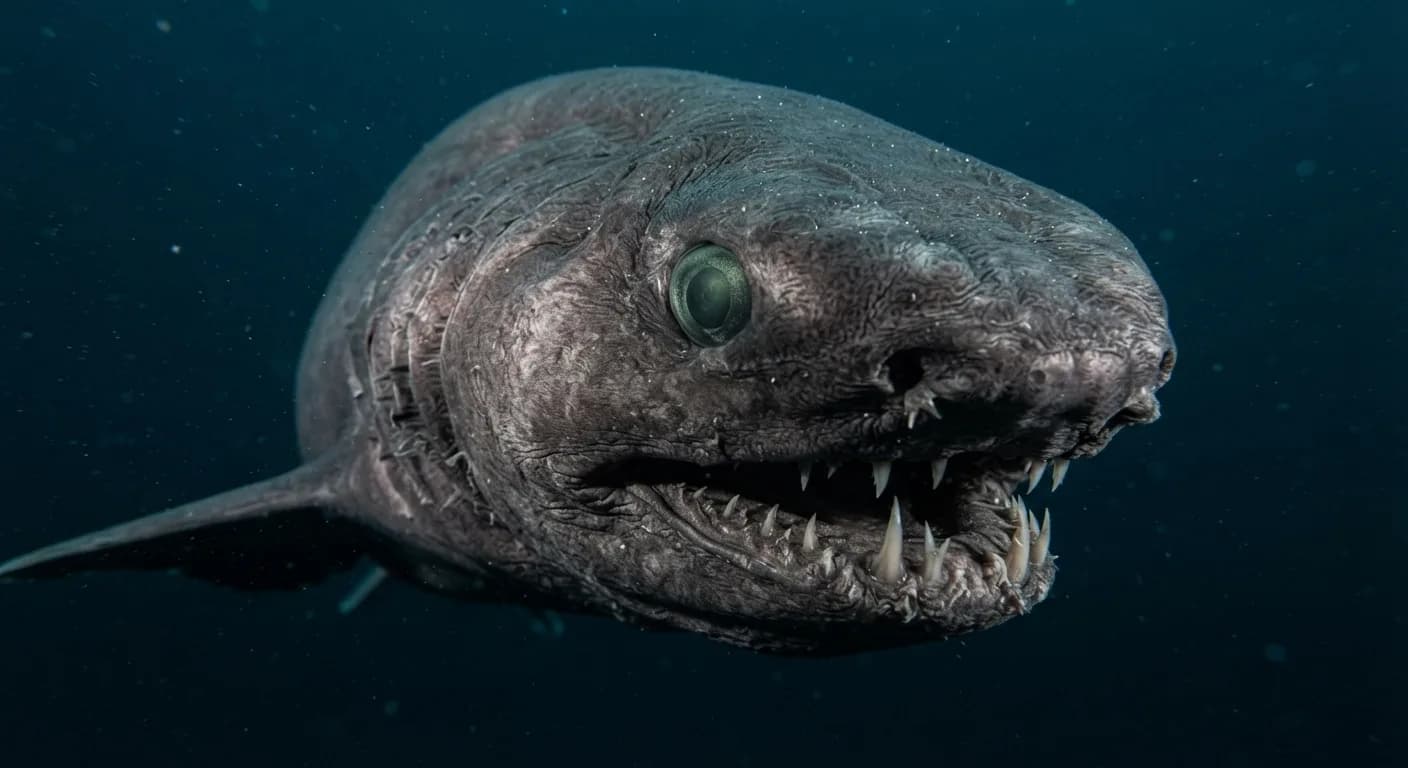
Frilled SharkLeast Concern

Frilled Shark

Chlamydoselachus anguineus

Bluntnose Sixgill SharkNear Threatened

Bluntnose Sixgill Shark

Hexanchus griseus

Least Concern

Flathead Grey Mullet

Mugil cephalus

Giant Pacific OctopusLeast Concern

Giant Pacific Octopus

Enteroctopus dofleini

Goblin SharkLeast Concern

Goblin Shark

Mitsukurina owstoni

Megamouth SharkLeast Concern

Megamouth Shark

Megachasma pelagios

CountriesJapan
TagsOmnivore
Omnivore
Nocturnal
Solitary
Fish
Ocean

North America33

Asia23

Africa20

Europe17

South America11

Oceania6

Japan
Albania
Algeria
Angola
Anguilla
Antigua and Barbuda
Anguilla
Antigua and Barbuda
Aruba
Bahamas
Barbados
Belize
Bermuda
British Virgin Islands
Canada
Cayman Islands
Costa Rica
Cuba
Curaçao
Dominica
Dominican Republic
Greenland
Grenada
Guadeloupe
Haiti
Honduras
Jamaica
Martinique
Mexico
Nicaragua
Panama
Puerto Rico
Saint Kitts and Nevis
Saint Lucia
Saint Vincent and the Grenadines
Trinidad and Tobago
Turks and Caicos Islands
U.S. Virgin Islands
United States
Bangladesh
China
India
Indonesia
Israel
Japan
Lebanon
Malaysia
Maldives
Myanmar
Oman
Pakistan
Philippines
Russia
Saudi Arabia
South Korea
Sri Lanka
Syria
Taiwan
Thailand
Türkiye
Vietnam
Yemen
Algeria
Angola
Cabo Verde
Egypt
Gabon
Ghana
Kenya
Libya
Madagascar
Mauritania
Morocco
Mozambique
Namibia
Nigeria
Senegal
Somalia
South Africa
Sudan
Tanzania
Tunisia
Albania
Bosnia and Herzegovina
Croatia
Cyprus
France
Greece
Iceland
Ireland
Italy
Malta
Monaco
Montenegro
Norway
Portugal
Slovenia
Spain
United Kingdom
Argentina
Brazil
Chile
Colombia
Ecuador
French Guiana
Guyana
Peru
Suriname
Uruguay
Venezuela
Australia
Fiji
French Polynesia
New Caledonia
New Zealand
Papua New Guinea