Skip to content
WAnimals
  • Map
  • Species
  • Parks
  • Diving
Log inCreate account
WAnimals

The guide for travellers and animal lovers: discover, plan and share your wild adventures around the world.

Discover wildlife

  • Species
  • Ecosystems
  • Glossary
  • Tags

Explore places

  • Map
  • Countries
  • Parks
  • Diving

Plan experiences

  • Guides

Learn

  • Blog

Resources

  • About us
  • How we build our profiles
  • Help centre
  • Contact
  • Install the app

Follow us

Account

  • Log in
  • Create account

© 2026 WAnimals. All rights reserved.

Terms of servicePrivacyCookiesLegal notice
MapSpeciesParksDiving
  1. Dwarf Sperm Whale

Mammals · Artiodactyla · Kogiidae

Dwarf Sperm Whale

Kogia sima

Least Concern

The species is abundant and widely distributed; it faces no significant short-term risk.

Spotted something wrong?

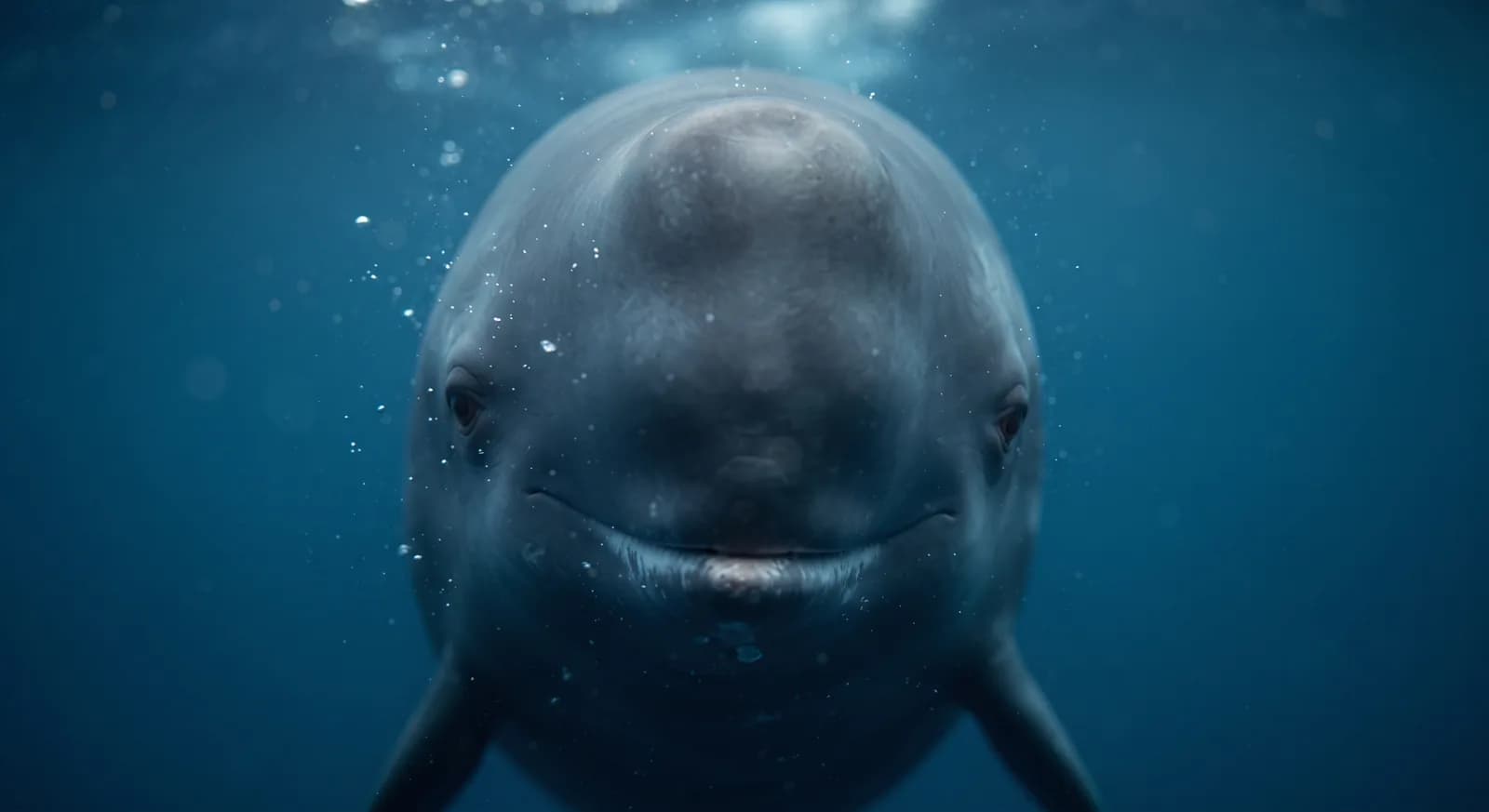
The dwarf sperm whale is the smallest of the cetaceans known as sperm whales and one of the hardest odontocetes to observe: unobtrusive, slow-moving and with hardly any visible blow, it is known mainly from stranded animals. It feeds on squid, octopus and deep-water fish. It shares with the pygmy sperm whale (Kogia breviceps) a surprising feature, an intestinal sac filled with dark fluid that it uses as a chemical defence.

Weight

135 kg – 275 kg

Size

2.1 m – 2.7 m

Life expectancy

22 years

Diet

Carnivore

Feeds mainly on other animals.

Social structure

Family group

Lives in small family groups with close bonds.

Ocean
151countries57parks1same family

Fun facts

  • GeneralIt releases a cloud of reddish fluid, like a curtain of ink, to escape.
  • When threatened it releases a cloud of reddish fluid from an intestinal sac, creating a smokescreen under water just as a squid does with its ink.
  • Behind the eye it has a pale crescent-shaped mark, known as a false gill, which gives it a deceptive resemblance to a small shark.
  • It defends itself like a squid. The two Kogia species are the only cetaceans able to expel a cloud of ink: they contract a sac in the intestine and release up to twelve litres of a reddish-brown liquid that forms a screen and buys them time to escape.
  • It is the smallest cetacean to be called a whale: it does not exceed 2.7 m, less than a bottlenose dolphin.
  • It feeds by suction, mostly on squid from mid and deep waters, along with fish and crustaceans.
  • Almost everything known about it comes from strandings: it is among the deep-water cetaceans that strand most often, and at the same time among the hardest to see alive at sea.
  • It does not leap when it dives: it sinks vertically, without raising its tail or making a splash, and at the surface it floats motionless, showing only the back of its head and the dorsal fin.
  • Until 1966 it was considered the same species as the pygmy sperm whale; the two are told apart above all by the position of the dorsal fin, which sits further forward in this species.

Life cycle and biology

Skeleton type
Vertebrate - internal bony skeleton (mammal)
Habitat and environment
Deep waters over the continental slope in temperate and tropical seas worldwide
Gestation / incubation
9-11 months
Litter / clutch size
1

Sources consulted: Wikipedia (es): Kogia sima

Where to find it

Loading map…

Where to see it

Parks and dive sites where this species has been documented — showing 10 of 57.

Related species

Other species in the catalogue with the most in common with Dwarf Sperm Whale — same habitat, park, country, tags or family.

Same taxonomic family
Shares a park
Shares a park
Shares a park
Shares a park
Shares a park

Keep exploring

Based on what we already know about dwarf sperm whale.

Share an experience, a fun fact or a tip for seeing the dwarf sperm whale.
Home
Species
One of the 3 sperm whales on WAnimals
See full glossary
This page in other languages: Español · Deutsch · Français · Português · Italiano

The pins mark the parks where its presence is documented.
See its range on the interactive map→
KomodoIndonesia
EvergladesUnited States
Sian Ka'anMexico
Bacalar ChicoBelize
GuanicaPuerto Rico
JaraguaDominican Republic
Virgin Islands (St John)U.S. Virgin Islands
Tobago Main RidgeTrinidad and Tobago
Exuma Cays Land and Sea ParkBahamas
Fernando de NoronhaBrazil
See all 57 parks
Pygmy Sperm WhaleData Deficient

Pygmy Sperm Whale

Kogia breviceps

Blainville's Beaked WhaleLeast Concern

Blainville's Beaked Whale

Mesoplodon densirostris

Least Concern

Greater Bulldog Bat

Noctilio leporinus

Bottlenose DolphinLeast Concern

Bottlenose Dolphin

Tursiops truncatus

Sperm WhaleVulnerable

Sperm Whale

Physeter macrocephalus

Least Concern

Cuvier's Beaked Whale

Ziphius cavirostris

CountriesIndonesia
ParksKomodoIndonesia
TagsCarnivore
Carnivore
Family group
Ocean
Mammal

Africa40

North America34

Asia33

Oceania21

Europe12

South America11

Indonesia
Australia
Thailand
United States
Belize
Japan
Algeria
Angola
Benin
Cabo Verde
Cameroon
Comoros
Côte d’Ivoire
Democratic Republic of the Congo
Djibouti
Egypt
Equatorial Guinea
Eritrea
Gabon
Gambia
Ghana
Guinea
Guinea-Bissau
Kenya
Liberia
Libya
Madagascar
Mauritania
Mauritius
Mayotte
Morocco
Mozambique
Namibia
Nigeria
Republic of the Congo
Réunion
São Tomé and Príncipe
Senegal
Seychelles
Sierra Leone
Somalia
South Africa
Sudan
Tanzania
Togo
Tunisia
Anguilla
Antigua and Barbuda
Aruba
Bahamas
Barbados
Belize
Bermuda
British Virgin Islands
Canada
Cayman Islands
Costa Rica
Cuba
Curaçao
Dominica
Dominican Republic
El Salvador
Grenada
Guadeloupe
Guatemala
Haiti
Honduras
Jamaica
Martinique
Mexico
Nicaragua
Panama
Puerto Rico
Saint Kitts and Nevis
Saint Lucia
Saint Vincent and Grenadines
Trinidad and Tobago
Turks and Caicos Islands
U.S. Virgin Islands
United States
Bahrain
Bangladesh
Brunei
Cambodia
China
India
Indonesia
Iran
Israel
Japan
Kuwait
Lebanon
Malaysia
Maldives
Myanmar
North Korea
Oman
Pakistan
Philippines
Qatar
Russia
Saudi Arabia
Singapore
South Korea
Sri Lanka
Syria
Taiwan
Thailand
Timor-Leste
Türkiye
United Arab Emirates
Vietnam
Yemen
American Samoa
Australia
Cook Islands
Fiji
French Polynesia
Guam
Kiribati
Marshall Islands
Micronesia
Nauru
New Caledonia
New Zealand
Niue
Northern Mariana Islands
Palau
Papua New Guinea
Samoa
Solomon Islands
Tonga
Tuvalu
Vanuatu
Albania
Bosnia and Herzegovina
Croatia
Cyprus
France
Greece
Italy
Malta
Monaco
Montenegro
Slovenia
Spain
Argentina
Brazil
Chile
Colombia
Ecuador
French Guiana
Guyana
Peru
Suriname
Uruguay
Venezuela